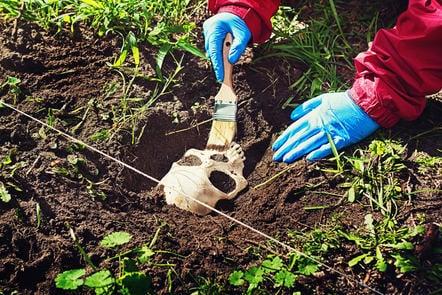
Learn to use ‘human skeletal analysis’ to uncover the story behind human remains. Explore three sites from around the world. Discover what’s written in the bones. A human skeleton is uncovered. Who was this person? What is their story? Through ‘human skeletal analysis’, we are able to read the story behind a skeleton and tell the sex, age and ethnicity of the person who passed away.
Class Deals by MOOC List - Click here and see FutureLearn's Active Discounts, Deals, and Promo Codes.
During this course, you’ll gain an introduction to some of the key techniques and approaches that are used in human skeletal analysis.
You’ll use case studies to uncover their stories and explore some of the ethical issues that surround the analysis of human remains.
What topics will you cover?
- Principles and tools of forensic and biological archaeology
- Legislative requirements for the discovery of human skeletal remains
- Using craniometrics, isotopes, DNA and Carbon 14 to read human skeletal remains
- Sensitivities involved in working with human skeletal remains
- Role of Indigenous partnerships in the archaeological recovery of human skeletal remains
- Explore three sites from around the world
What will you achieve?
By the end of the course, you'll be able to...
- Describe the basic principles of four techniques used to analyse human skeletal remains
- Identify legislative requirements governing the discovery of human remains
- Discuss the ethics of working with human remains
- Explain the importance of context to the forensic or archaeological recovery of human remains
- Reflect upon the role of technology, context and culture in reading the stories of human skeletal remains
Go to Class
MOOC List is learner-supported. When you buy through links on our site, we may earn an affiliate commission.