Introduction to CAD, CAM, and Practical CNC Machining (Coursera)

Offered by Autodesk,
Introduction to CAD, CAM, and Practical CNC Machining (Coursera)

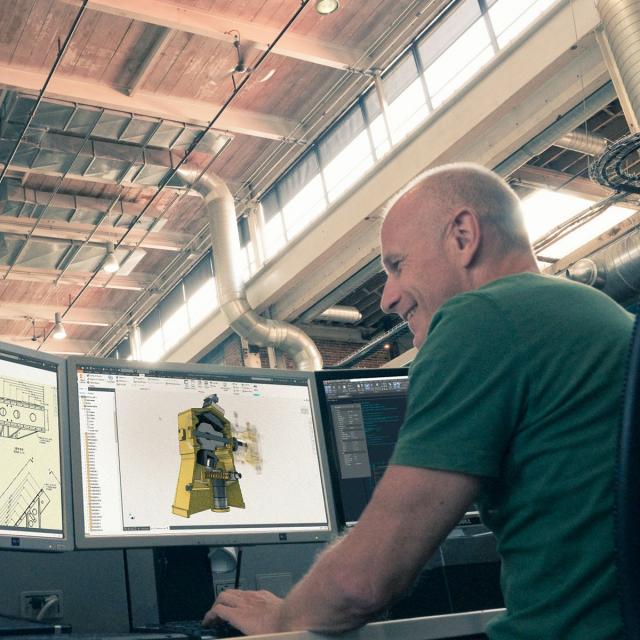
This course introduces you to the foundational knowledge in computer-aided design, manufacture, and the practical use of CNC machines. In this course we begin with the basics in Autodesk® Fusion 360™ CAD by learning how to properly sketch and model 3D parts. Before we program any toolpaths, we’ll explore CNC machining basics to ensure we have the ground level foundational knowledge needed to effectively define toolpaths.

Class Deals by MOOC List - Click here and see Coursera's Active Discounts, Deals, and Promo Codes.

Finally, we explore the basics of setting up a CAM program and defining toolpaths to cut simple geometry. This is the same basic process that gets repeated for the design and manufacture of any part and is a critical step in learning and understanding the process.
Want to take your learning to the next level? Complete the Autodesk CAD/CAM for Manufacturing Specialization, and you’ll unlock an additional Autodesk Credential as further recognition of your success! The Autodesk Credential comes with a digital badge and certificate, which you can add to your resume and share on social media platforms like LinkedIn, Facebook, and Twitter. Sharing your Autodesk Credential can signal to hiring managers that you’ve got the right skills for the job and you’re up on the latest industry trends like generative design.
What You Will Learn

  • Explain the CAD design process as applied to prismatic parts.
    • Summarize the workflow of digital manufacturing.
  • Demonstrate knowledge and skills in basic Fusion 360 CAM.
  • Recall foundational knowledge of practical CNC machining.

Course 1 of 4 in the Autodesk CAD/CAM for Manufacturing Specialization.

Syllabus

WEEK 1
Autodesk Fusion 360 Foundational Design concepts
In Week 1, we’ll dive right into Autodesk® Fusion 360™ to learn all the basics of navigating, sketching, and modeling. This foundations of computer-aided design with Fusion 360 are the first steps to having a digital model that can be programmed and ultimately machined. We’ll focus our energy on learning the best practices for sketching geometry, creating 3D models, and understanding basic assemblies while designing our first part.

WEEK 2
CNC and machining basics
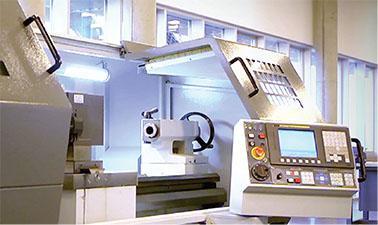
In Week 2, we’ll expand our knowledge by exploring the basics of machining. This course can’t replace hands-on training and practical knowledge at a physical machine, but there are some basics we should really cover before we dive into programming toolpaths. We'll cover topics like coordinate systems, work holding devices, tools, and types of cutting.

WEEK 3
Setting up CAM programs
In Week 3, we’ll explore all the details that go into setting up a CAM program. This involves defining stock, locating a coordinate system, and creating a digital tool library. We’ll also take a look at machine configurations, which allow us to digitally define the CNC machine and its parameters.

WEEK 4
Creating our first CNC program
In Week 4, we’ll start creating toolpaths by exploring 2-axis cutting and 2.5-axis cutting operations. Starting with 2-axis cutting allows us the opportunity to learn about tool motion without focusing on too many parameters at once. With a solid foundation creating toolpaths for a waterjet machine we can begin learning about milling operations that position the Z-axis depth and cut only in X and Y. In these lessons, we’ll learn some of the most common operations needed to program prismatic parts.
Go to Class
MOOC List is learner-supported. When you buy through links on our site, we may earn an affiliate commission.

Related Courses

Engineering Design Process with Autodesk Fusion 360 (Coursera) Coursera
Autodesk

Engineering Design Process with Autodesk Fusion 360 (Coursera)

This course provides a deeper exploration of mechanical assemblies and simulation, which are key engineering features of the design and manufacturing process. The foundation of engineering design is exploration and iteration. Design is rarely a perfectly linear and straightforward process. In this course, we'll explore mechanical assembly design and simulation, focusing on testing and improving design components and performance.

Nov 4th 2024
4 Weeks
Introduction to Mechanical Engineering Design and Manufacturing with Fusion 360 (Coursera) Coursera
Autodesk

Introduction to Mechanical Engineering Design and Manufacturing with Fusion 360 (Coursera)

Design for manufacturing is the process of designing parts, components, or products with the understanding surrounding design requirements for a specific manufacturing method. This course explores the design for manufacture workflow and shows how to validate models and create the G code, the programming language needed to instruct the CNC machine on how to move.

Nov 11th 2024
4 Weeks
Engineering Drawing | 工程制图 (edX) EdX
Tsinghua University,TsinghuaX

Engineering Drawing | 工程制图 (edX)

“Engineering Drawing” is a fundamental course of engineering technology, including two parts: basic theories and advanced practices. The first part will introduce the theory of projection and its application on drawings. The second part is to give students general experience in producing a variety of mechanical drawings.

Self Paced
Self-Paced
Introduction to Computer Numerical Control (edX) EdX
TenarisUniversity

Introduction to Computer Numerical Control (edX)

Learn how The Introduction to Computer Numerical Control (CNC) Machining enables computers to control manufacturing tools and how to select, program and operate a CNC machine. Computer Numerical Control (CNC) Machining is the process through which computers control machine-based processes in manufacturing. The kinds of machines controlled include lathes, mills, routers and grinders – all used for manufacturing of metal and plastic products.

Self Paced
Self-Paced
Computer-Aided Design (CAD) (saylor.org) Saylor Academy
Saylor.org

Computer-Aided Design (CAD) (saylor.org)

CAD, or computer-aided design, is a powerful modeling tool that technical professionals use. With CAD, architects can draw up building plans and engineers can develop component and system designs. Some CAD programs even allow users to perform stress analysis, demonstrating how well a proposed structure will fare when put to use. For example, when does a load become too big? How much weight can be put onto a bridge before it becomes structurally unsound? Using CAD, professionals can create precise engineering drawings in both 2- and 3-D, complete with dimensions and specifications, in a neat and readable format.

Legacy Course
Self-Paced
Modeling and Design for Mechanical Engineers with Autodesk Fusion 360 (Coursera) Coursera
Autodesk

Modeling and Design for Mechanical Engineers with Autodesk Fusion 360 (Coursera)

There are many considerations that play a part in engineering a new product. Regardless of what that product is, there are fundamentals such as form, fit, and function when it comes to digital modeling. In this course, we lay the foundation to create any design and dive deep into topics about the control of the design. From assembly joints and joint limits to complex shapes using forms, rest assured that your design will be rock solid.

Nov 11th 2024
4 Weeks
Autodesk Fusion 360 Integrated CAD/CAM/CAE (Coursera) Coursera
Autodesk

Autodesk Fusion 360 Integrated CAD/CAM/CAE (Coursera)

Design, engineering, and manufacturing are undergoing a digital transformation, and the need for a collaborative product development environment is becoming an ever-growing requirement. Autodesk® Fusion 360™ meets this need by connecting CAD, CAM, and CAE in a single cloud-based platform unlike any other tool of its kind. This course builds upon digital manufacturing trends and foundational CAD concepts discussed in Course 1 of this series by introducing Fusion 360 as a problem-solving tool.

Nov 4th 2024
5-12 Weeks
Creating Toolpaths for a CNC Lathe (Coursera) Coursera
Autodesk

Creating Toolpaths for a CNC Lathe (Coursera)

CNC machines come in an almost endless array of configurations for various applications. So far, we have only talked about CNC Mills. More specifically vertical milling centers. In this course we turn our attention to the CNC Lathe. We identify the difference in a lathe’s coordinate system, tools, and how to create lathe specific toolpaths.

Nov 11th 2024
4 Weeks
Multi-Axis CNC Toolpaths (Coursera) Coursera
Autodesk

Multi-Axis CNC Toolpaths (Coursera)

Computer Numerical Controlled machines, or CNC for short, can have a nearly endless number of options. Most machines today control tool motion in 3-axes, X, Y and Z, but can be upgraded to include a 4th or 5th axis as well, A and B. Additionally, there are many machines on the market that are already 5-axis capable. The good news is that Autodesk® Fusion 360™ has you covered if you need to control multi-axis positioning or simultaneous motion in all 5 axes at once!

Nov 11th 2024
4 Weeks
Introduction to Engineering Design (Coursera) Coursera
Starweaver

Introduction to Engineering Design (Coursera)

In today's fast-paced technological environment, understanding the fundamentals of engineering design is crucial for aspiring engineers and professionals alike. This comprehensive course serves as a primer, introducing participants to key concepts and methodologies essential for designing innovative solutions to complex problems. It provides an overview of the engineering design process, emphasizing the integration of creativity and functionality in problem-solving.

May 25th 2026
4 Weeks