Autodesk Certified Professional: AutoCAD for Design and Drafting Exam Prep (Coursera)

Offered by Autodesk,
Autodesk Certified Professional: AutoCAD for Design and Drafting Exam Prep (Coursera)

Prove to potential employers that you’re up to the task by becoming an Autodesk Certified Professional. This online course from Autodesk prepares you by offering an overview of skills that match what is covered in the Autodesk Certified Professional: AutoCAD for Design and Drafting exam.

Class Deals by MOOC List - Click here and see Coursera's Active Discounts, Deals, and Promo Codes.

The video lessons are structured to match the exam’s objective domains and follow the typical workflow and features of the AutoCAD software, including sections on drawing and organizing objects, drawing with accuracy, advanced editing functions, layouts, printing, and outputs, annotation techniques, and reusable content and drawing management. In the course, you will create drawing objects, manage layers, apply object snaps, and work with the User Coordinate System. You’ll edit objects and apply rotation and scale, array techniques, grip editing, offsets, fillet and chamfer, and trim and extend. You will also gain an understanding of exam topics such as layouts and viewports, output formats, and drawing management. Brush up on markup tools, hatch and fill, text, tables, multileaders, dimensioning, and much more.
About the Autodesk Certified Professional: AutoCAD for Design and Drafting Exam:
The Autodesk Certified Professional: AutoCAD for Design and Drafting exam is the recognized standard for measuring your skills and knowledge in AutoCAD. Certification at this level demonstrates a comprehensive skill set that provides an opportunity for individuals to stand out in a competitive professional environment. This type of experience typically comes from having worked with the software on a regular basis for at least 2 years, equivalent to approximately 400 hours (minimum) - 1200 hours (recommended), of real-world Autodesk software experience.
What You Will Learn

  • Draw and organize objects, use advanced editing functions, and draw accurately using the User Coordinate System.
  • Create and manage your layouts, outputs, printings, and use annotation techniques like markup tools, hatch and fill, multileaders, and dimensioning.
  • Perform drawing management techniques, use blocks for efficiency, and control external reference and underlay files.
  • Demonstrate the skills and knowledge required for taking the Autodesk Certified Professional: AutoCAD for Design and Drafting exam.

Syllabus

WEEK 1
Advanced Drawing, Organize Objects, and Drawing with Accuracy
In week 1, we'll cover the advanced drawing techniques covered on the exam, including polylines, arcs, splines, and polygons and working with rays, xlines, and multilines. You’ll also learn how to select, isolate, hide, and remove objects, manage layers, control the User Coordinate System (UCS), and work with multi-functional grips for editing.

WEEK 2
Layouts, Printing, Outputs, Annotation Techniques, Reusable Content, and Drawing Management
In week 2, we'll begin with an overview of layouts and outputting drawings, including using the Page Setup Manager, working with viewports, and creating eTransmit packages. You’ll learn about several annotation techniques and discover the benefits of working with revision clouds, multileaders, and dimensions. Finally, you’ll discover some best practices for reusing content such as blocks and working with external reference and underlay files.

Go to Class
MOOC List is learner-supported. When you buy through links on our site, we may earn an affiliate commission.

Related Courses

Interpersonal Communication for Engineering Leaders (Coursera) Coursera
Rice University

Interpersonal Communication for Engineering Leaders (Coursera)

This course covers communication skills that engineering leaders use every day to motivate, inspire, and support the people in their organizations. Speaking and writing are basic leadership communication skills. (We covered these topics in the Specialization course 1 and 3.) However, leaders also need to be skillful interpersonal communicators.

Oct 12th 2026
4 Weeks
Quantitative Formal Modeling and Worst-Case Performance Analysis (Coursera) Coursera
EIT Digital

Quantitative Formal Modeling and Worst-Case Performance Analysis (Coursera)

Welcome to Quantitative Formal Modeling and Worst-Case Performance Analysis. In this course, you will learn about modeling and solving performance problems in a fashion popular in theoretical computer science, and generally train your abstract thinking skills. After finishing this course, you have learned to think about the behavior of systems in terms of token production and consumption, and you are able to formalize this thinking mathematically in terms of prefix orders and counting functions. You have learned about Petri-nets, about timing, and about scheduling of token consumption/production systems, and for the special class of Petri-nets known as single-rate dataflow graphs, you will know how to perform a worst-case analysis of basic performance metrics, like throughput, latency and buffering.

Oct 19th 2026
4 Weeks
Image and video processing: From Mars to Hollywood with a stop at the hospital (Coursera) Coursera
Duke University

Image and video processing: From Mars to Hollywood with a stop at the hospital (Coursera)

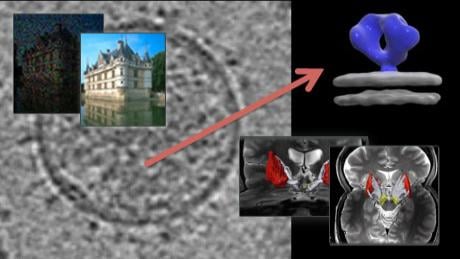
In this course, you will learn the science behind how digital images and video are made, altered, stored, and used. We will look at the vast world of digital imaging, from how computers and digital cameras form images to how digital special effects are used in Hollywood movies to how the Mars Rover was able to send photographs across millions of miles of space.

Oct 5th 2026
5-12 Weeks
Thermodynamique : fondements (Coursera) Coursera
École Polytechnique Fédérale de Lausanne

Thermodynamique : fondements (Coursera)

Ce cours vous apportera une compréhension des concepts fondamentaux de la thermodynamique du point de vue de la physique, de la chimie et de l’ingénierie. Il est scindé un deux MOOCs. Dans la première partie, le Professeur J.-Ph. Ansermet de l’EPFL et son collaborateur le Dr. Sylvain Bréchet ont rassemblé en quatre leçons tous les principes fondamentaux de la thermodynamique. La deuxième partie du MOOC illustre l’approche thermodynamique par une série d’applications présentées par des spécialistes provenant de diverses institutions partenaires du réseau RESCIF.

Oct 12th 2026
4 Weeks
English for Science, Technology, Engineering, and Mathematics (Coursera) Coursera
University of Pennsylvania

English for Science, Technology, Engineering, and Mathematics (Coursera)

Welcome to English for Science, Technology, Engineering, and Mathematics, a course created by the University of Pennsylvania, and funded by the U.S. Department of State Bureau of Educational and Cultural Affairs, Office of English Language Programs. This course is designed for non-native English speakers who are interested in improving their English skills in the sciences. In this course, you will explore some of the most innovative areas of scientific study, while expanding your vocabulary and the language skills needed to share scientific information within your community.

Oct 5th 2026
5-12 Weeks
Materials Data Sciences and Informatics (Coursera) Coursera
Georgia Institute of Technology

Materials Data Sciences and Informatics (Coursera)

This course aims to provide a succinct overview of the emerging discipline of Materials Informatics at the intersection of materials science, computational science, and information science. Attention is drawn to specific opportunities afforded by this new field in accelerating materials development and deployment efforts.

Oct 5th 2026
5-12 Weeks
Exploring Light: Hands-on Activities and Strategies for Teachers (Coursera) Coursera
Exploratorium

Exploring Light: Hands-on Activities and Strategies for Teachers (Coursera)

This is an Exploratorium teacher professional development course taught by Teacher Institute staff, open to any science teacher (particularly middle or high school level) and science enthusiast. This is a hands-on workshop that explores topics and strategies teachers can use to help their students become active investigators of light.

Oct 4th 2026
4 Weeks
VLSI CAD Part II: Layout (Coursera) Coursera
University of Illinois at Urbana-Champaign

VLSI CAD Part II: Layout (Coursera)

A modern VLSI chip is a remarkably complex beast: billions of transistors, millions of logic gates deployed for computation and control, big blocks of memory, embedded blocks of pre-designed functions designed by third parties (called “intellectual property” or IP blocks). How do people manage to design these complicated chips? Answer: a sequence of computer aided design (CAD) tools takes an abstract description of the chip, and refines it step-wise to a final design.

Oct 19th 2026
5-12 Weeks
Designing Effective Science Communication (Coursera) Coursera
University of Colorado Boulder

Designing Effective Science Communication (Coursera)

Although many would prefer to leave science in the past and no longer engage with it once completing compulsory science classes in school, the reality is that engaging with science is an integral part of our daily lives. Moreover, for the safety and wellness of human society, it is necessary to engage with scientific information. We are faced with the necessity of examining scientific evidence on topics ranging from conservation to public health and make decisions that impact not only our families but those around us.

Oct 19th 2026
5-12 Weeks
Introduction to Engineering Mechanics (Coursera) Coursera
Georgia Institute of Technology

Introduction to Engineering Mechanics (Coursera)

This course is an introduction to learning and applying the principles required to solve engineering mechanics problems. Concepts will be applied in this course from previous courses you have taken in basic math and physics. The course addresses the modeling and analysis of static equilibrium problems with an emphasis on real world engineering applications and problem solving.

Oct 19th 2026
5-12 Weeks
Oral Communication for Engineering Leaders (Coursera) Coursera
Rice University

Oral Communication for Engineering Leaders (Coursera)

Taught by Rice University communication faculty from the Rice Center for Engineering Leadership (RCEL). This course covers core topics in oral communication: Communication strategy, content, data visualization, and delivery. You’ll learn key principles in: Creating a communication strategy; Developing a clear message and organizing persuasive content; Creating strong visual support; Presenting data effectively; Presenting professionally and confidently; Handling formal presentations, giving pitches, speaking extemporaneously, managing online presentations, and lowering public speaking anxiety.

Oct 19th 2026
5-12 Weeks