Introduction to battery-management systems (Coursera)

Introduction to battery-management systems (Coursera)

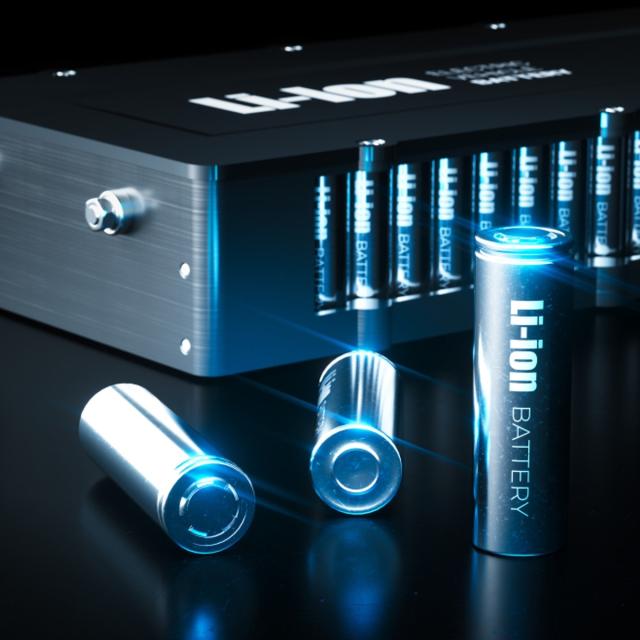
This course will provide you with a firm foundation in lithium-ion cell terminology and function and in battery-management-system requirements as needed by the remainder of the specialization.

Class Deals by MOOC List - Click here and see Coursera's Active Discounts, Deals, and Promo Codes.

After completing this course, you will be able to:

  • List the major functions provided by a battery-management system and state their purpose
  • Match battery terminology to a list of definitions
  • Identify the major components of a lithium-ion cell and their purpose
  • Understand how a battery-management system “measures” current, temperature, and isolation, and how it controls contactors
  • Identify electronic components that can provide protection and specify a minimum set of protections needed
  • Compute stored energy in a battery pack
  • List the manufacturing steps of different types of lithium-ion cells and possible failure modes

Course 1 of 5 in the Algorithms for Battery Management Systems Specialization.

Syllabus

Week 1
Battery Boot Camp
This week, you will learn some important terminology used to describe battery cells, and will learn the principles of operation of standard electrochemical battery cells.

Week 2
How lithium-ion cells work
This week, you will learn some of the principal advantages of lithium-ion cells versus standard electrochemical battery cells, what are their primary components, and how they work.

Week 3
BMS sensing and high-voltage control
This week, you will begin to learn about BMS requirements, and will study the requirements for sensing and high-voltage control in detail.

Week 4
BMS design requirements 2-5
This week, you will continue to learn about BMS requirements, studying requirements for protection, interface, performance management, and diagnostics in detail.

Week 5
How are cells made? How can they fail?
This week, you will learn in more detail than before how lithium-ion cells are made and how they can fail.
Go to Class
MOOC List is learner-supported. When you buy through links on our site, we may earn an affiliate commission.

Related Courses

Outsmarting intermittency (Coursera) Coursera
École Polytechnique

Outsmarting intermittency (Coursera)

Solar and wind offer clean and renewable ways to produce large amounts of electricity. They have boomed over the last few years, evolving from an eco-daydream to a major market and showing unprecedented growth rates. Yet, installing solar panels and wind turbines is by no means the end of the story. The electrical grid, which connects production means to the end-users’ sockets, is not a simple electron pipe. It is the beating heart of our electricity system and ensures its stability. Solar and wind raise specific challenges for the grid, and these challenges will have to be tackled if we want to deploy larger amounts of renewable sources.

Aug 3rd 2026
4 Weeks
Haptics: Introduction to Haptics (Stanford Online) Lagunita Stanford Online
Stanford University

Haptics: Introduction to Haptics (Stanford Online)

Participants in this class will learn how to build, program, and control haptic devices, which are mechatronic devices that allow users to feel virtual or remote environments. In the process, participants will gain an appreciation for the capabilities and limitations of human touch, develop an intuitive connection between equations that describe physical interactions and how they feel, and gain practical interdisciplinary engineering skills related to robotics, mechanical engineering, electrical engineering, bioengineering, and computer science.

Self Paced
Self-Paced
Building Arduino robots and devices (Coursera) Coursera
Moscow Institute of Physics and Technology

Building Arduino robots and devices (Coursera)

For many years now, people have been improving their tools, studying the forces of nature and bringing them under control, using the energy of the nature to operate their machines. Last century is noted for the creation of machines which can operate other machines. Nowadays the creation of devices that interact with the physical world is available to anyone. Our course consists of a series of practical problems on making things that work independently: they make their own decisions, act, move, communicate with each other and people around, and control other devices. We will demonstrate how to assemble such devices and programme them using the Arduino platform as a basis.

May 9th 2022
5-12 Weeks
Internet of Things: Multimedia Technologies (Coursera) Coursera
University of California, San Diego

Internet of Things: Multimedia Technologies (Coursera)

Content is an eminent example of the features that contributed to the success of wireless Internet. Mobile platforms such as the Snapdragon™ processor have special hardware and software capabilities to make acquisition, processing and rendering of multimedia content efficient and cost-effective.

Aug 17th 2026
3 Weeks
Introduction to Semiconductor Devices 1 (Coursera) Coursera
Korea Advanced Institute of Science and Technology - KAIST

Introduction to Semiconductor Devices 1 (Coursera)

This course aims to provide a general understanding of semiconductor devices. This course explores the principles and the operation mechanism of semiconductor, such as charge transfer, p-n junction, junction capacitors, and Metal-Oxide-Semiconductor Field Effect Transistors(MOSFETs).

Jul 27th 2026
5-12 Weeks
Introdução ao Controle Moderno (Coursera) Coursera
Instituto Tecnológico de Aeronáutica

Introdução ao Controle Moderno (Coursera)

Este curso lhe dará a base necessária para entender técnicas mais avançadas de controle moderno. Você aprenderá como representar a dinâmica de um sistema no espaço de estados, como analisar um sistema no espaço de estados, como projetar uma realimentação de estado e como projetar um observador de estado.

Jul 27th 2026
5-12 Weeks
Physics 102 - AC Circuits and Maxwell's Equations (Coursera) Coursera
Rice University

Physics 102 - AC Circuits and Maxwell's Equations (Coursera)

This course serves as an introduction to the physics of electricity and magnetism. Upon completion, learners will have an understanding of how the forces between electric charges are described by fields, and how these fields are related to electrical circuits. They will gain experience in solving physics problems with tools such as graphical analysis, algebra, vector analysis, and calculus. The course follows the typical progression of topics of a first-semester university physics course: charges, electric forces, electric fields potential, magnetic fields, currents, magnetic moments, electromagnetic induction, and circuits.

Aug 3rd 2026
3 Weeks
Fundamentals of Audio and Music Engineering: Part 1 Musical Sound & Electronics (Coursera) Coursera
University of Rochester

Fundamentals of Audio and Music Engineering: Part 1 Musical Sound & Electronics (Coursera)

In this course students learn the basic concepts of acoustics and electronics and how they can applied to understand musical sound and make music with electronic instruments. Topics include: sound waves, musical sound, basic electronics, and applications of these basic principles in amplifiers and speaker design.

Aug 3rd 2026
5-12 Weeks