Intel® Edge AI Fundamentals with OpenVINO™ (Udacity)

Offered by Udacity,
Intel® Edge AI Fundamentals with OpenVINO™ (Udacity)

Develop cutting-edge Edge AI applications. Stay at the cutting-edge of AI technology by gaining practical skills for deploying edge AI. Learn how to use the Intel® Distribution of the OpenVINO™ toolkit to deploy computer vision capabilities inside a range of edge applications. Leverage the potential of edge computing and use the Intel® Distribution of the OpenVINO™ toolkit to fast-track development of high-performance computer vision and deep learning inference applications.

Class Deals by MOOC List - Click here and see Udacity's Active Discounts, Deals, and Promo Codes.

Computer vision and AI at the edge are becoming instrumental in powering everything from factory assembly lines and retail inventory management to hospital urgent care medical imaging equipment like X-ray and CAT scans. This program will teach fluency in some of the most cutting-edge technologies. The course will introduce students to the Intel® Distribution of OpenVINO™ Toolkit, which allows developers to deploy pre-trained deep learning models through a high-level C++ or Python inference engine API integrated with application logic. Based on convolutional neural networks (CNN), the toolkit extends workloads across Intel® hardware (including accelerators) and maximizes performance.
What is Edge AI? In Edge AI, the AI algorithms are processed locally on a hardware device, without requiring any connection. It uses data that is generated from the device and processes it to give real-time insights in less than few milliseconds. AI Edge processing today is focused on moving the inference part of the AI workflow to the device, keeping data constrained to the device.

What You Will Learn

Lesson 1
Leveraging Pre-Trained Models

  • Leverage a pre-trained model for computer vision inferencing

Lesson 2
The Model Optimizer

  • Convert pre-trained models into the framework-agnostic intermediate representation with the Model Optimizer

Lesson 3
The Inference Engine

  • Perform efficient inference on deep learning models through the hardware-agnostic Inference Engine

Lesson 4
Deploying an Edge App

  • Deploy an app on the edge including sending information through MQTT and analyze model performance and use cases
Go to Class
MOOC List is learner-supported. When you buy through links on our site, we may earn an affiliate commission.

Related Courses

Leveraging Virtual Assistants for Personal Productivity (Coursera) Coursera
Coursera Instructor Network

Leveraging Virtual Assistants for Personal Productivity (Coursera)

In a fast-paced world, managing personal productivity is crucial. This course introduces beginners to the world of virtual assistants and chatbots and how they can be harnessed to enhance personal productivity. Learn how to use these AI-driven tools effectively to streamline tasks, manage time, and boost overall efficiency.

Sep 14th 2026
1 Week
AI Fundamentals (Udacity) Udacity
Udacity,Microsoft Azure

AI Fundamentals (Udacity)

Learn the AI skills top companies are looking for. This course is an entry point into the world of AI using Microsoft's cloud-based solutions, such as Azure Machine Learning and Azure Cognitive Services. You will have the chance to learn and experience firsthand how to train and deliver machine learning models and use Azure Cognitive Services for typical AI workloads such as Computer Vision, Natural Language Processing and Conversational AI.

Self Paced
Self-Paced
Encoder-Decoder Architecture with Google Cloud (Udacity) Udacity
Udacity,Google Cloud

Encoder-Decoder Architecture with Google Cloud (Udacity)

Learn about the main components of the encoder-decoder architecture and how to train and serve these models. This course gives you a synopsis of the encoder-decoder architecture, which is a powerful and prevalent machine learning architecture for sequence-to-sequence tasks such as machine translation, text summarization, and question answering.

Self Paced
Self-Paced
Technologies and platforms for Artificial Intelligence (Coursera) Coursera
Politecnico di Milano

Technologies and platforms for Artificial Intelligence (Coursera)

This course will address the hardware technologies for machine and deep learning (from the units of an Internet-of-Things system to a large-scale data centers) and will explore the families of machine and deep learning platforms (libraries and frameworks) for the design and development of smart applications and systems.

Sep 14th 2026
4 Weeks
Machine Learning Introduction for Everyone (Coursera) Coursera
IBM

Machine Learning Introduction for Everyone (Coursera)

This three-module course introduces machine learning and data science for everyone with a foundational understanding of machine learning models. You’ll learn about the history of machine learning, applications of machine learning, the machine learning model lifecycle, and tools for machine learning. You’ll also learn about supervised versus unsupervised learning, classification, regression, evaluating machine learning models, and more.

Sep 14th 2026
3 Weeks
Create Image Captioning Models with Google Cloud (Udacity) Udacity
Udacity,Google Cloud

Create Image Captioning Models with Google Cloud (Udacity)

Learn how to create, train, and evaluate an image captioning model by using deep learning. This course teaches you how to create an image captioning model by using deep learning. You learn about the different components of an image captioning model, such as the encoder and decoder, and how to train and evaluate your model.

Self Paced
Self-Paced
AWS Machine Learning Foundations Course (Udacity) Udacity
Udacity

AWS Machine Learning Foundations Course (Udacity)

Learn what machine learning is and the steps involved in building and evaluating models. Gain in demand skills needed at businesses working to solve challenges with AI. Learn the fundamentals of advanced machine learning areas such as computer vision, reinforcement learning, and generative AI. Get hands-on with machine learning using AWS AI Devices (i.e. AWS DeepRacer and AWS DeepComposer). Learn how to prepare, build, train, and deploy high-quality machine learning (ML) models quickly with Amazon SageMaker and learn object-oriented programming best practices.

Self Paced
Self-Paced
Artificial Intelligence for Robotics (Udacity) Udacity
Udacity

Artificial Intelligence for Robotics (Udacity)

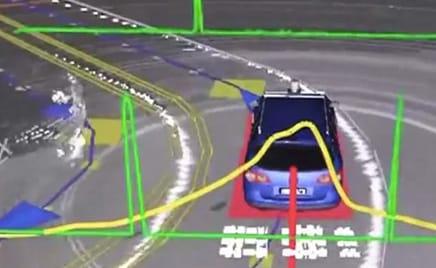
Learn how to program all the major systems of a robotic car. Topics include planning, search, localization, tracking, and control. Learn how to program all the major systems of a robotic car from the leader of Google and Stanford's autonomous driving teams. This class will teach you basic methods in Artificial Intelligence, including: probabilistic inference, planning and search, localization, tracking and control, all with a focus on robotics. Extensive programming examples and assignments will apply these methods in the context of building self-driving cars.

Self Paced
Self-Paced
Introduction to Large Language Models with Google Cloud (Udacity) Udacity
Udacity,Google Cloud

Introduction to Large Language Models with Google Cloud (Udacity)

Learn how large language models can be utilized and how you can use prompt tuning to enhance LLM performance. This is an introductory level course that explores what large language models (LLM) are, the use cases where they can be utilized, and how you can use prompt tuning to enhance LLM performance. It also covers Google tools to help you develop your own Gen AI apps. Most students will be able to complete this course in under an hour.

Self Paced
Self-Paced
Internet of Things: Multimedia Technologies (Coursera) Coursera
University of California, San Diego

Internet of Things: Multimedia Technologies (Coursera)

Content is an eminent example of the features that contributed to the success of wireless Internet. Mobile platforms such as the Snapdragon™ processor have special hardware and software capabilities to make acquisition, processing and rendering of multimedia content efficient and cost-effective.

Sep 14th 2026
3 Weeks