IBM COBOL Basic Testing and Debugging (Coursera)

Offered by IBM, LearnQuest,
IBM COBOL Basic Testing and Debugging (Coursera)

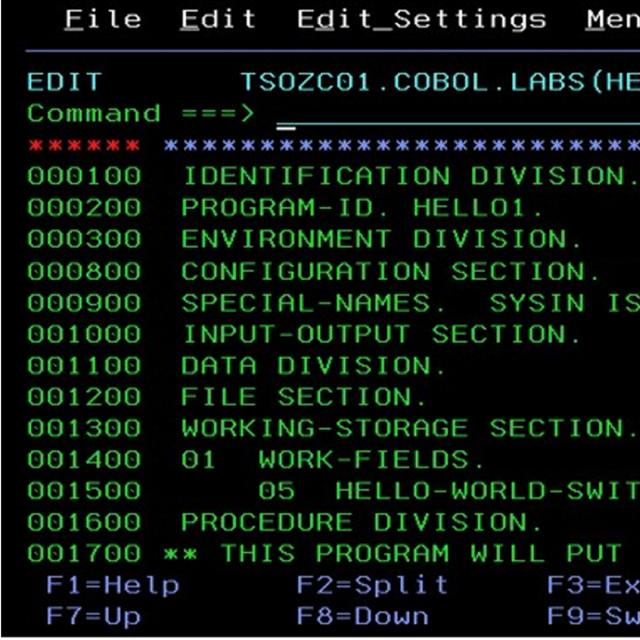
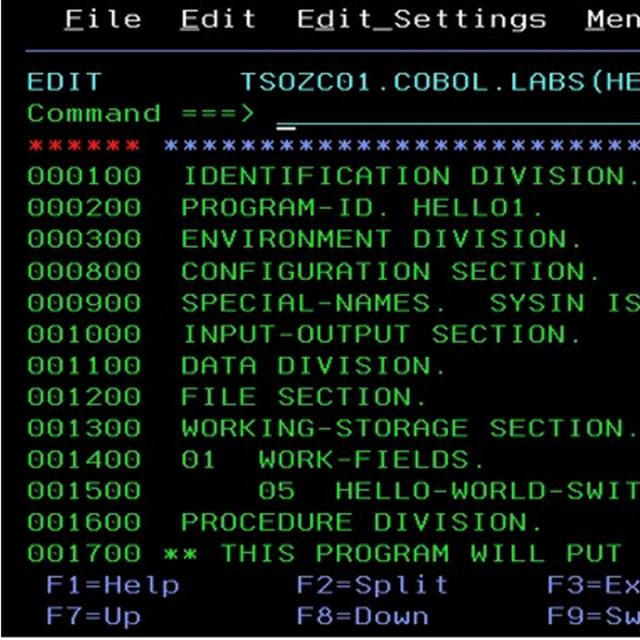
Welcome to IBM COBOL – Basic Testing and Debugging! By enrolling in this course, you are taking a big step in increasing your knowledge and hands on experience with IBM COBOL testing and debugging topics and technologies. In this course, you will describe common errors associated with working with COBOL. You will list file status codes. You will also describe the process of debugging COBOL code. So let’s get started!

Class Deals by MOOC List - Click here and see Coursera's Active Discounts, Deals, and Promo Codes.

Course 6 of 7 in the IBM Mainframe Developer.

Syllabus

WEEK 1
Welcome to IBM COBOL - Basic Testing and Debugging
In the first module of this course, we will welcome everyone to the course, present the course objectives, and define other pertinent course details.

WEEK 2
Common COBOL Errors
In the second module of the course, we will describe common errors associated with working with COBOL. By the end of this module, you will be able to define COBOL run-time errors; list file status codes; and describe common COBOL errors.

WEEK 3
Testing
In the third module of the course, we will describe core concepts and topics related to testing COBOL code. By the end of this module, you will identify COBOL compile options and their usage(s) within a testing context; describe mainframe unit testing; define the test drive development (TDD) methodology in a COBOL context.

WEEK 4
Debugging
In the fourth module of the course, we will describe the process of debugging COBOL code. By the end of this module, you will list concepts and topics related to detecting, diagnosing, and eliminating bugs; Describe COBOL debugging options; and describe the IBM z/OS Debugger and its core features and functionality.

WEEK 5
Congratulations on Completing to IBM COBOL - Basic Testing and Debugging
In this module, we'll congratulate everyone for completing the course, present the completed course objectives, and define other pertinent course details and next steps.

Go to Class
MOOC List is learner-supported. When you buy through links on our site, we may earn an affiliate commission.

Related Courses

Architecting Smart IoT Devices (Coursera) Coursera
EIT Digital

Architecting Smart IoT Devices (Coursera)

This course will teach you how to develop an embedded systems device. In order to reduce the time to market, many pre-made hardware and software components are available today. You'll discover all the available hardware and software components, such as processor families, operating systems, boards and networks. You'll also learn how to actually use and integrate these components.

Nov 16th 2026
5-12 Weeks
Server side JavaScript with Node.js (Coursera) Coursera
NIIT StackRoute

Server side JavaScript with Node.js (Coursera)

Have you ever wondered how you are able to do net banking or book a ticket online? Which technology is adopted for applications used in different businesses? Backend technology acts as a backbone to every web application. It typically includes all services, data interfaces and their core business logic. This course will introduce you to the Node.js environment and help you design and develop backend or server-side of the application. It also provides you with hands on coding exercises and will enable you to build JavaScript programs and test and execute them in the Node.js environment.

Nov 2nd 2026
5-12 Weeks
Introduction to Java Programming: Writing Good Code (edX) EdX
Universidad Carlos III de Madrid - UC3M,UC3Mx

Introduction to Java Programming: Writing Good Code (edX)

Learn to program in an easy and interactive way and enter the fascinating world of computer science. This is an introductory course to learn programming with Java designed to teach how to code good programs in Java, understanding “good” as both correct and efficient. Basic principles of software engineering will be introduced to make it easier for our future self and others to reuse code. Ethical issues and the intellectual property of our programs will also be addressed in the last part of this course. Examples and case studies will be provided, so that learners can implement simple but increasingly complex programs in Java.

Self Paced
Self-Paced
Computing in Python I: Fundamentals and Procedural Programming (edX) EdX
Georgia Institute of Technology,GTx

Computing in Python I: Fundamentals and Procedural Programming (edX)

Learn the fundamentals of computing in Python, including variables, operators, and writing and debugging your own programs. This course starts from the beginning, covering the basics of how a computer interprets lines of code; how to write programs, evaluate their output, and revise the code itself; how to work with variables and their changing values; and how to use mathematical, boolean, and relational operators.

Self Paced
Self-Paced
Software Engineering: Implementation and Testing (Coursera) Coursera
The Hong Kong University of Science and Technology - HKUST

Software Engineering: Implementation and Testing (Coursera)

Software Development Life Cycle (SDLC) is the process of developing software through planning, requirement analysis, design, implementation, testing, and maintenance. This course focuses on the implementation and testing phases of SDLC, and you will examine different software development processes for large software systems development, and understand the strengths (pros) and weaknesses (cons) of different software development processes.

Nov 9th 2026
5-12 Weeks
Introduction to Enterprise Computing (Coursera) Coursera
IBM

Introduction to Enterprise Computing (Coursera)

Large Scale Enterprise Computing powers all major transactions, and the Mainframe is responsible for 87% of all credit card transactions and enables 71% of all Fortune 500 companies. Mainframes are fundamental on how we do business, and IBM Z is the only production mainframe sold today. Virtually everyone depends on it. This is your introduction to the hardware, operating systems, security, and features that make this possible.

Nov 9th 2026
3 Weeks
Advanced React (Coursera) Coursera
Meta

Advanced React (Coursera)

Learn how to use more advanced React concepts and features, optimize and debug your React applications, and become proficient in using React Bootstrap and JSX. You’ll examine different types of React components, learn various characteristics and when to use them. You’ll start working with hooks, effects and other functional components. You’ll find out how routing is used in React to customize the users' experience, you’ll create a web application that consumes API data, and you'll get familiar with the most commonly used React framework integrations, tools, and debugging approaches.

Nov 2nd 2026
4 Weeks
Python Data Representations (Coursera) Coursera
Rice University

Python Data Representations (Coursera)

This course will continue the introduction to Python programming that started with Python Programming Essentials. We'll learn about different data representations, including strings, lists, and tuples, that form the core of all Python programs. We will also teach you how to access files, which will allow you to store and retrieve data within your programs. These concepts and skills will help you to manipulate data and write more complex Python programs.

Nov 2nd 2026
4 Weeks
Moving, Shooting, and Debugging in GameMaker (Coursera) Coursera
University of Colorado System

Moving, Shooting, and Debugging in GameMaker (Coursera)

This course is the second course in the specialization about learning how to develop video games using GameMaker on Windows or Mac. Why use GameMaker instead of using C# and Unity or C++ and Unreal*? Learning to develop games with GameMaker is much easier than learning to program in C# or C++ AND learning Unity or Unreal. If you just want to continue learning how to develop games in a more "gentle" way, this is a great starting point.

Nov 9th 2026
4 Weeks
Introduction to Visual Basic Programming (Coursera) Coursera
LearnQuest

Introduction to Visual Basic Programming (Coursera)

This course is the second course in a series that aims to prepare you for a role working as a programmer. In this course, you will be introduced to the five main concepts in procedural programming: user input, console output, variable declaration and assignment, decision branching and iteration. Labs will allow the students to apply the material in the lectures in simple computer programs designed to re-enforce the material in the lesson.

Nov 2nd 2026
4 Weeks
IBM COBOL Software Development Practices (Coursera) Coursera
IBM,LearnQuest

IBM COBOL Software Development Practices (Coursera)

This course is aimed at anybody interested in COBOL or or software development. In this course, you will be introduced to core practices, systems, and methodologies associated with IBM COBOL software development. You will learn about COBOL as a self-documenting language. You will review working with existing coding. This course also covers quality assurance (QA), technical support and project management.

Nov 2nd 2026
3 Weeks