Moving, Shooting, and Debugging in GameMaker (Coursera)

Moving, Shooting, and Debugging in GameMaker (Coursera)

This course is the second course in the specialization about learning how to develop video games using GameMaker on Windows or Mac. Why use GameMaker instead of using C# and Unity or C++ and Unreal*? Learning to develop games with GameMaker is much easier than learning to program in C# or C++ AND learning Unity or Unreal. If you just want to continue learning how to develop games in a more "gentle" way, this is a great starting point.

Class Deals by MOOC List - Click here and see Coursera's Active Discounts, Deals, and Promo Codes.

This course assumes you have the prerequisite knowledge from the previous course in the specialization. You should make sure you have that knowledge, either by taking that previous course or from personal experience, before tackling this course. Throughout this course you'll continue building your foundational GameMaker knowledge by exploring more GameMaker and game development topics.
Module 1: Learn how to implement player and movement and learn about collision masks
Module 2: Learn how to shoot projectiles and control firing rate
Module 3: Learn how to debug both Visual games and Code games
Module 4: Learn how to add health to your games

  • I do have Coursera Specializations called C# Programming for Unity Game Development and C++ Programming for Unreal Game Development for those more advanced topics.

This course is part of the Game Development with GameMaker Specialization.

Syllabus

Player Movement
In this module, you'll learn how to move the player's avatar. You'll also learn how to clamp the avatar so it stays in the screen, and you'll learn about collision masks and bounding boxes.

Shooting
In this module, you'll learn how to add shooting to your games, including support for controlled firing rate and spam firing.

Debugging
In this module, you'll learn about the debugging process and you'll learn how to debug GML Visual and GML Code games.

Getting Healthy
In this module, you'll learn how to add health to your games, and you'll also learn how to make one object move toward (chase) another object.

Go to Class
MOOC List is learner-supported. When you buy through links on our site, we may earn an affiliate commission.

Related Courses

Gameplay en videojuegos (Coursera) Coursera
Universitat Autònoma de Barcelona

Gameplay en videojuegos (Coursera)

¿Cómo se estructura y funciona un programa de videojuego? Es lo que comúnmente se conoce como 'gameplay', y que constituirá nuestro núcleo de estudio en este curso. Su análisis detallado nos permitirá comprender su importancia, y qué funcionalidades debe tener. Analizaremos también la interface gráfica del usuario (GUI), que finalmente condiciona el hecho de que el jugador pueda interaccionar correctamente con el videojuego. Para definir y comprender mejor los conceptos se usan ejemplos y referentes de videojuegos de la industria.

Sep 21st 2026
4 Weeks
An Introduction to Interactive Programming in Python (Part 2) (Coursera) Coursera
Rice University

An Introduction to Interactive Programming in Python (Part 2) (Coursera)

This two-part course is designed to help students with very little or no computing background learn the basics of building simple interactive applications. Our language of choice, Python, is an easy-to learn, high-level computer language that is used in many of the computational courses offered on Coursera. To make learning Python easy, we have developed a new browser-based programming environment that makes developing interactive applications in Python simple.

Oct 5th 2026
4 Weeks
Emprendimiento y métodos ágiles de desarrollo en videojuegos (Coursera) Coursera
Universidad de los Andes

Emprendimiento y métodos ágiles de desarrollo en videojuegos (Coursera)

¡Bienvenido al curso de emprendimiento y métodos ágiles de desarrollo en videojuegos! Este curso es parte del Programa Especializado Coursera en Diseño y Desarrollo de Videojuegos, en la cual aprenderás a diseñar y programar cierto tipo de videojuegos, aumentarás tu comprensión acerca del mercado actual de videojuegos y de lo que se requiere para crear un juego exitoso comercialmente.

Sep 28th 2026
5-12 Weeks
Planning, HUDs, and Spawners in GameMaker (Coursera) Coursera
University of Colorado System

Planning, HUDs, and Spawners in GameMaker (Coursera)

This course is the third course in the specialization about learning how to develop video games using GameMaker on Windows or Mac. Why use GameMaker instead of using C# and Unity or C++ and Unreal*? Learning to develop games with GameMaker is much easier than learning to program in C# or C++ AND learning Unity or Unreal. If you just want to continue learning how to develop games in a more "gentle" way, this is a great starting point.

Sep 28th 2026
4 Weeks
The Arduino Platform and C Programming (Coursera) Coursera
University of California, Irvine

The Arduino Platform and C Programming (Coursera)

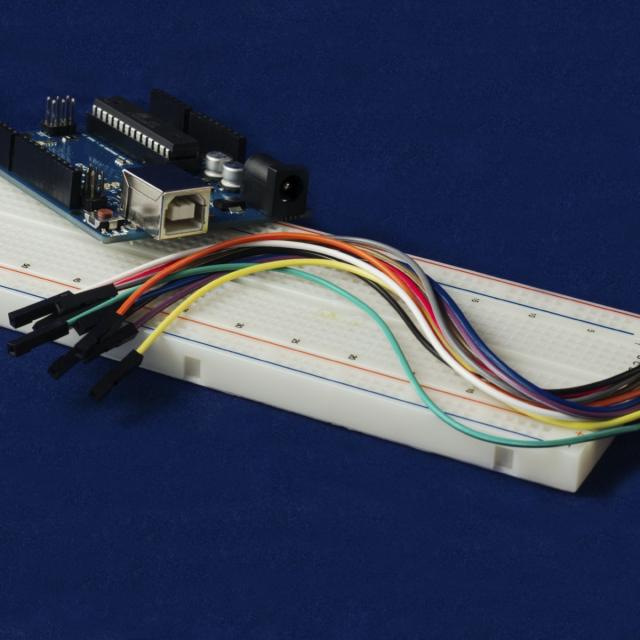
The Arduino is an open-source computer hardware/software platform for building digital devices and interactive objects that can sense and control the physical world around them. In this class you will learn how the Arduino platform works in terms of the physical board and libraries and the IDE (integrated development environment). You will also learn about shields, which are smaller boards that plug into the main Arduino board to perform other functions such as sensing light, heat, GPS tracking, or providing a user interface display. The course will also cover programming the Arduino using C code and accessing the pins on the board via the software to control external devices.

Sep 28th 2026
4 Weeks
Serious Gaming (Coursera) Coursera
Erasmus University Rotterdam

Serious Gaming (Coursera)

Have you ever wondered how playing games can help us to train people, deal with societal challenges or raise awareness of contemporary social issues? In this MOOC you will learn the ins and outs of games that are designed with exactly those purposes in mind: serious games. We will define serious games and discuss the different types that have been developed. We will explain why people like to play them and what impact they may have.

Oct 12th 2026
5-12 Weeks
Software Engineering: Implementation and Testing (Coursera) Coursera
The Hong Kong University of Science and Technology - HKUST

Software Engineering: Implementation and Testing (Coursera)

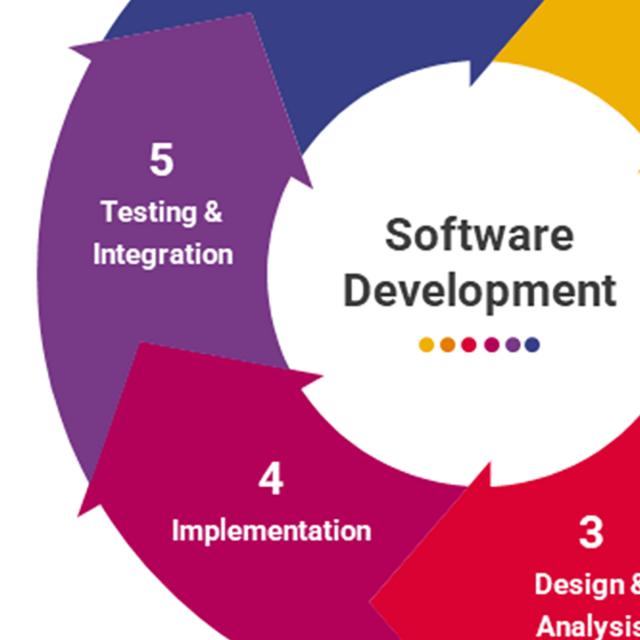
Software Development Life Cycle (SDLC) is the process of developing software through planning, requirement analysis, design, implementation, testing, and maintenance. This course focuses on the implementation and testing phases of SDLC, and you will examine different software development processes for large software systems development, and understand the strengths (pros) and weaknesses (cons) of different software development processes.

Sep 28th 2026
5-12 Weeks