EdX

Human Origins (edX)

Human Origins (edX)

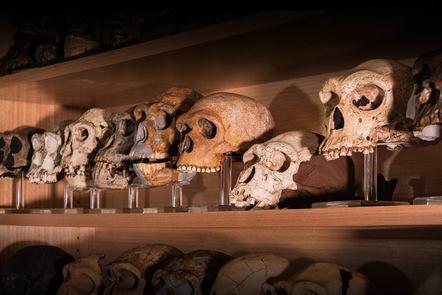
Explore the scientific evidence for human evolution, our fossil relatives, and the place of humankind in the natural world in this credit-eligible course. This course will guide you through an exploration of the scientific evidence for the evolution of humans and our fossil relatives and humankind’s place in the natural world. It includes an introduction to evolutionary theory, an overview of the hominin fossil record and what that record teaches us about our place in nature.

Class Deals by MOOC List - Click here and see EdX's Active Discounts, Deals, and Promo Codes.

Dr. Donald Johanson, a world-renowned paleoanthropologist who found the skeleton known as Lucy, will present an exciting in-depth exploration of paleoanthropological field research from his unique perspective.
This course satisfies the Social-behavioral sciences (SB) general studies requirement at Arizona State University. This course may satisfy a general education requirement at other institutions; however, it is strongly encouraged that you consult with your institution of choice to determine how these credits will be applied to their degree requirements prior to transferring the credit.

What you'll learn:

  • Outline the nature of science and explain how scientific research is conducted
  • Identify humans’ place in the natural world from taxonomic/phylogenetic perspectives
  • Define the role of paleoanthropologists in human origins research
  • Identify how paleoanthropologists use scientific method to formulate hypotheses and strategically conduct research
  • Articulate differences between scientific evidence for human evolution and non-scientific, non-testable, explanations for human origins
Note: This course is currently not available.

Related Courses

Evolution: A Course for Educators (Coursera) Coursera
American Museum of Natural History

Evolution: A Course for Educators (Coursera)

How are all of the species living on Earth today related? How does understanding evolutionary science contribute to our well-being? In this course, participants will learn about evolutionary relationships, population genetics, and natural and artificial selection. Participants will explore evolutionary science and learn how to integrate it into their classrooms.

Jun 1st 2026
4 Weeks
Understanding and Teaching Evolution (FutureLearn) FutureLearn
University of Bath

Understanding and Teaching Evolution (FutureLearn)

Learn key concepts in biological evolution and find out how to integrate them into the classroom. Find out how to teach evolution to 7–16 year olds. How does evolution happen? Can we observe it in real time? How do new species come about and how long does this take? When you think about evolution, you may think of Darwin, but modern genetics has transformed our understanding of how evolution happens. This course uses this new genetics-centred approach to explain key concepts in our scientific understanding of evolution.

Available Now
3 Weeks
A Question of Time: How We Date Human Evolution (FutureLearn) FutureLearn
Griffith University

A Question of Time: How We Date Human Evolution (FutureLearn)

Discover the role that dating human fossils plays in the reconstruction of human evolution: explore examples from around the world. Uncover the history of our ancestors by dating human fossils. Trace your origins and develop your understanding of human evolution, with this course from the world-leading experts at Griffith University.

No sessions available
2 Weeks
Introduction to Bioethics (edX) EdX
Georgetown University,GeorgetownX

Introduction to Bioethics (edX)

Introduction to Bioethics explores some of the most difficult - and fascinating - moral challenges we face in health, medicine, and emerging technologies. Should we clone humans? Who owns our DNA? How much control should we have over how and when we die? When does medical treatment turn into medical enhancement — and should we care? Is rationing health care good, bad, necessary — or all of the above? This course will explore fundamental moral issues that arise in medicine, health, and biotechnology.

No sessions available
13-24 Weeks
Was Alexander Great? The Life, Leadership, and Legacies of History’s Greatest Warrior (edX) EdX
Wellesley College,WellesleyX

Was Alexander Great? The Life, Leadership, and Legacies of History’s Greatest Warrior (edX)

Was Alexander Great? If so, how? If not, why not? This course explores the life, leadership, and legacies of history’s greatest warrior. Alexander the Great conquered most of the world known to the ancient Greeks, fused the eastern and western peoples of his empire, and became a god – before his 33rd birthday.

No sessions available
4 Weeks
Designing and Running Randomized Evaluations (edX) EdX
MIT,MITx

Designing and Running Randomized Evaluations (edX)

Learn how to both design randomized evaluations and implement them in the field to measure the impact of social programs. A randomized evaluation, also known as a randomized controlled trial (RCT), field experiment or field trial, is a type of impact evaluation that uses random assignment to allocate resources, run programs, or apply policies as part of the study design.

Sep 7th 2021
5-12 Weeks
Providing Harm Reduction Services for Drug Users and Sex Workers (edX) EdX
ZHAWx,ZHAW Zurich University of Applied Sciences

Providing Harm Reduction Services for Drug Users and Sex Workers (edX)

Learn the professional and methodological competencies for working with drug users and sex workers according to the principles of human rights. Did you ever ask yourself how the perspective of substance users and sex workers differs from your own? How can drug consumption rooms work, or how can sex work be practised in a self-determined manner? These and other questions will be explored in the MOOC «Harm Reduction Services for Drug Users and Sex Workers».

Mar 4th 2024
5-12 Weeks