FUN

At the heart of medical radioactivity (FUN)

Offered by Université de Nantes,
At the heart of medical radioactivity (FUN)

After a brief introduction on the physical basis of radioactivity, the MOOC "at the heart of medical radioactivity", will present in different stages the interest of medical radioactivity, from the design of a radiopharmaceutical to its use in the patient. The public objective of this MOOC is to demonstrate the medical use of radioactivity and its modalities.

This course lasts 6 weeks (including an introductory week) and is divided into 24 sequences. Each week 2 to 6 thematic sequences will be discussed. The sequences will be presented in the form of videos, and participants will have access to additional documents to better understand or deepen understanding of certain concepts. Participants will also have suggestions for additional lessons or videos to view (outside the FUN platform).

Course plan

Week 0 : Introduction to the MOOC
Ep#1: History of Nuclear Medicine
Ep#2: Medical use of ionizing radiation

Week 1 : What is Radioactivity?
Ep#1: Journey to the heart of matter
Ep#2: The Origins of Radioactivity
Ep#3: The Different Types of Radioactivity
Ep#4: Concepts in Radiobiology

Week 2 : Production of Radioactive Isotopes
Ep#1: Cyclotron production: The example of fluorine-18
Ep#2: Cyclotron production: The example of Astatine-211
Ep#3: The Neutron Reactor: Example of iodine-131 production
Ep#4: Generator production: Example of metastable Technetium-99

Week 3 : Radiopharmaceuticals: Definition and Mode of Action
Ep#1: What is a radiopharmaceutical?
Ep#2: How radiopharmaceuticals work: The concept of molecular targeting
Ep#3: Radiopharmaceuticals for diagnostic applications
Ep#4: Radiopharmaceuticals for Therapeutic Applications

Week 4 : Medical Applications
Ep#1: Patient pathway - Diagnostic tests in conventional nuclear medicine: an example of bone and myocardial scintigraphy
Ep#2: Patient pathway - Diagnostic Tests using Positron Emission Tomography: Example of FDG PET
Ep#3: Patient pathway - Therapeutic Applications: An Example of Iodine-131 radiotherapy
Ep#4: Contribution of nuclear medicine to personalized medicine
Ep#5: Contribution of Nuclear Medicine in the management of breast cancer
Ep#6: Use of ionizing radiation in external radiotherapy

Week 5 : Radioprotection
Ep#1: Radiation protection: Regulatory framework and theoretical data
Ep#2: Practical radiation protection
Ep#3: Perception of radioactivity, theoretical data
Ep#4: The hospitalization experience in a shielded room of patients with thyroid cancer treated with iodine-131

Go to Class
MOOC List is learner-supported. When you buy through links on our site, we may earn an affiliate commission.

Related Courses

Agir pour sa santé ! (FUN) FUN
Université de Liège

Agir pour sa santé ! (FUN)

Etre en bonne santé, ce n’est pas un secret, ça nous permet de profiter plus longtemps d’une vie de qualité. Mais pour rester en bonne santé, il faut agir et ce n’est pas qu’une question de motivation! Il existe des dizaines de comportements de santé : mettre de la crème solaire, manger sainement, porter un casque à vélo, boire régulièrement de l’eau, ou encore pratiquer une activité physique régulière. Mais qu’est-ce qui explique que nous réalisons certaines de ces actions et pas d’autres ? Pourquoi est-ce si difficile de changer ses comportements ? L’objectif de ce cours sera de vous aider à mieux comprendre les mécanismes qui influencent notre motivation et les outils qui peuvent faciliter le passage de l’intention au comportement de santé.

Oct 10th 2022
5-12 Weeks
Introduction to Dental Medicine (Coursera) Coursera
University of Pennsylvania

Introduction to Dental Medicine (Coursera)

The mouth is the window into human health. This course provides an overview of dental medicine to engage, educate, excite and assist you in improving the oral health of your patients and members of your community. We will review topics in dental medicine including scope of the field, what to expect in function, and some of the many ways that dysfunction may present for different patients.

Oct 5th 2026
5-12 Weeks
PrEParing: PrEP for Providers and Patients (Coursera) Coursera
Johns Hopkins University

PrEParing: PrEP for Providers and Patients (Coursera)

Pre-Exposure Prophylaxis (PrEP) using the antiretroviral medication emtricitibine/tenofovir approved in countries around the world is a highly effective means of reducing transmission of HIV through sexual encounters and needle sharing. This Johns Hopkins University course PrEPares you with essential information, concepts and practical advice regarding PrEP from leaders in the field. A first of its kind learning opportunity, both providers and patients learn from the same experts through content that meets the needs of both audiences, while facilitating the opportunity for a shared community space.

Oct 12th 2026
5-12 Weeks
MOOC PRE-ECLAMPSIE (FUN) FUN
Université Sorbonne Paris Cité

MOOC PRE-ECLAMPSIE (FUN)

Ce MOOC propose une mise à jour des connaissances sur la pré-éclampsie et a pour but de vous faire connaitre les dernières nouveautés dans ce domaine. La pré-éclampsie est une des principales complications de la grossesse, pouvant avoir des conséquences graves pour la mère comme pour le fœtus. Les outils et les modalités de prise en charge évoluent régulièrement, et nécessitent une constante mise à jour des connaissances des professionnels de santé.

No session available
5-12 Weeks
Psychological First Aid (Coursera) Coursera
Johns Hopkins University

Psychological First Aid (Coursera)

Learn to provide psychological first aid to people in an emergency by employing the RAPID model: Reflective listening, Assessment of needs, Prioritization, Intervention, and Disposition. Utilizing the RAPID model (Reflective listening, Assessment of needs, Prioritization, Intervention, and Disposition), this specialized course provides perspectives on injuries and trauma that are beyond those physical in nature. The RAPID model is readily applicable to public health settings, the workplace, the military, faith-based organizations, mass disaster venues, and even the demands of more commonplace critical events, e.g., dealing with the psychological aftermath of accidents, robberies, suicide, homicide, or community violence.

Oct 5th 2026
5-12 Weeks
"Care for carers" Aider une personne âgée : un rôle à part entière. Conseils et soutien (FUN) FUN
Université Fédérale Toulouse Midi-Pyrénées

"Care for carers" Aider une personne âgée : un rôle à part entière. Conseils et soutien (FUN)

This course is entended for anyone engaged in a care relationship with older people in disability or dependency situations, whether formal or informal caregivers. This module is part of Care Campus, a unique partner ship of academic institutions companies cities and governemental agencies that aim to improve the quality of care of older citizens in Europe.

No sessions available
5-12 Weeks
Sustainable Food Production Through Livestock Health Management (Coursera) Coursera
University of Illinois at Urbana-Champaign

Sustainable Food Production Through Livestock Health Management (Coursera)

Learn about the impact of infectious disease on sustainable animal-based food production by understanding the science of growth, immunity, and infection and by learning the problem-solving skills needed to advance animal health and food production through optimal management practices. In this course we will explore the effect of infectious disease on sustainable animal-based food production. The content and learning outcomes of this new course will be designed to be relevant across different food production sectors (i.e., beef, dairy, poultry, and pigs).

Oct 5th 2026
5-12 Weeks
Comprendre les addictions (FUN) FUN
Université Paris-Sud

Comprendre les addictions (FUN)

Responsables de 20% des causes de mortalité et de 50% des faits de délinquance, les addictions constituent un problème majeur de santé et de sécurité publique qui concerne de près ou de loin quasiment toutes les familles, comme l'ensemble de la société civile. Les addictions contemporaines comportent de multiples facettes : au-delà des problèmes liés à l'alcool, à l’héroïne ou la cocaïne il faut désormais y inclure : les consommations excessives chez les jeunes (cannabis, " binge drinking " ...), l'émergence des nouvelles drogues, les conduites addictives dans les entreprises et les addictions sans produit (jeux d'argent, internet, sexe, achats compulsifs ...). L'attention portée aux questions d'addictions et les données de la science ont considérablement progressé et ont permis l'émergence et l'essor de l’Addictologie.

No sessions available
5-12 Weeks
Défis énergétiques et risques sanitaires dans les transports (FUN) FUN
le cnam

Défis énergétiques et risques sanitaires dans les transports (FUN)

Savez-vous comment fonctionne un moteur de voiture ou d'avion ? Pensez-vous qu'un moteur à essence pollue moins qu'un moteur diesel ? Croyez-vous que le respect de l'environnement passe par les voitures électriques ? Qu'en est-il de l'avion, du train, du bateau ? Ce Mooc labellisé "COP22" traite toutes ces questions. Il aborde les défis énergétiques et sanitaires à relever dans le domaine des transports : la nécessité d'améliorer l'efficacité énergétique des systèmes de production d'énergie, l'impact des émissions de polluants sur la santé, le déséquilibre climatique ...

No sessions available
5-12 Weeks
De l'atome à l'humain : à la racine des mots scientifiques (FUN) FUN
Université de Lorraine

De l'atome à l'humain : à la racine des mots scientifiques (FUN)

Ce cours en ligne gratuit porte donc sur l’étymologie du vocabulaire scientifique et médical. Il s’adresse aux lycéens se préparant à la PACES, aux formations paramédicales, aux études scientifiques, aux STAPS... Il s’adresse également aux étudiants de ces différentes filières, ainsi qu’à toute personne intéressée par l’étymologie.

Sep 27th 2021
4 Weeks
Introduction to Systems Biology (Coursera) Coursera
Icahn School of Medicine at Mount Sinai

Introduction to Systems Biology (Coursera)

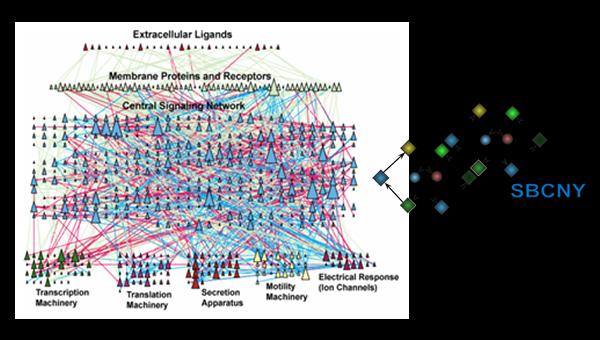
This course will introduce the student to contemporary Systems Biology focused on mammalian cells, their constituents and their functions. Biology is moving from molecular to modular. As our knowledge of our genome and gene expression deepens and we develop lists of molecules (proteins, lipids, ions) involved in cellular processes, we need to understand how these molecules interact with each other to form modules that act as discrete functional systems.

Oct 5th 2026
5-12 Weeks