Getting Started with Git and GitHub (Coursera)

Offered by IBM,
Getting Started with Git and GitHub (Coursera)

Get started with Git and GitHub in this self-paced, introductory course! You’ll become familiar with collaborative version control and popular Git platforms. Collaboration and social coding are crucial parts of contemporary Software Engineering practices and the DevOps culture.

Class Deals by MOOC List - Click here and see Coursera's Active Discounts, Deals, and Promo Codes.

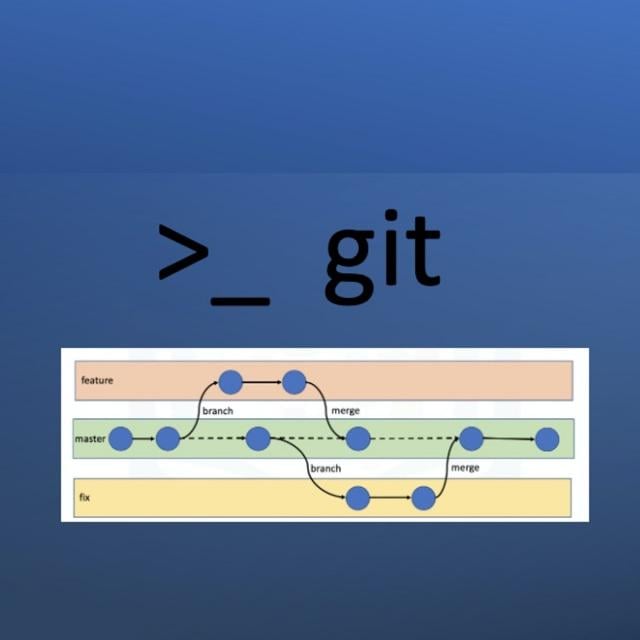
You will begin this course with an overview of Git and Github fundamentals and explore key Git concepts such as branching and repositories, as well as the use of Git commands. You will also learn and practice various Git concepts such as forking, cloning and merging workflows using hands-on labs. And you’ll learn to use GitHub to work effectively as a team, and perform common Git operations, such as Pull Requests, from both the Web UI and command line.
The course wraps up with a final project where you will start building your portfolio by creating and sharing a public/open-source GitHub project. By completing this course you will demonstrate your Git and Github skills as well as add a project to your resume!
All hands-on activities in this course can be performed using web-browser based tools and interfaces. Installation of any specialized software is NOT required on your own computer in order to complete the course.
This course is part of the following programs:

What You Will Learn

  • Describe version control and its place in social and collaborative coding and in DevOps.
  • Explain basic Git concepts such as repositories, branches, and project management.
  • Use GitHub and Git commands to collaborate on a team project.
  • Build your portfolio by creating and sharing an open-source project on GitHub.

Syllabus

Git and GitHub Fundamentals
Application developers rarely work alone. Large web/cloud/mobile development and data science projects will include many people – front-end developers, back-end developers, database administrators, repository administrators, and others. Every change by every contributor must be tracked and controlled to enable collaboration, accountability and version management. This type of distributed version control is extremely important when managing both small and large software projects. In this module you will learn about some of the popular version control tools, create a GitHub account and use the GitHub web interface to create a repository, add a file to it and commit your changes.

Using Git Commands and Managing GitHub Projects
Branches are the heart of workflows in Git-based version control systems like GitHub. In this module you will become familiar with creating and using branches, and merging your changes to the main branch with Pull Requests. As you start working with GitHub repositories and automating workflows, using the web interface can be limiting and more time-consuming. This is where Git commands come in. You can use from your own desktop or a Cloud IDE - wherever you develop your code. In this module you will also become familiar with and utilize various Git commands to clone and fork repositories, as well as commit, push and pull your changes using the command line.

Final Project
Now that you are familiar working with GitHub repositories, Branches, and Git commands, in this final project you will apply your knowledge and skills to create a GitHub Project, add few files to it such as an open-source license, and share it publicly.

Go to Class
MOOC List is learner-supported. When you buy through links on our site, we may earn an affiliate commission.

Related Courses

Introduction to HTML, CSS, & JavaScript (Coursera) Coursera
IBM

Introduction to HTML, CSS, & JavaScript (Coursera)

Want to take the first steps to become a Web Developer? This course will help you discover the languages, frameworks, and tools that you will need to create interactive and engaging websites right from the beginning. You will begin by learning about the roles of front-end, back-end, and full-stack developers and how they work together on development projects. Through this, you will also become familiar with the terminology and skills needed in your career as a web developer.

Sep 21st 2026
4 Weeks
Learn HTML and CSS (Coursera) Coursera
Scrimba

Learn HTML and CSS (Coursera)

This course is perfect if you want to learn how to code websites from scratch. You will learn the basics of HTML and CSS through interactive challenges. Along the way, you will build multiple projects, like a Google.com clone, a Space Exploration page, and a fun birthday site filled with GIFs. While most of the challenges are done in Scrimba's interactive editor, you will also learn how to use professional tools like VS Code for code editing, GitHub for hosting your code, and Netlify for deploying your projects to the world wide web.

Sep 14th 2026
5-12 Weeks
Advanced Reproducibility in Cancer Informatics (Coursera) Coursera
Johns Hopkins University

Advanced Reproducibility in Cancer Informatics (Coursera)

This course introduces tools that help enhance reproducibility and replicability in the context of cancer informatics. It uses hands-on exercises to demonstrate in practical terms how to get acquainted with these tools but is by no means meant to be a comprehensive dive into these tools. The course introduces tools and their concepts such as git and GitHub, code review, Docker, and GitHub actions.

Sep 14th 2026
5-12 Weeks
DevOps Capstone Project (Coursera) Coursera
IBM

DevOps Capstone Project (Coursera)

In this course you will apply your skills and knowledge acquired during previous courses in the PC to demonstrate your proficiency in DevOps practices by developing, testing, deploying, monitoring, and enhancing a secure microservices-based application on Cloud, over the course of several sprints, using a variety of Agile, Cloud Native, and CI/CD technologies and tools.

Sep 21st 2026
5-12 Weeks
CI/CD for Software Developers (Coursera) Coursera
Codio

CI/CD for Software Developers (Coursera)

This course is designed as an intermediate introduction to CI/CD. You will learn about the basics of automating processes and version control. This course uses GitHub, and you will need to have an account with them. Information is provided how to do this. Learners also use CI/CD to build, test, and check the quality of their code. The course ends with deployment, secrets, and a capstone.

Sep 14th 2026
3 Weeks
Continuous Integration (Coursera) Coursera
University of California, Davis

Continuous Integration (Coursera)

In today's world, software development is highly complex and often has large teams of developers working on small pieces of a larger software project. This course will go over the basic principles of using a continuous integration system effectively to constantly improve software. We're going to describe the different stations of continuous test, build, integration and deploy processes required for DevOps practices and apply best practices for quality software management, and tooling to accomplish iterative software build & test processes.

Sep 21st 2026
4 Weeks
Designing User Interfaces and Experiences (UI/UX) (Coursera) Coursera
IBM

Designing User Interfaces and Experiences (UI/UX) (Coursera)

UI and UX design is a thriving industry with numerous prospects for anyone with the right skills. This course is designed for those who are interested in starting a career in designing UI and UX experiences as well as developers who want to create web and front-end applications. It emphasizes the key concepts, tools, and methodologies used in front-end development.

Sep 21st 2026
4 Weeks
Essential Tools For Application Development (Coursera) Coursera
LearnQuest

Essential Tools For Application Development (Coursera)

In Essential Tools, we will look at two important classes of tools for developers: Version Control Systems and Built Automation Tools. We will look why we use such tools, discuss common concepts for those categories of tools, and then look at a specific and common example of each: Apache® Subversion® for version control, and Apache® Maven™ for build automation.

Sep 21st 2026
2 Weeks
The Data Scientist's Toolbox (Coursera) Coursera
Johns Hopkins University

The Data Scientist's Toolbox (Coursera)

In this course you will get an introduction to the main tools and ideas in the data scientist's toolbox. The course gives an overview of the data, questions, and tools that data analysts and data scientists work with. There are two components to this course. The first is a conceptual introduction to the ideas behind turning data into actionable knowledge. The second is a practical introduction to the tools that will be used in the program like version control, markdown, git, GitHub, R, and RStudio.

Sep 14th 2026
4 Weeks