General Chemistry I (saylor.org)

Offered by Saylor.org,
General Chemistry I (saylor.org)

This chemistry survey is designed to introduce students to the world of chemistry. The principles of chemistry were first identified, studied, and applied by ancient Egyptians in order to extract metal from ores, make alcoholic beverages, glaze pottery, turn fat into soap, and much more.

What began as a quest to build better weapons or create potions capable of ensuring everlasting life has since become the foundation of modern science. Take a look around you: chemistry makes up almost everything you touch, see, and feel, from the shampoo you used this morning to the plastic container that holds your lunch. In this course, we will study chemistry from the ground up, learning the basics of the atom and its behavior. We will use this knowledge to understand the chemical properties of matter and the changes and reactions that take place in all types of matter.

Go to Class
MOOC List is learner-supported. When you buy through links on our site, we may earn an affiliate commission.

Related Courses

Quantum Mechanics (Coursera) Coursera
University of Colorado Boulder

Quantum Mechanics (Coursera)

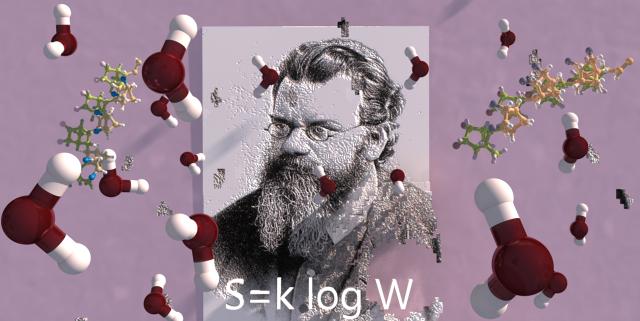
Course 2 of Statistical Thermodynamics presents an introduction to quantum mechanics at a level appropriate for those with mechanical or aerospace engineering backgrounds. Using a postulatory approach that describes the steps to follow, the Schrodinger wave equation is derived and simple solutions obtained that illustrate atomic and molecular structural behavior. More realistic behavior is also explored along with modern quantum chemistry numerical solution methods for solving the wave equation.

May 25th 2026
3 Weeks
Beer Quality: Foam (Coursera) Coursera
University of California, Davis

Beer Quality: Foam (Coursera)

As it is one of the most distinctive qualities of beer, achieving the perfect foam is a precise art. In this course, you’ll learn how foam affects the quality of beer. Designed for brewers of all skill levels, this online course is part of a comprehensive series where "The Pope of Foam”, Charlie Bamforth, guides you through the key markers of beer quality: flavor, foam, color/clarity, freshness and quality systems.

Jun 1st 2026
4 Weeks
Nanotechnology and Nanosensors, Part 2 (Coursera) Coursera
Technion - Israel Institute of Technology

Nanotechnology and Nanosensors, Part 2 (Coursera)

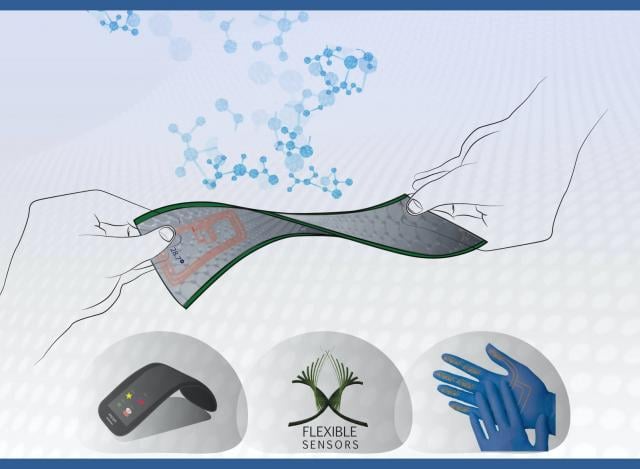
Learn about novel sensing tools that make use of nanotechnology to screen, detect and monitor various events in personal or professional life. Together, we will lay the groundwork for infinite innovative applications, starting from diagnosis and treatments of diseases, continuing with quality control of goods and environmental aspects, and ending with monitoring security issues.

May 18th 2026
5-12 Weeks
Beer Quality: Flavor (Coursera) Coursera
University of California, Davis

Beer Quality: Flavor (Coursera)

In this second course of the Beer Quality Series, you will learn about factors influencing the perception of flavor and the molecules that influence flavor. We also review methods of evaluating and measuring flavor, as well as methods of modifying flavor.

Jun 1st 2026
4 Weeks
Symptom Management in Palliative Care (Coursera) Coursera
Stanford University

Symptom Management in Palliative Care (Coursera)

This course should be taken after the Essentials of Palliative Care course and continues building your primary palliative care skills – communication, psychosocial support and goals of care. You will learn how to screen, assess, and manage both physical and psychological symptoms. You will explore common symptoms such as pain, nausea, fatigue, and distress and learn specific treatments.

May 25th 2026
4 Weeks
Introduction to Systems Biology (Coursera) Coursera
Icahn School of Medicine at Mount Sinai

Introduction to Systems Biology (Coursera)

This course will introduce the student to contemporary Systems Biology focused on mammalian cells, their constituents and their functions. Biology is moving from molecular to modular. As our knowledge of our genome and gene expression deepens and we develop lists of molecules (proteins, lipids, ions) involved in cellular processes, we need to understand how these molecules interact with each other to form modules that act as discrete functional systems.

May 18th 2026
5-12 Weeks
Thermodynamique : fondements (Coursera) Coursera
École Polytechnique Fédérale de Lausanne

Thermodynamique : fondements (Coursera)

Ce cours vous apportera une compréhension des concepts fondamentaux de la thermodynamique du point de vue de la physique, de la chimie et de l’ingénierie. Il est scindé un deux MOOCs. Dans la première partie, le Professeur J.-Ph. Ansermet de l’EPFL et son collaborateur le Dr. Sylvain Bréchet ont rassemblé en quatre leçons tous les principes fondamentaux de la thermodynamique. La deuxième partie du MOOC illustre l’approche thermodynamique par une série d’applications présentées par des spécialistes provenant de diverses institutions partenaires du réseau RESCIF.

May 25th 2026
4 Weeks