EdX

Fundamentals of Manufacturing Processes (edX)

Offered by MIT, MITx,
Fundamentals of Manufacturing Processes (edX)

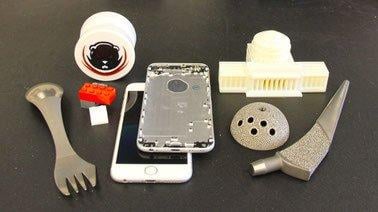
Study the processes used to manufacture products ranging from toys to smartphones, and learn fundamental principles and practical considerations that enable production at scale. Have you wondered how something was manufactured? Do you want to learn what it takes to turn your design into a finished product at scale? This course introduces a wide range of manufacturing processes including machining, injection molding, casing, and 3D printing; and explains the fundamental and practical aspects of manufacturing at scale.

Class Deals by MOOC List - Click here and see EdX's Active Discounts, Deals, and Promo Codes.

For each process, 2.008x explains the underlying physical principles, provides several examples and demonstrations, and summarizes design for manufacturing principles. Modules are also included on cost estimation, quality and variation, and sustainability. New content added in 2020 and 2021 includes 360 degree high-fidelity views of products, augmented reality product disassembly, and select updated lecture videos. Together, the content will enable you to design a manufacturing process for a multi-part product, make quantitative estimates of cost and throughput, and recognize important constraints and tradeoffs in manufacturing processes and systems. The course concludes with a perspective on sustainability, digitization, and the worldwide trajectory of manufacturing.

What you'll learn:

  • Manufacturing processes in detail: machining, injection molding, casting, thermoforming, sheet metal forming, 3D printing, electronics assembly, and more.

Overarching principles: rate, quality, cost, flexibility, sustainability.
Design for manufacturing principles, how to plan a multi-step manufacturing process, and important life-cycle considerations of mass-produced products.

Syllabus

Week 1: Introduction and Process Planning
An introduction to the scope and significance of manufacturing worldwide, followed by an overview of the structure of 2.008x and highlights of key topics. Then, a framework is presented for planning manufacturing processes, and for evaluating process performance based on four key attributes.

Week 2: Machining
This module describes machining, the most common process of material removal. Chapters address the mechanics of material deformation, estimates of material removal rate and cutting forces, practical aspects of turning and milling operations, and methods of machining advanced materials and complex parts.

Week 3: Injection Molding
Injection molding is the most widely used plastics manufacturing process. Chapters of this module describe the process physics, rate-limiting steps, process parameters, thermoplastic materials, mold tooling design, and guidelines for defect prevention. Examples include molding of toy bricks, cups, and plastic furniture.

Week 4: Thermoforming and Sheet Metal Forming
These modules address sheet forming of plastics and metals. Chapters describe the materials and process considerations, rate- and geometry-limiting aspects including springback and tearing, and explain various uses including manufacturing of plastic packaging and aluminum beverage cans. A supplement to the thermoforming module introduces other polymer forming processes including those for plastic bottles, bags, and large containers.

Week 5: Casting
This module introduces casting, whereby a metal part is made by solidification within a mold. Modules describe sand casting, die casting, and investment casting processes; rate-limiting steps and factors governing part microstructure, quality, and cost are also analyzed.

Week 6: Additive Manufacturing
We first introduce the spectrum of additive manufacturing (AM) technologies, its key applications, and reasons for its rapid growth and significance. Next, we focus in-depth on the three most prevalent AM processes: extrusion of polymers and composites (i.e., FFF/FDM), photopolymerization (i.e., stereolithography or SLA), and selective laser melting (SLM) of metals.

Week 7: Quality and Variation
This module explains basic statistical methods for analyzing, monitoring, and controlling process variation, including the use of control charts. The critical differences between variation, tolerances, and quality are explained; and principles of precision metrology are introduced.

Week 8: Manufacturing System
We will introduce probability theory and queuing theory, give analytical examples of simple manufacturing systems through the lens of critical concepts such as production rate, capacity, buffers, and offer simulations representative to the current state of the industry and case study examples.

Week 9: Manufacturing Cost
Understanding the cost of manufacturing a part or product, and its relationship to the process details and production volume, is essential to effective scale-up. This module presents a methodology for estimating manufacturing cost, and examples discuss the cost of making toy bricks, window glass, and smartphones.

Week 10: Sustainability and Robotics
First, we discuss the implications of the energy consumption of manufacturing, and of the product life cycle life cycle. Second, the robotics module introduces several types of robots used in manufacturing, compares their performance, and illustrates how robotics can improve production efficiency and quality.

Week 11: Electronics
This module will explain the process physics of microelectronics fabrication, and PCB manufacturing. We will explain techniques for assembling electronic components on to PCBs and discuss Cost, Rate, Quality, and Flexibility of different assembly techniques.

Go to Class
MOOC List is learner-supported. When you buy through links on our site, we may earn an affiliate commission.

Related Courses

Responsible Innovation: Ethics, Safety and Technology (edX) EdX
Delft University of Technology,DelftX

Responsible Innovation: Ethics, Safety and Technology (edX)

How to deal with risks and ethical questions raised by development of new technologies. There is no doubt that technological innovation is one of the key elements driving human progress. However, new technologies also raise ethical questions, have serious implications for society and the environment and pose new risks, often unknown and unknowable before the new technologies reach maturity.

This course is archived
5-12 Weeks
Introduction to Bioethics (edX) EdX
Georgetown University,GeorgetownX

Introduction to Bioethics (edX)

Introduction to Bioethics explores some of the most difficult - and fascinating - moral challenges we face in health, medicine, and emerging technologies. Should we clone humans? Who owns our DNA? How much control should we have over how and when we die? When does medical treatment turn into medical enhancement — and should we care? Is rationing health care good, bad, necessary — or all of the above? This course will explore fundamental moral issues that arise in medicine, health, and biotechnology.

No sessions available
13-24 Weeks
Micro and Nanofabrication (MEMS) (edX) EdX
École Polytechnique Fédérale de Lausanne,EPFLx

Micro and Nanofabrication (MEMS) (edX)

Learn the fundamentals of microfabrication and nanofabrication by using the most effective techniques in a cleanroom environment. Microfabrication and nanofabrication are the basis of manufacturing for nearly all modern miniaturized systems that are ubiquitously used in our daily life. Examples include; computer chips and integrated sensors for monitoring our environment, cars, mobile phones, medical devices and more.

Self Paced
Self-Paced
Entrepreneurship for Engineers (edX) EdX
Wageningen University,Delft University of Technology

Entrepreneurship for Engineers (edX)

A toolbox for building a technology startup from idea to execution. Are you an entrepreneur, or do you have a passion for building your own technology startup? This course will help and encourage you to start a successful technology-based venture. If you always wanted to become an entrepreneur, or if you are simply interested in putting a new technology to innovative use, this course is for you.

Self Paced
Self-Paced
Android: introducción a la programación (edX) EdX
Universitat Politècnica de València,UPValenciaX

Android: introducción a la programación (edX)

Desarrollaremos una aplicación de ejemplo, "Mis Lugares Favoritos", para conocer el entorno de desarrollo de Android y sus elementos. Android es la plataforma libre desarrollada por Google, ampliamente utilizada en multitud de dispositivos como móviles, tabletas, TV, wearables o sistemas empotrados. Su expansión ha sido espectacular, superando en la actualidad al S.O. Microsoft Windows.

Self Paced
Self-Paced
A Resilient Future: Science and Technology for Disaster Risk Reduction (edX) EdX
École Polytechnique Fédérale de Lausanne

A Resilient Future: Science and Technology for Disaster Risk Reduction (edX)

Discover how science and technology help us reduce disaster risk and increase resilience. This course aims to introduce participants to existing and emerging technologies suitable for disaster risk reduction while promoting the overall aim of sustainable development. The course focuses on three main natural hazards- floods, landslides and earthquakes. It also discusses the challenges and limits of adapting and adopting technologies depending on context (Global North and Global South) with examples from Switzerland, Nepal, Colombia, Philippines and other countries.

Self Paced
Self-Paced
The Einstein Revolution (edX) EdX
HarvardX,Harvard University

The Einstein Revolution (edX)

Traces Albert Einstein’s engagement with relativity, quantum mechanics, Nazism, nuclear weapons, philosophy, the arts, and technology. Albert Einstein has become the icon of modern science. Following his scientific, cultural, philosophical, and political trajectory, this course aims to track the changing role of physics in the 20th and 21st centuries.

Self Paced
Self-Paced
An Introduction to Evidence-Based Undergraduate STEM Teaching (edX) EdX
CornellX,Cornell University

An Introduction to Evidence-Based Undergraduate STEM Teaching (edX)

Learn how to implement evidence-based teaching strategies in your university classroom as well as effective methods for assessing teaching and learning. This course is designed to provide future STEM faculty, graduate students and post-doctoral fellows with an introduction to effective teaching strategies and the research that supports them.

Jun 17th 2024
5-12 Weeks
Autonomous Mobile Robots (edX) EdX
ETH Zurich,ETHx

Autonomous Mobile Robots (edX)

Basic concepts and algorithms for locomotion, perception, and intelligent navigation. Robots are rapidly evolving from factory workhorses, which are physically bound to their work-cells, to increasingly complex machines capable of performing challenging tasks in our daily environment. The objective of this course is to provide the basic concepts and algorithms required to develop mobile robots that act autonomously in complex environments.

Self Paced
Self-Paced
Innovation and Technology Management in Tourism and Hospitality (edX) EdX
The Hong Kong Polytechnic University,HKPolyUx

Innovation and Technology Management in Tourism and Hospitality (edX)

Learn about information and communication technologies [ICTs] and innovations in the hotel and tourism industries. Gain an in-depth understanding of the strategic applications of ICT (information and communication technologies) innovations in the hospitality and tourism industry. You will learn about the roles of ICT infrastructures and tools in shaping business environment, business models, marketing practices, revenue strategies, and customer services.

Apr 26th 2024
5-12 Weeks