Fundamentals of Immunology: Death by Friendly Fire (Coursera)

Offered by Rice University,
Fundamentals of Immunology: Death by Friendly Fire (Coursera)

Course 3 of a three course specialization called Fundamentals of Immunology. Each course in the specialization presents material that builds on the previous course's material. This is the third leg of the journey through the defenses your body uses to keep you healthy. In the first course we learned about innate immunity and B cell function. In the second course we studied T cell function and coordination of the immune response.

Class Deals by MOOC List - Click here and see Coursera's Active Discounts, Deals, and Promo Codes.

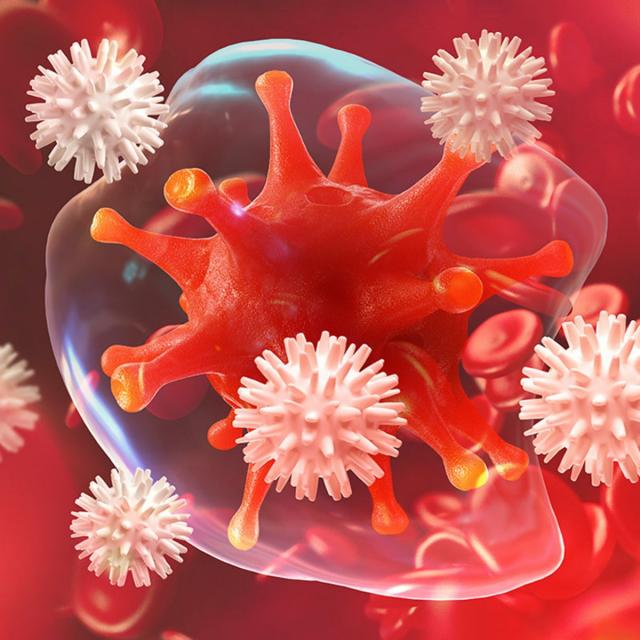
Fundamentals of Immunology: Death by Friendly Fire introduces students to the basic functions of the adaptive and innate immune systems. The early lectures survey cells, tissues and organs using metaphors, cartoons and models to improve understanding and retention. After describing the form, function, origin and varieties of antibodies, subsequent lectures provide details on the mechanism of the generation of variation. The course provides animations of gene rearrangement and class switching and descriptions of affinity maturation correlated with detailed physical models of antibody structure. The final lecture reviews these concepts in anatomical context. Testing employs multiple choice questions testing facts, concepts, and application of principles. Questions may refer to diagrams, drawing and photographs used in lecture and reproduced in the outline.
What You Will Learn
A survey of immune cells and how they attack pathogens, with emphasis on the mechanism of inducing apoptosis and details of Antibody Directed Cell-mediated Cytotoxicity. The inflammatory response and mechanisms of generating tolerance, presented in sequence to emphasize the decision making involved in controlling attacks. A survey of autoimmune disease, their characteristics, cause and treatment. Survey of hypersensitivity reactions, including allergy, anaphylaxis, anemias, granulomas, and a variety of skin responses. This is accompanied by identification, prevention and treatment. The final discussion of preventing transplant rejection is preceded by a detailed unit on antibody technology and the methods of testing for incompatibility.
Course 3 of 4 in the Fundamentals of Immunology Specialization.

Syllabus

WEEK 1: Cellular Immunity
WEEK 2: Inflamation
WEEK 3: Tolerance
WEEK 4: Autoimmunity
WEEK 5: Hypersensitivity
WEEK 6: Transplant Immunity
Go to Class
MOOC List is learner-supported. When you buy through links on our site, we may earn an affiliate commission.

Related Courses

Case Studies in Personalized Medicine (Coursera) Coursera
Vanderbilt University

Case Studies in Personalized Medicine (Coursera)

Learn how advances in biomedicine hold the potential to revolutionize drug development, drug treatments, and disease prevention: where are we now, and what does the future hold? This course will present short primers in genetics and mechanisms underlying variability in drug responses. A series of case studies will be used to illustrate principles of how genetics are being brought to bear on refining diagnoses and on personalizing treatment in rare and common diseases. The ethical and operational issues around how to implement large scale genomic sequencing in clinical practice will be addressed.

Aug 17th 2026
5-12 Weeks
Population Health: Fundamentals of Population Health Management (Coursera) Coursera
Leiden University

Population Health: Fundamentals of Population Health Management (Coursera)

What are the principles of Population Health Management as a pro-active management approach to improve health and to tackle health disparities? In this course we will discuss the basic principles of Population Health Management that will help you as (future) health care professional or policymaker to analyse current healthcare challenges and to design possible solutions using the Population Health Management Approach.

Aug 17th 2026
4 Weeks
Population Health: Syndemics (Coursera) Coursera
Leiden University

Population Health: Syndemics (Coursera)

Do you wish to contribute to breaking cycles of ill-health in disadvantaged populations? And explore co-occurrence of diseases, such as substance abuse, infectious and chronic disease, and the relation with social factors (disparities)? Are you disappointed in the poor effectiveness of interventions for combined social and medical problems? Then this syndemics course might provide you with some answers.

Aug 17th 2026
4 Weeks
Diabetes - a Global Challenge (Coursera) Coursera
University of Copenhagen

Diabetes - a Global Challenge (Coursera)

Diabetes and obesity are growing health problems in rich and poor countries alike. With this course you will get updated on cutting-edge diabetes and obesity research including biological, genetic and clinical aspects as well as prevention and epidemiology of diabetes and obesity. All lectures are provided by high-profile scientists from one the world's leading universities in diabetes research.

Aug 17th 2026
5-12 Weeks
The Brain and Space (Coursera) Coursera
Duke University

The Brain and Space (Coursera)

This course is about how the brain creates our sense of spatial location from a variety of sensory and motor sources, and how this spatial sense in turn shapes our cognitive abilities. Knowing where things are is effortless. But “under the hood,” your brain must figure out even the simplest of details about the world around you and your position in it.

Aug 17th 2026
5-12 Weeks
Career 911: Your Future Job in Medicine and Healthcare (Coursera) Coursera
Northwestern University

Career 911: Your Future Job in Medicine and Healthcare (Coursera)

This course aims to help high school students, recent graduates, and those considering career transitions explore health care career options and learn strategies for entry into the health care workforce and health related fields. There are lots of amazing job opportunities in medicine and healthcare! Join us, as we share the strategies and secrets for getting those jobs.

Aug 17th 2026
5-12 Weeks
Traditional herbal medicine in supportive cancer care: From alternative to integrative (Coursera) Coursera
Technion - Israel Institute of Technology

Traditional herbal medicine in supportive cancer care: From alternative to integrative (Coursera)

Please join us for an exciting and innovative journey, examining one of the most important and often overlooked aspects of the oncology setting: Traditional Herbal Medicine in Supportive Cancer Care. This course is presented with short lectures offering a wide range of issues related to the principles and practice of herbal medicine in cancer care.

Aug 17th 2026
13-24 Weeks
Clinical Kidney, Pancreas and Islet Transplantation (Coursera) Coursera
Leiden University,Leiden University Medical Center

Clinical Kidney, Pancreas and Islet Transplantation (Coursera)

Kidney transplantation is a major advance of modern medicine which provides high-quality of life for patients with end-stage renal disease. What used to be an experimental, risky, and very limited treatment option more than 50 years ago is now routinely performed in many countries worldwide. The number of renal transplants is expected to rise sharply in the next decade since the proportion of patients with end stage renal disease is increasing.

Aug 17th 2026
4 Weeks
Preventing Chronic Pain: A Human Systems Approach (Coursera) Coursera
University of Minnesota

Preventing Chronic Pain: A Human Systems Approach (Coursera)

Chronic pain is at epidemic levels and has become the highest-cost condition in health care. This course uses both creative and experiential learning to better understand chronic pain conditions and how they can be prevented through self-management in our cognitive, behavioral, physical, emotional, spiritual, social, and environmental realms.

Aug 17th 2026
5-12 Weeks
eHealth: More than just an electronic record (Coursera) Coursera
The University of Sydney

eHealth: More than just an electronic record (Coursera)

The MOOC, "eHealth: More than just an electronic record!", is multidisciplinary in nature, and aims to equip the global audience of health clinicians, students, managers, administrators, and researchers to reflect on the overall impact of eHealth on the integration of care. It explores the breadth of technology application, current and emerging trends, and showcases both local and international eHealth practice and research.

Aug 17th 2026
5-12 Weeks
How Music Can Change Your Life (Coursera) Coursera
University of Melbourne

How Music Can Change Your Life (Coursera)

Did you ever wonder how music works? This course provides free video, audio and journal resources that explain six basic principles about how music can influence individual and community health and wellbeing. From biology and neuroscience, to psychotherapy and politics, the ways we engage with music can make all the difference. Music has always played an integral role in the lives of individuals and communities all around the globe.

Aug 17th 2026
5-12 Weeks