Fundamentals of electron and ion microscopy (Coursera)

Fundamentals of electron and ion microscopy (Coursera)

Electron and ion microscopy techniques are the most widespread tools for imaging and investigation of structural and functional properties of solid and soft matter on micro- and nanoscale, which applications are very broad : material science, microelectronics, nanotechnology, biology, forensics science and many others. This course represents the fundamentals on the working principles of all main components of the modern microscopes such as electron and ion optics as well as diverse signal detectors, on the physics of the particle interaction with the matter and of the image formation in different operation modes.

Class Deals by MOOC List - Click here and see Coursera's Active Discounts, Deals, and Promo Codes.

The obtained knowledge will serve as basics for future practical usage of electron and ion microscopy as well as focused ion beam systems in various fields from basic research to industrial applications. A distinguished feature of the course is the consideration of both electron and ion beam technologies, which started to be rapidly growing due to the availability of recently industrially developed dual beam equipment, where these technologies are used jointly.

Syllabus

WEEK 1: General Topics in Electron and Ion Microscopy
WEEK 2: Scanning Electron Microscopy
WEEK 3: Transmission Electron Microscopy
WEEK 4: Scanning Ion Microscopy and Focused Ion Beams
WEEK 5: Analysis in Electron Microscopy

Go to Class
MOOC List is learner-supported. When you buy through links on our site, we may earn an affiliate commission.

Related Courses

Mastering bitumen for better roads and innovative applications (Coursera) Coursera
École des Ponts ParisTech

Mastering bitumen for better roads and innovative applications (Coursera)

During the four coming weeks, best experts in bitumen will bring you their knowledge and experience to build a strong understanding of today’s realities and new perspectives on the future of bitumen. Total is the European leader on bitumen markets. Innovation has always been the key to sustainability and durability in the products they develop. Their main objective here is to share technical knowledge and experience to insure bitumen are being used in the most effective and efficient ways for their different applications in road works.

Oct 5th 2026
4 Weeks
Frontier Physics, Future Technologies (FutureLearn) FutureLearn
University of York

Frontier Physics, Future Technologies (FutureLearn)

Expand your understanding of modern physics and discover how we can solve societal problems by developing future technologies. Explore the mysteries of the universe through cutting-edge physics. Physics is the most fundamental of the sciences. By studying the properties of energy and matter, physicists aim to explain the many mysteries of the universe.

Self Paced
3 Weeks
Cell Biology: The Cytoskeleton and Cell Cycle (edX) EdX
MIT,MITx

Cell Biology: The Cytoskeleton and Cell Cycle (edX)

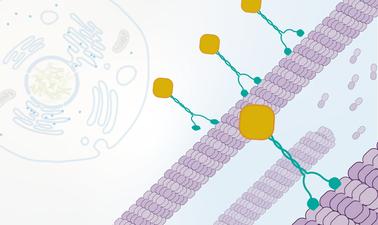
How do we know what we know about cells? Enhance your scientific thinking and data analysis skills with this in-depth adventure through cell biology. Do you think you know how cells grow and divide? Professor Iain Cheeseman will challenge you to see the cytoskeleton in new and beautiful ways. You will explore these structural elements of cells with an expanded toolkit to better understand the dynamic processes that generate incredible amounts of force and regulate function throughout the cell cycle.

Self Paced
Self-Paced
ImageInLife - Imaging the Vertebrate embryo: from biological material to modelling (FUN) FUN
Université de Montpellier

ImageInLife - Imaging the Vertebrate embryo: from biological material to modelling (FUN)

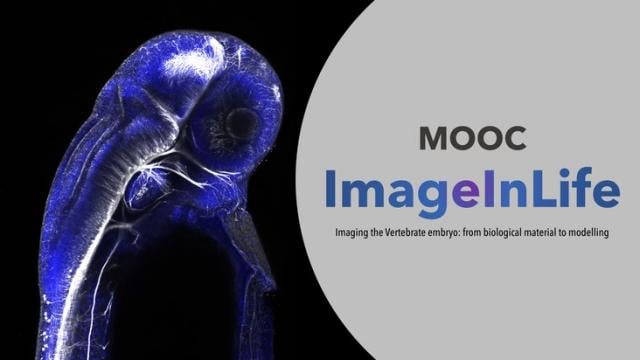
Microscopy technologies have progressed to such a point that it is now possible to image a developing vertebrate at the single cell resolution. Two main model species are being used for such studies, the zebrafish and the mouse. The present MOOC introduces the trainees to these two animal models, to the most modern microscopy technologies, to the use of high volume of data (images) and to the modelling of the studied processes. Trainees will also be introduced to the intravital study of viral infections.

Aug 24th 2021
5-12 Weeks
Fundamentals of Nanomaterials and Nanotechnology (edX) EdX
Purdue University,PurdueX

Fundamentals of Nanomaterials and Nanotechnology (edX)

Learn about the application of nanomaterials in civil and environmental engineering. This course will introduce students to the field of nanotechnology with a special emphasis on nanomaterials synthesis, characterizations and their applications in civil and environmental engineering. The specific applications will include, but not limited to, tailoring mechanical property, durability, self-cleaning, self-sealing, self-sensing, energy harvesting and other multi-functionality.

Aug 22nd 2022
5-12 Weeks
Histology: Using Microscopy to Study Anatomy and Identify Disease (FutureLearn) FutureLearn
The Open University

Histology: Using Microscopy to Study Anatomy and Identify Disease (FutureLearn)

Get an introduction to histology – the study of anatomy at a microscopic level – and find out how it is used to identify disease. Histology is a key part of modern medicine – it helps us study cells and tissues at a microscopic level, and accurately diagnose diseases such as cancer. This online course introduces the field. It starts with the basic principles of light microscopy, before focussing on the structure and function of human tissues, and the relationships between them.

No sessions available
4 Weeks
Renewable Energy: Fundamentals and Job Opportunities (Coursera) Coursera
University at Buffalo

Renewable Energy: Fundamentals and Job Opportunities (Coursera)

This course prepares you to recognize the complexities and nuances of different renewable energy solutions, as well as relevant career opportunities (both technical occupations and roles not typically associated with clean energy). Learners are immersed in discussions about green energy technologies, the impact of sustainability on society, energy consumption in the United States and conservation. Topics include: tenets of green building design and construction, solar energy conversion through photovoltaic cells, wind turbine site selection and design, and nanotechnology applications in clean energy.

Oct 5th 2026
5-12 Weeks
Nanotechnology: A Maker’s Course (Coursera) Coursera
Duke University,University of North Carolina,North Carolina State University

Nanotechnology: A Maker’s Course (Coursera)

How can we create nano-structures that are 10,000 times smaller than the diameter of a human hair? How can we “see” at the nano-scale? Through instruction and lab demonstrations, in this course you will obtain a rich understanding of the capabilities of nanotechnology tools, and how to use this equipment for nano-scale fabrication and characterization.

Oct 5th 2026
5-12 Weeks
Material Behavior (Coursera) Coursera
Georgia Institute of Technology

Material Behavior (Coursera)

Have you ever wondered why ceramics are hard and brittle while metals tend to be ductile? Why some materials conduct heat or electricity while others are insulators? Why adding just a small amount of carbon to iron results in an alloy that is so much stronger than the base metal? In this course, you will learn how a material’s properties are determined by the microstructure of the material, which is in turn determined by composition and the processing that the material has undergone.

Oct 5th 2026
5-12 Weeks
Introduction to Basic Vibrations (Coursera) Coursera
Korea Advanced Institute of Science and Technology - KAIST

Introduction to Basic Vibrations (Coursera)

Introduction to Basic Vibrations starts with the fundamental principle of vibrations with a single and double degree of freedom systems. These fundamental vibration systems provide a solid platform not only to understand general vibrations but also to apply or use them into simple mechanical problems.

Oct 5th 2026
5-12 Weeks