Free Will and Neuroscience (Coursera)

Offered by Dartmouth College,
Free Will and Neuroscience (Coursera)

In this course, we will discuss free will from a neuroscientific perspective. Module one of the course will explore two neuroscientific arguments against free will from Libet and Wegner and evaluate neuroscientists’ arguments against free will. You will also examine where these experiments do not succeed in debunking free will.

Class Deals by MOOC List - Click here and see Coursera's Active Discounts, Deals, and Promo Codes.

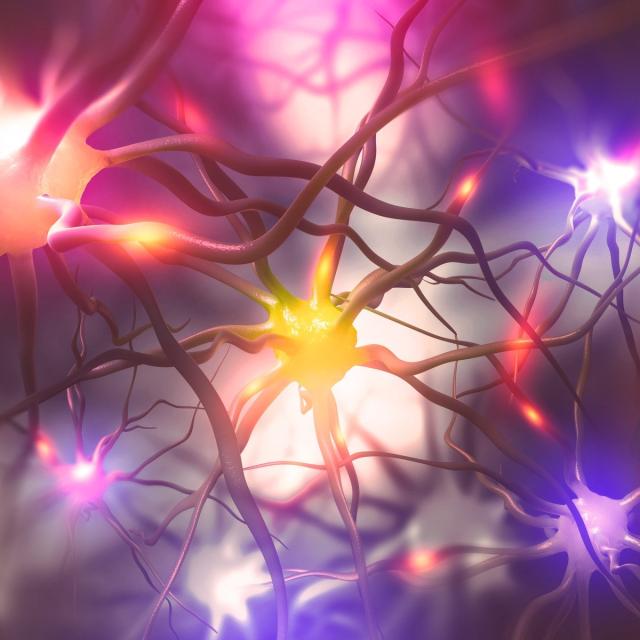
In module two, the anatomy and physiology of neurons will be described. You will also learn how they communicate. You will have an understanding about neural anatomy and physiology to consciousness, attention, and free will.
In the final and the third module of the course, you will explore an example of the top-down influence on bottom-up processing called volitional attention. You will see how neural circuits responsible for both volitional and non-volitional thought and action interact with each other. Next, you will learn how a neural circuit can change its physical structure and function, and how these changes might impact human behavior.
This course is part of the Libertarian Free Will Specialization.

Syllabus

Module 1: Neuroscientific Arguments Against Free Will
Module 1
This module explains neuroscientific arguments against free will including Libet experiment and Wegner's experiment.

Module 2: The Neuroscience of Free Will: Part 1
Module 2
This module deals with the neuroscientific aspects of free will including the structure and function of neuron, neural receptors, and concepts such as indeterminism. It also explains the top-down executive function of the brain.

The Neuroscience of Free Will: Part 2
Module 3
This module explores the concept of volition in the brain and further explores concepts such as the neural basis of mindfulness, volitional imagination, self-transformation etc.

Go to Class
MOOC List is learner-supported. When you buy through links on our site, we may earn an affiliate commission.

Related Courses

Gamification (Coursera) Coursera
University of Pennsylvania

Gamification (Coursera)

Gamification is the application of game elements and digital game design techniques to non-game problems, such as business and social impact challenges. This course will teach you the mechanisms of gamification, why it has such tremendous potential, and how to use it effectively.

Jun 8th 2026
5-12 Weeks
Learning, Knowledge, and Human Development (Coursera) Coursera
University of Illinois at Urbana-Champaign

Learning, Knowledge, and Human Development (Coursera)

This course sets out to provide an understanding of theories of learning and development and how these theories relate to educational technology. It has two components. The first is theoretical, in which we attempt to develop an overall frame of reference, locating approaches to the psychology of learning in terms of large paradigm shifts, from ‘behaviorism’ to ‘brain developmentalism’ to ‘social cognitivism’. The second component is practical, in which we will use these theoretical concepts to ‘parse’ a technology-mediated learning environment for its underlying presuppositions.

Jun 1st 2026
4 Weeks
Serious Gaming (Coursera) Coursera
Erasmus University Rotterdam

Serious Gaming (Coursera)

Have you ever wondered how playing games can help us to train people, deal with societal challenges or raise awareness of contemporary social issues? In this MOOC you will learn the ins and outs of games that are designed with exactly those purposes in mind: serious games. We will define serious games and discuss the different types that have been developed. We will explain why people like to play them and what impact they may have.

Jun 8th 2026
5-12 Weeks
Understanding Obesity (Coursera) Coursera
University of Edinburgh

Understanding Obesity (Coursera)

In this course, we’ll look at the facts and misconceptions around obesity and discuss key physiological and psychological concepts around the brain’s control of appetite and body weight. We’ll consider the biological and environmental pressures that make it easy to gain weight (and hard to lose it!). Most importantly, we'll give you the opportunity to reflect on your own knowledge and assumptions around the subject.

Jun 1st 2026
4 Weeks
Less Stress, Better Health (Coursera) Coursera
American Psychological Association

Less Stress, Better Health (Coursera)

Stress is a natural part of the human experience. However, stress can also be damaging to people’s physical and psychological health. This course provides an introduction to stress in general and then explores the psychological, physiological, and social consequences of stress. It ends with information on how you can combat the negative effects of stress and build resilience so you can not just survive stress, but also use it to help you grow.

Jun 8th 2026
5-12 Weeks
Questionnaire Design for Social Surveys (Coursera) Coursera
University of Michigan

Questionnaire Design for Social Surveys (Coursera)

This course will cover the basic elements of designing and evaluating questionnaires. We will review the process of responding to questions, challenges and options for asking questions about behavioral frequencies, practical techniques for evaluating questions, mode specific questionnaire characteristics, and review methods of standardized and conversational interviewing.

Jun 1st 2026
5-12 Weeks
Social Psychology (Coursera) Coursera
Wesleyan University

Social Psychology (Coursera)

This course offers a brief introduction to classic and contemporary social psychology, covering topics such as decision making, persuasion, group behavior, personal attraction, and factors that promote health and well-being. Ever wonder why people do what they do? This course—which includes more than $1,000 of video and reading materials—offers some answers based on the latest research from social psychology.

Jun 8th 2026
5-12 Weeks
Data Collection: Online, Telephone and Face-to-face (Coursera) Coursera
University of Michigan

Data Collection: Online, Telephone and Face-to-face (Coursera)

This course presents research conducted to increase our understanding of how data collection decisions affect survey errors. This is not a “how–to-do-it” course on data collection, but instead reviews the literature on survey design decisions and data quality in order to sensitize learners to how alternative survey designs might impact the data obtained from those surveys.

Jun 1st 2026
4 Weeks
Positive Psychology: Resilience Skills (Coursera) Coursera
University of Pennsylvania

Positive Psychology: Resilience Skills (Coursera)

Learn how to incorporate resilience interventions into your personal and professional life with Dr. Karen Reivich. In this course, you are exposed to the foundational research in resilience, including protective factors such as mental agility and optimism. Several types of resilience interventions are explored including cognitive strategies; strategies to manage anxiety and increase positive emotions such as gratitude; and a critical relationship enhancement skill.

Jun 8th 2026
4 Weeks
Positive Psychology: Martin E. P. Seligman’s Visionary Science (Coursera) Coursera
University of Pennsylvania

Positive Psychology: Martin E. P. Seligman’s Visionary Science (Coursera)

Dr. Martin E.P. Seligman—renowned worldwide as the “father of Positive Psychology”—has led visionary leaps in the scientific research, empirical data and personal understandings of human flourishing. This course explores the past, present and future of positive psychology as a journey through the key scientific leaps led by Dr. Seligman and his colleagues at the University of Pennsylvania's Positive Psychology Center and Master of Applied Positive Psychology program.

Jun 1st 2026
4 Weeks
The Harder Side of Science Communication (Coursera) Coursera
University of Colorado Boulder

The Harder Side of Science Communication (Coursera)

In this course, you will explore how to develop and implement evidence-based methods for science communication. We’ll discuss major theories of human learning, cognitive phenomena like bias and motivated reasoning that can undermine even the best activities, and the science behind why mis/disinformation spreads so quickly. We’ll end with motivational interviewing and a discussion of how to use learning engineering to design educational activities.

Jun 8th 2026
4 Weeks