Forums for a Future (Canvas.net)

Forums for a Future (Canvas.net)

This course examines the political (world order), economic (globalization), social/cultural (beliefs, values, and lifestyle), and psychological (human capacity for change) forces that are re-defining the quality of life in the 21st century.

This course examines the political (world order), economic (globalization), social/cultural (beliefs, values, and lifestyle), and psychological (human capacity for change) forces that are re-defining the quality of life in the 21st century.

Students will leave Forums for a Future with an explicit (written) worldview of their own creation as the basis for developing a coherent sense of self-direction for living peacefully and sustainably on a crowded planet in the 21st century.

Students should have some familiarity with the basic concepts of political science, economics, sociology, and psychology. Although an introductory level course in any of these areas is helpful, it is not necessary.

Much of the material has been published by the instructor as op-ed pieces in newspapers and popular (not academic or technical) books. Any thoughtful person can and should grasp the messages and may simply skip the complicated conceptual writing and still profit from reading the contributions of others. It is not highbrow; it is intended to promote general public civic discourse.

This course is based on a very popular honors level course at the University of South Florida. Participants should have related background and knowledge along with the ability to self-direct their learning.

More info: https://www.canvas.net/courses/forums-for-a-future

Go to Class
MOOC List is learner-supported. When you buy through links on our site, we may earn an affiliate commission.

Related Courses

Gamification (Coursera) Coursera
University of Pennsylvania

Gamification (Coursera)

Gamification is the application of game elements and digital game design techniques to non-game problems, such as business and social impact challenges. This course will teach you the mechanisms of gamification, why it has such tremendous potential, and how to use it effectively.

Sep 28th 2026
5-12 Weeks
Game Theory II: Advanced Applications (Coursera) Coursera
Stanford University,The University of British Columbia

Game Theory II: Advanced Applications (Coursera)

Popularized by movies such as "A Beautiful Mind", game theory is the mathematical modeling of strategic interaction among rational (and irrational) agents. Over four weeks of lectures, this advanced course considers how to design interactions between agents in order to achieve good social outcomes. Three main topics are covered: social choice theory (i.e., collective decision making and voting systems), mechanism design, and auctions.

Oct 5th 2026
5-12 Weeks
#talkmentalillness (Coursera) Coursera
University of Colorado Boulder

#talkmentalillness (Coursera)

I am a professor and mental health researcher and educator, and I’ve been working in the field for over 15 years. Like so many of my colleagues, however, I was unprepared for the wave of mental health challenges that would face our society in 2020. From COVID-19 and the devastating economic impacts of the pandemic to racial justice protests, widespread natural disasters, our current cultural moment presents unprecedented mental health concerns, and particularly for marginalized communities. For this reason, I led a field-wide call to action for mental health research and treatment that resulted in this #TalkMentalIllness course.

Sep 28th 2026
5-12 Weeks
What are the Chances? Probability and Uncertainty in Statistics (Coursera) Coursera
Johns Hopkins University

What are the Chances? Probability and Uncertainty in Statistics (Coursera)

This course focuses on how analysts can measure and describe the confidence they have in their findings. The course begins with an overview of the key probability rules and concepts that govern the calculation of uncertainty measures. We’ll then apply these ideas to variables (which are the building blocks of statistics) and their associated probability distributions. The second half of the course will delve into the computation and interpretation of uncertainty. We’ll discuss how to conduct a hypothesis test using both test statistics and confidence intervals. Finally, we’ll consider the role of hypothesis testing in a regression context, including what we can and cannot learn from the statistical significance of a coefficient. By the end of the course, you should be able to discuss statistical findings in probabilistic terms and interpret the uncertainty of a particular estimate.

Sep 21st 2026
4 Weeks
The Economics of Health Care Delivery (Coursera) Coursera
University of Pennsylvania

The Economics of Health Care Delivery (Coursera)

In this course, you’ll learn about the key components of health care, and the economics behind their principles and pricing strategies. Professors Ezekiel Emanuel of Penn Medicine and Guy David of the Wharton School have designed this course to help you understand the complex structure of the health care system and health insurance. Through study and analysis of providers and insurance through an economic lens, you’ll learn how basic economic principles apply to both principles and payment methods.

Sep 21st 2026
4 Weeks
Financial Markets (Coursera) Coursera
Yale University

Financial Markets (Coursera)

An overview of the ideas, methods, and institutions that permit human society to manage risks and foster enterprise. Emphasis on financially-savvy leadership skills. Description of practices today and analysis of prospects for the future. Introduction to risk management and behavioral finance principles to understand the real-world functioning of securities, insurance, and banking industries. The ultimate goal of this course is using such industries effectively and towards a better society.

Sep 28th 2026
5-12 Weeks
The Bible's Prehistory, Purpose, and Political Future (Coursera) Coursera
Emory University

The Bible's Prehistory, Purpose, and Political Future (Coursera)

With its walls razed to ground by Babylon’s armies, Jerusalem joined a long line of ancient vanquished cities—from Ur and Nineveh and Persepolis to Babylon itself. While some recovered from the destruction, others did not. But none responded to political catastrophe by fashioning the kind of elaborate and enduring monument to their own downfall that we find in the Bible. Most conquered populations viewed their subjugation as a source of shame. They consigned it to oblivion, opting instead to extol the golden ages of the past. The biblical authors in contrast reacted to loss by composing extensive writings that acknowledge collective failure, reflect deeply upon its causes, and discover thereby a ground for collective hope.

Sep 21st 2026
5-12 Weeks
Economics of Money and Banking (Coursera) Coursera
Columbia University

Economics of Money and Banking (Coursera)

The last three or four decades have seen a remarkable evolution in the institutions that comprise the modern monetary system. The financial crisis of 2007-2009 is a wakeup call that we need a similar evolution in the analytical apparatus and theories that we use to understand that system. Produced and sponsored by the Institute for New Economic Thinking, this course is an attempt to begin the process of new economic thinking by reviving and updating some forgotten traditions in monetary thought that have become newly relevant.

Sep 28th 2026
13-24 Weeks
Social and Economic Networks: Models and Analysis (Coursera) Coursera
Stanford University

Social and Economic Networks: Models and Analysis (Coursera)

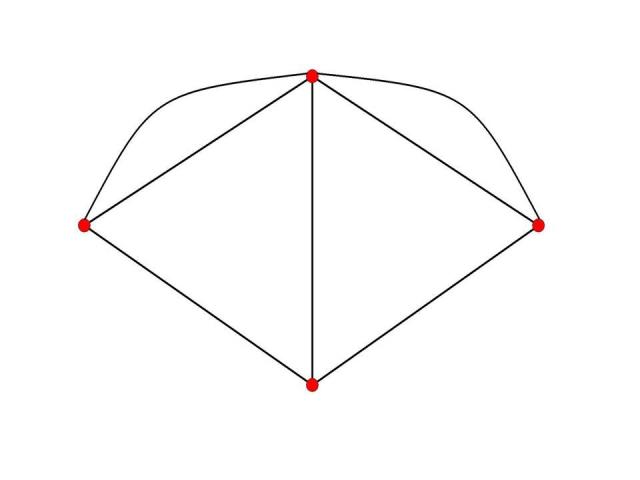
Learn how to model social and economic networks and their impact on human behavior. How do networks form, why do they exhibit certain patterns, and how does their structure impact diffusion, learning, and other behaviors? We will bring together models and techniques from economics, sociology, math, physics, statistics and computer science to answer these questions.

Sep 28th 2026
5-12 Weeks
Model Thinking (Coursera) Coursera
University of Michigan

Model Thinking (Coursera)

We live in a complex world with diverse people, firms, and governments whose behaviors aggregate to produce novel, unexpected phenomena. We see political uprisings, market crashes, and a never ending array of social trends. How do we make sense of it? Models. Evidence shows that people who think with models consistently outperform those who don't. And, moreover people who think with lots of models outperform people who use only one. Why do models make us better thinkers? Models help us to better organize information - to make sense of that fire hose or hairball of data (choose your metaphor) available on the Internet.

Sep 21st 2026
5-12 Weeks