Física Experimental: Eletromagnetismo (IST)

Física Experimental: Eletromagnetismo (IST)

Curso assente na obtenção e análise de dados experimentais tendo por base duas experiências de eletromagnetismo realizadas com materiais correntes e com recurso ao e-lab (laboratório remoto). O presente curso consiste numa introdução à Física Experimental onde os participantes poderão explorar a análise de dados e tratamento dos erros experimentais associados a experiências de eletromagnetismo realizadas com materiais correntes e com recurso ao e-lab (laboratório acessível remotamente), bem como técnicas numéricas de ajuste de funções aos modelos teóricos que as descrevem.

Os participantes desenvolverão competências na análise de dados experimentais e na definição de critérios para a aceitação de um modelo teórico proposto na interpretação de uma experiência de eletromagnetismo, face aos dados experimentais obtidos.

No final do curso os(as) participantes estarão aptos(as) a:

  • Utilizar algoritmos numéricos em folhas de cálculo;
  • Analisar e propagar as incertezas das medidas;
  • Controlar experiências remotas;
  • Construir uma experiência simples de óptica;
  • Compreender a relação entre corrente eléctrica e o campo magnético.

No curso serão abordados os seguintes aspetos:

  • Introdução à física experimental e seus conceitos básicos;
  • Ajustes numéricos a dados experimentais;
  • Incertezas nas grandezas derivadas;
  • A relação entre corrente elétrica e campo magnético;
  • Indução magnética;
  • Realização de uma experiência prática: Determinação do índice de refração pelo método de Pfund;
  • Realização de uma experiência remota: Variação do valor do campo magnético criado por uma bobine retangular (módulo e orientação).

Recommend Readings:
D. W. Preston e E. R. Dietz, The Art of Experimental Physics. Wiley, 1991.
Hughes, I. G. e Hase, T. P. A. (2010). Measurements and their Uncertainties: A practical guide to modern error analysis. Oxford University Press.

Go to Class
MOOC List is learner-supported. When you buy through links on our site, we may earn an affiliate commission.

Related Courses

Les deux infinis et nous (Coursera) Coursera
École Polytechnique

Les deux infinis et nous (Coursera)

Partez à la découverte de l'infiniment grand et de l'infiniment petit dans leurs aspects les plus proches de notre quotidien, en compagnie de physiciens et de physiciennes qui vont vous faire découvrir leur présence insoupçonnée dans notre vie de tous les jours. Vous vous initierez à la vie et aux métiers d'une grande collaboration en physique de l'infiniment petit et de l'infiniment grand, vous découvrirez comment les outils développés dans ces domaines ont trouvé des applications inattendues, comment la physique nucléaire a profondément modifié les domaines de l'énergie et de la santé, et comment les propriétés de certaines particules aident à présent d'autres disciplines à sonder la matière d'une manière totalement différente.

Sep 21st 2026
4 Weeks
Electrodynamics: An Introduction (Coursera) Coursera
Korea Advanced Institute of Science and Technology - KAIST

Electrodynamics: An Introduction (Coursera)

The depth and breadth of electromagnetism, the foundation for many fields including materials science, electrical engineering, and physical chemistry, requires a long, steep, and steady learning curve. This course aims to bridge the gap between the fundamental principles taught in electromagnetism and its practical application to specific fields such as materials, physics, and chemistry related to energy storage and harvesting.

Sep 28th 2026
5-12 Weeks
Física Experimental (IST) MOOC Técnico
Instituto Superior Técnico, Universidade de Lisboa

Física Experimental (IST)

Curso que assenta na construção de experiências a partir de material corrente e na utilização do e-lab (laboratório acessível remotamente). Neste curso os participantes irão adquirir conhecimentos de análise de dados e tratamentos dos erros experimentais associados, bem como técnicas numéricas de ajuste de funções aos modelos teóricos que descrevem as experiências propostas.

No sessions available
5-12 Weeks
AstroTech: The Science and Technology behind Astronomical Discovery (Coursera) Coursera
University of Edinburgh

AstroTech: The Science and Technology behind Astronomical Discovery (Coursera)

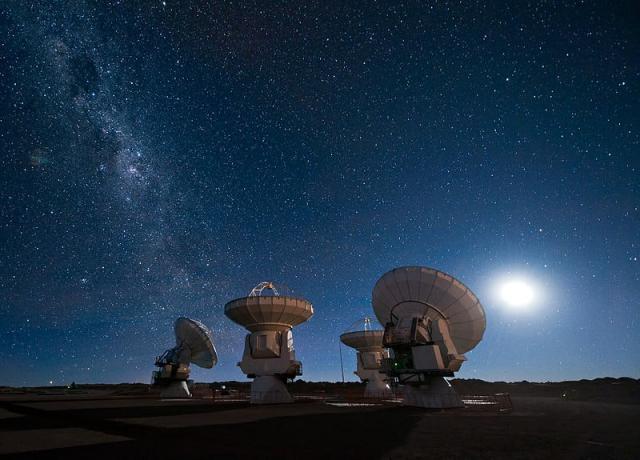
Modern astronomy has made some astonishing discoveries - how stars burn and how black holes form; galaxies from the edge of the universe and killer rocks right next door; where the elements come from and how the expanding universe is accelerating. But how do we know all that? The truth is that astronomy would be impossible without technology, and every advance in astronomy is really an advance in technology. But the technology by itself is not enough. We have to apply it critically with a knowledge of physics to unlock the secrets of the Universe.

Sep 21st 2026
5-12 Weeks
Physics of silicon solar cells (Coursera) Coursera
École Polytechnique

Physics of silicon solar cells (Coursera)

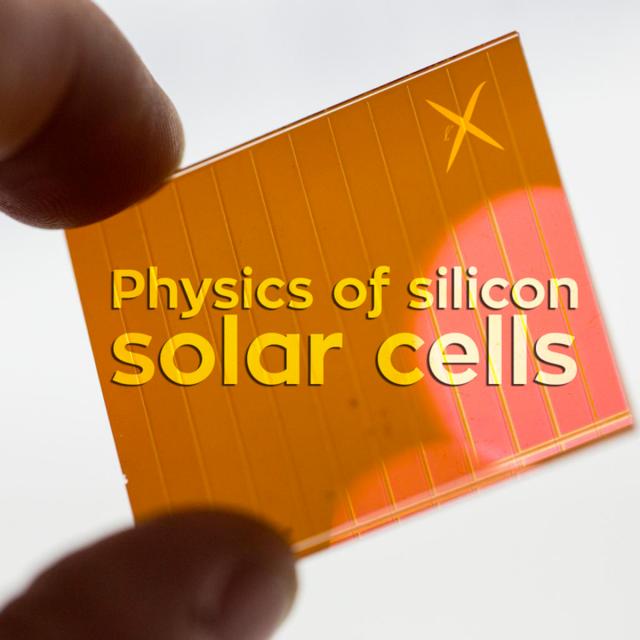
The first MOOC “Photovoltaic solar energy” is a general presentation of the solar photovoltaics technologies in the global energetic context, without extensive details. In particular the description of the solar cell operation is restricted to the ideal case. In contrast this second MOOC allows a deep understanding of the properties of solar cells based on crystalline semiconductors.

Sep 28th 2026
5-12 Weeks
The Diversity of Exoplanets (Coursera) Coursera
University of Geneva

The Diversity of Exoplanets (Coursera)

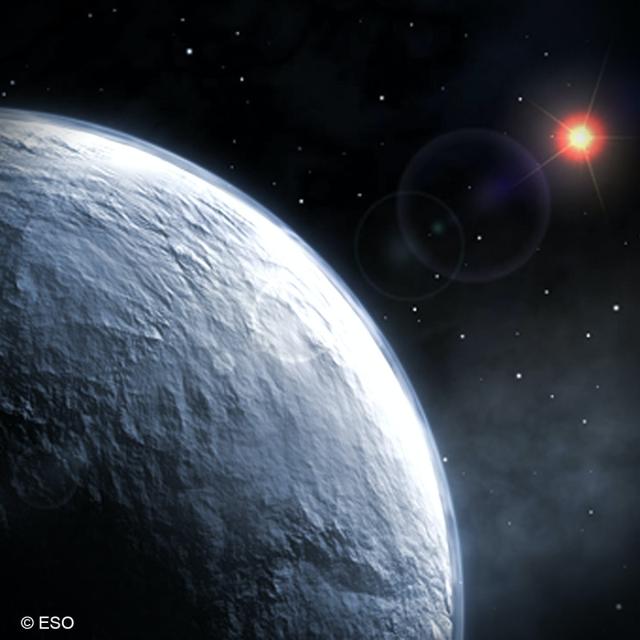
In this MOOC, you will have the opportunity to practice several methods of detection and characterisation of exoplanets. You will discover their statistical properties and the current state of knowledge we have in this very recent field of research. You will also understand the limitations and biases of the different detection techniques.

Sep 21st 2026
5-12 Weeks
The Discovery of the Higgs Boson (Coursera) Coursera
University of Edinburgh

The Discovery of the Higgs Boson (Coursera)

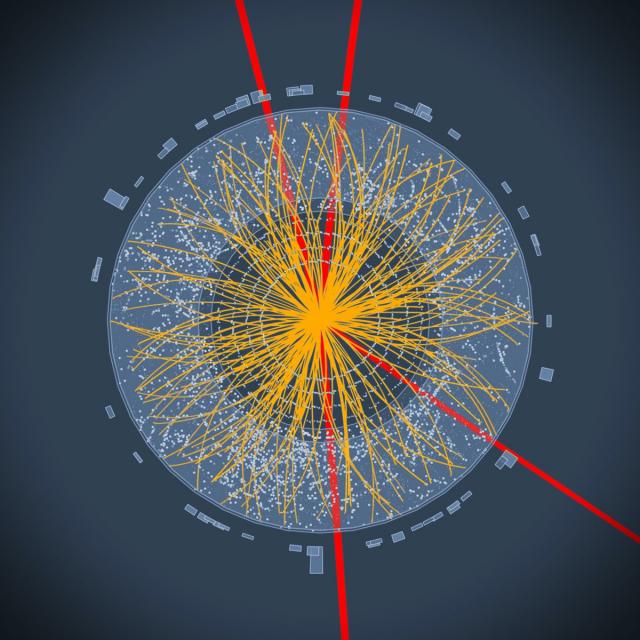
The discovery of a new fundamental particle at the Large Hadron Collider (LHC), CERN is the latest step in a long quest seeking to answer one of physics’ most enduring questions: why do particles have mass? The experiments’ much anticipated success confirms predictions made decades earlier by Peter Higgs and others, and offers a glimpse into a universe of physics beyond the Standard Model.

Sep 28th 2026
5-12 Weeks
Understanding Modern Physics III: Simplicity and Complexity (Coursera) Coursera
The Hong Kong University of Science and Technology - HKUST

Understanding Modern Physics III: Simplicity and Complexity (Coursera)

The 20th century was known as the century of physics. In the past 120 years, concepts such as space, time, energy, entropy and particles were understood to much deeper levels. New paradigms of thinking such as relativity and quantum mechanics emerged. This course is the third course in the Understanding Modern Physics series, which covers an introduction to action principle, fundamental particle physics, entropy & information and complexity.

Oct 5th 2026
4 Weeks
Tesoros de la Física y sus Descubridores I (Coursera) Coursera
Universidad de los Andes

Tesoros de la Física y sus Descubridores I (Coursera)

¿Sabes cómo vuelan los aviones, tan pesados y no se caen mientras vuelan? ¿Sabes que viajamos por el espacio sobre el planeta Tierra que se traslada y gira muy rápido y no lo percibimos? ¿O acaso, notas efectos de su movimiento? ¿Cuál es nuestro lugar en el universo? ¿Podemos viajar en el tiempo? ¡Preguntas, muchas preguntas! Con espíritu de descubridores nuestra curiosidad nos motiva a buscar respuestas, a explorar nuestro entorno, a entrar a lo desconocido y hallar nuevo conocimiento.

Sep 28th 2026
5-12 Weeks
Kinematics: Describing the Motions of Spacecraft (Coursera) Coursera
University of Colorado Boulder

Kinematics: Describing the Motions of Spacecraft (Coursera)

The movement of bodies in space (like spacecraft, satellites, and space stations) must be predicted and controlled with precision in order to ensure safety and efficacy. Kinematics is a field that develops descriptions and predictions of the motion of these bodies in 3D space. This course in Kinematics covers four major topic areas: an introduction to particle kinematics, a deep dive into rigid body kinematics in two parts (starting with classic descriptions of motion using the directional cosine matrix and Euler angles, and concluding with a review of modern descriptors like quaternions and Classical and Modified Rodrigues parameters).

Oct 5th 2026
4 Weeks