Explainable deep learning models for healthcare - CDSS 3 (Coursera)

Offered by University of Glasgow,
Explainable deep learning models for healthcare - CDSS 3 (Coursera)

This course will introduce the concepts of interpretability and explainability in machine learning applications. The learner will understand the difference between global, local, model-agnostic and model-specific explanations. State-of-the-art explainability methods such as Permutation Feature Importance (PFI), Local Interpretable Model-agnostic Explanations (LIME) and SHapley Additive exPlanation (SHAP) are explained and applied in time-series classification.

Class Deals by MOOC List - Click here and see Coursera's Active Discounts, Deals, and Promo Codes.

Subsequently, model-specific explanations such as Class-Activation Mapping (CAM) and Gradient-Weighted CAM are explained and implemented. The learners will understand axiomatic attributions and why they are important. Finally, attention mechanisms are going to be incorporated after Recurrent Layers and the attention weights will be visualised to produce local explanations of the model.
Course 3 of 5 in the Informed Clinical Decision Making using Deep Learning Specialization.

What You Will Learn

  • Program global explainability methods in time-series classification
  • Program local explainability methods for deep learning such as CAM and GRAD-CAM
  • Understand axiomatic attributions for deep learning networks
  • Incorporate attention in Recurrent Neural Networks and visualise the attention weights

Syllabus

WEEK 1
Interpretable vs Explainable Machine Learning Models in Healthcare
Deep learning models are complex and it is difficult to understand their decisions. Explainability methods aim to shed light to the deep learning decisions and enhance trust, avoid mistakes and ensure ethical use of AI. Explanations can be categorised as global, local, model-agnostic and model-specific. Permutation feature importance is a global, model agnostic explainabillity method that provide information with relation to which input variables are more related to the output.

WEEK 2
Local Explainability Methods for Deep Learning Models
Local explainability methods provide explanations on how the model reach a specific decision. LIME approximates the model locally with a simpler, interpretable model. SHAP expands on this and it is also designed to address multi-collinearity of the input features. Both LIME and SHAP are local, model-agnostic explanations. On the other hand, CAM is a class-discriminative visualisation techniques, specifically designed to provide local explanations in deep neural networks.

WEEK 3
Gradient-weighted Class Activation Mapping and Integrated Gradients
GRAD-CAM is an extension of CAM, which aims to a broader application of the architecture in deep neural networks. Although, it is one of the most popular methods in explaining deep neural network decisions, it violates key axiomatic properties, such as sensitivity and completeness. Integrated gradients is an axiomatic attribution method that aims to cover this gap.

WEEK 4
Attention mechanisms in Deep Learning
Attention in deep neural networks mimics human attention that allocates computational resources to a small range of sensory input in order to process specific information with limited processing power. In this week, we discuss how to incorporate attention in Recurrent Neural Networks and autoencoders. Furthermore, we visualise attention weights in order to provide a form of inherent explanation for the decision making process.

Go to Class
MOOC List is learner-supported. When you buy through links on our site, we may earn an affiliate commission.

Related Courses

The Oral Cavity: Portal to Health and Disease (Coursera) Coursera
University of Pennsylvania

The Oral Cavity: Portal to Health and Disease (Coursera)

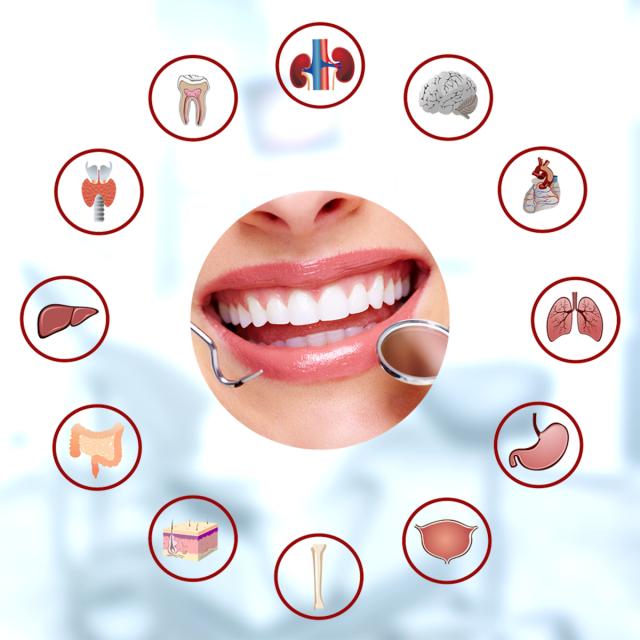
This course will focus on the interprofessional realtionship of dentistry and medicine. For each session, the medical specialist will present a broad overview of specific disease entity which will be followed by a dental educator discussing the relevant oral manifestations and implications. The final module of each session will be devoted to the interaction between the dental and other health care professionals.

Oct 5th 2026
5-12 Weeks
Foundations of Data Science: K-Means Clustering in Python (Coursera) Coursera
University of London,Goldsmiths, University of London

Foundations of Data Science: K-Means Clustering in Python (Coursera)

This MOOC, designed by an academic team from Goldsmiths, University of London, will quickly introduce you to the core concepts of Data Science to prepare you for intermediate and advanced Data Science courses. It focuses on the basic mathematics, statistics and programming skills that are necessary for typical data analysis tasks.

Oct 5th 2026
5-12 Weeks
Confronting Gender Based Violence: Global Lessons for Healthcare Workers (Coursera) Coursera
Johns Hopkins University

Confronting Gender Based Violence: Global Lessons for Healthcare Workers (Coursera)

This course introduces participants from the healthcare sector to gender based violence (GBV), including global epidemiology of GBV; health outcomes; seminal research; and clinical best practices for GBV prevention, support, and management. A core curriculum is supplemented by lectures that contextualize the content with specific examples and programs from around the world.

Oct 12th 2026
4 Weeks
Service Transformed: Lessons in U.S. Veteran Centered Care (Coursera) Coursera
University of Michigan

Service Transformed: Lessons in U.S. Veteran Centered Care (Coursera)

Improving health care for veterans has become a matter of national attention and has gained increasing attention from the medical community. With the current surge of veterans reintegrating into civilian society it is critical to improve the training of the next cadre of providers who will provide care for our veterans. It is widely known that veterans receive care in all aspects of the health system, thus providers in veteran focused care facilities, military health serves and civilian locals must be aware of the unique needs of veterans. It is perhaps even more important to educate civilian providers who may be unfamiliar with the unique physical, mental and emotional needs related to military service.

Sep 28th 2026
5-12 Weeks
Everyday Chinese Medicine 2 (Coursera) Coursera
The Chinese University of Hong Kong

Everyday Chinese Medicine 2 (Coursera)

This course, Everyday Chinese Medicine II offered by the Chinese University of Hong Kong, aims to show to the public, as well as the healthcare professionals about the basic principles of Chinese medicine. Our primary goal is to empower healthcare choices by promoting awareness and practical application on Chinese medicine diagnostic and therapeutic approaches, and to facilitate interprofessional education between Chinese and conventional clinicians.

Oct 5th 2026
5-12 Weeks
Machine Teaching for Autonomous AI (Coursera) Coursera
University of Washington

Machine Teaching for Autonomous AI (Coursera)

Just as teachers help students gain new skills, the same is true of artificial intelligence (AI). Machine learning algorithms can adapt and change, much like the learning process itself. Using the machine teaching paradigm, a subject matter expert (SME) can teach AI to improve and optimize a variety of systems and processes. The result is an autonomous AI system.

Oct 5th 2026
4 Weeks
Engaging in Improving Patient Experience Through Analytics (Coursera) Coursera
Northeastern University

Engaging in Improving Patient Experience Through Analytics (Coursera)

This course is best suited for individuals currently in the healthcare sector, as a provider, payer, or administrator. Individuals pursuing a career change to the healthcare sector may also be interested in this course. This is the second part in a two-part course exploring concepts and topics related to improving the patient experience and reducing pain points in healthcare processes through analytic and decision support frameworks.

Oct 5th 2026
4 Weeks
Living with Dementia: Impact on Individuals, Caregivers, Communities and Societies (Coursera) Coursera
Johns Hopkins University

Living with Dementia: Impact on Individuals, Caregivers, Communities and Societies (Coursera)

Health professionals and students, family caregivers, friends of and affected individuals, and others interested in learning about dementia and quality care will benefit from completing the course. Led by Drs. Nancy Hodgson and Laura Gitlin, participants will acquire foundational knowledge in the care of persons with Alzheimer’s Disease and other neurocognitive disorders.

Sep 28th 2026
5-12 Weeks
PrEParing: PrEP for Providers and Patients (Coursera) Coursera
Johns Hopkins University

PrEParing: PrEP for Providers and Patients (Coursera)

Pre-Exposure Prophylaxis (PrEP) using the antiretroviral medication emtricitibine/tenofovir approved in countries around the world is a highly effective means of reducing transmission of HIV through sexual encounters and needle sharing. This Johns Hopkins University course PrEPares you with essential information, concepts and practical advice regarding PrEP from leaders in the field. A first of its kind learning opportunity, both providers and patients learn from the same experts through content that meets the needs of both audiences, while facilitating the opportunity for a shared community space.

Oct 12th 2026
5-12 Weeks
Violence Against Healthcare (Coursera) Coursera
University of Geneva

Violence Against Healthcare (Coursera)

At the global level, there are many countries marked by violence affecting health care. The 'Health care in danger' project aims to establish practical measures and recommendations that can be implemented on the ground by policy-makers, humanitarian organizations and health professionals. In view of the multiplicity of actors and latitudes concerned, it is essential to be able to make available the tools needed to make informed decisions, guide behaviour in high-risk areas and provide everyone the means to create and optimize the dialogue between humanitarian professionals and health on the one hand and relevant authorities or other armed actors.

Oct 5th 2026
5-12 Weeks