Everyday Excel, Part 1 (Coursera)

Everyday Excel, Part 1 (Coursera)

"Everyday Excel, Part 1" is aimed at learners who are seeking to learn Excel from the ground up. No experience with Excel is necessary. While this course is meant for beginners of Excel, advanced users will undoubtedly pick up new skills and tools.

Class Deals by MOOC List - Click here and see Coursera's Active Discounts, Deals, and Promo Codes.

This course is the first part of a three-part series and Specialization that focuses on teaching introductory through very advanced techniques and tools in Excel. In this course (Part 1), you will: 1) learn how to effectively navigate around the Excel environment; 2) edit and format Excel worksheets; 3) implement basic to advanced Excel functions (including financial, logical, and text functions); 4) learn how to manage data sets (filter, remove duplicates, consolidate data, sort data, and validate data); and 5) learn how to effectively visualize data through scatterplots, column charts, and pie charts.
New to Excel? That is entirely fine! This course is meant to be fun, thought-provoking, and appeal to a wide audience. No prior knowledge in programming nor advanced math skills are necessary. The course is organized into 5 Weeks (modules).
To pass each module, you'll need to pass a mastery quiz and complete a problem solving assignment. This course is unique in that the weekly assignments are completed in-application (i.e., on your own computer in Excel), providing you with valuable hands-on training.

What You Will Learn

  • Navigating Excel, editing the worksheet (including inserting/deleting cells, columns, and rows), and cell formatting.
  • Expression entry and common Excel formulas (including logical functions, text functions, and financial functions).
  • Data management (sorting, filtering, consolidating, removing duplicates, data validation, and one-way lookups).
  • Data visualization (scatter plots, column charts, pie charts, Slicers, Sparklines, and Pivot Tables).

Course 1 of 3 in the Everyday Excel Specialization

Syllabus

WEEK 1
Navigating Excel
In Week 1, you will learn basic worksheet navigation, how to open and save Excel files, and all about worksheets and workbooks. You will learn the difference between cells, columns, and rows in Excel, as well as cell references. You will learn how to move around the worksheet effectively using shortcut key combinations, and you will learn how to edit the worksheet. You will also learn how to format cells, conditionally format cells, and how to change between number, text, date, currency, and other cell formatting options. There will be particular emphasis on relative vs. absolute cell addressing modes and you will learn how to name cells and cell ranges. You will be introduced to basic macro recording using VBA and you will learn how to set personal preferences in Excel. Week 1 will conclude with a required quiz and an on-computer, in-application assignment. When you successfully complete Assignment 1, you will be given a "completion code", which you can input into the Week 1 submission quiz to earn credit for the assignment.

WEEK 2
Expression Entry and Common Excel Functions
In Week 2 you will learn about how to properly write Excel syntax. You will learn the order of operations, how to input mathematical formulas into Excel, and how to troubleshoot when things don't go as expected. You will be introduced to just a few of the thousands of built in functions in Excel. The functions that you will learn about in this module relate to summing, counting, averaging, how to round numbers and calculate remainders, random number generation, and combinations and permutations. Week 2 concludes with a quiz and an on-computer, in-application assignment.

WEEK 3
More Excel functions
In Week 3, you will learn more advanced functions in Excel. These include logical functions (IF, AND, OR) and advanced logical functions (SUMIF, COUNTIF, AVERAGEIF). You will learn how to effectively use Auto Fill and Fill Series but then I explain how to use text functions, which overcome some of the limitations of the Auto Fill feature. You will be introduced to Excel's financial functions (many more financial functions will be covered in Part 2 of the course), and you will learn how to use array formulas in Excel. Finally, I show how you can create your own user-defined function in VBA. Week 3 concludes with a quiz and on-computer, in-application assignment. When completed successfully, the Week 4 material will be released. Good luck!

WEEK 4
Managing Data
Week 4 really gets at the heart of why Excel is so great for managing data. You will learn how to apply a filter, how to create an Excel Table, and how to validate data (for example, by only allowing items in a drop-down list). You will learn how to sort data, how to clean up data prior to using, how to remove duplicates in your data, and how to consolidate data from multiple sources. Finally you will learn how to use one-way lookup functions in Excel (VLOOKUP and the INDEX/MATCH combination). Quiz 4 and the on-computer, in-application Assignment 4 will test your understanding of the material in Week 4. Once you've completed these assessments, the Week 5 material will be unlocked. Good luck and have fun!

WEEK 5
Plotting, Importing Data, and Converting to Other File Types
Week 5 is all about data visualization. You will learn the differences between and how to use scatter plots, column charts, and pie charts. You will be introduced to Pivot Tables, Slicers, and Sparklines, which all represent different and exciting ways to visualize your data. I will show you how to share data (embed vs. linking) with Word and PowerPoint as well as how to print your worksheets and how to convert them to .pdf documents. Like the other modules, Week 5 concludes with a quiz and an on-computer, in-application assignment. When you've completed those assessments, you will earn the Course Certificate! Good luck!

Go to Class
MOOC List is learner-supported. When you buy through links on our site, we may earn an affiliate commission.

Related Courses

The ABC's of GDPR: Protecting Privacy in an Online World (Coursera) Coursera
Knowledge Accelerators

The ABC's of GDPR: Protecting Privacy in an Online World (Coursera)

This course is aimed at business professionals, web designers, and other interested professionals who collect, process, use, or otherwise encounter personal data subject to the European Union's General Data Protection Regulation. By the end of this course, learners will be familiar with roles involved in assuring compliance with GDPR standards, the rights of GDPR data subjects, responsibilities of organizations regarding GDPR and the consequences for failure to comply.

Oct 5th 2026
1 Week
MySQL for Data Analytics and Business Intelligence (Coursera) Coursera
Edureka

MySQL for Data Analytics and Business Intelligence (Coursera)

Embark on a thorough educational expedition through the "Fundamentals of Database Management with MySQL" module. This foundational program aims to impart a robust comprehension of MySQL, a prominent Relational Database Management System (RDBMS). Participants will delve into crucial concepts, ranging from the fundamentals of SQL to more advanced topics like data retrieval, relationships, business intelligence, and data visualization.

Oct 5th 2026
1 Week
Programming Mobile Applications for Android Handheld Systems: Part 2 (Coursera) Coursera
University of Maryland, College Park

Programming Mobile Applications for Android Handheld Systems: Part 2 (Coursera)

This course introduces you to the design and implementation of Android applications for mobile devices. You will build upon concepts from the prior course, including handling notifications, using multimedia and graphics and incorporating touch and gestures into your apps.

Sep 28th 2026
5-12 Weeks
Leadership & Organization Design (Coursera) Coursera
Illinois Tech

Leadership & Organization Design (Coursera)

To succeed in today’s knowledge intensive organizations managers need to understand how individual differences in personality, learning style and cultural values, group dynamics, organizational culture, and human resource management policies shape employee attitudes and behaviors. This course teaches managers creative problem-solving and ethical decision-making, change management, leadership techniques for enhancing social capital and influencing other organizational members, and management tools for multicultural and geographically dispersed teams.

Oct 5th 2026
5-12 Weeks
Programming Fundamentals (Coursera) Coursera
Duke University

Programming Fundamentals (Coursera)

Programming is an increasingly important skill, whether you aspire to a career in software development, or in other fields. This course is the first in the specialization Introduction to Programming in C, but its lessons extend to any language you might want to learn. This is because programming is fundamentally about figuring out how to solve a class of problems and writing the algorithm, a clear set of steps to solve any problem in its class.

Oct 5th 2026
4 Weeks
Quantitative Model Checking (Coursera) Coursera
EIT Digital

Quantitative Model Checking (Coursera)

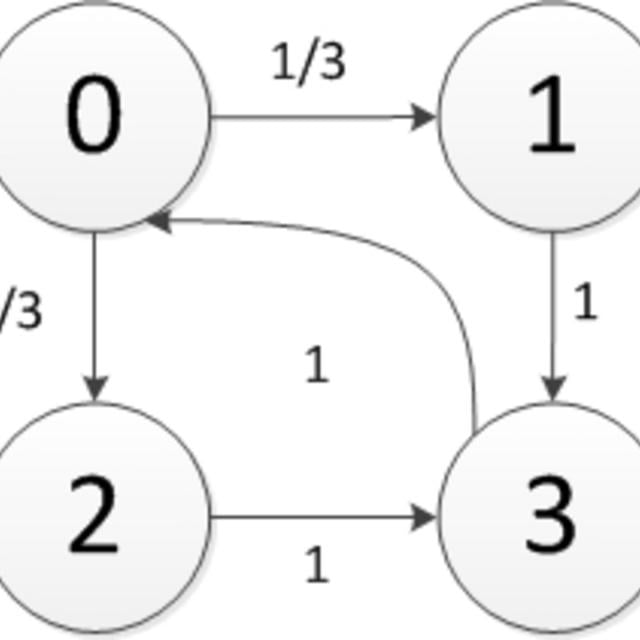
The integration of ICT (information and communications technology) in different applications is rapidly increasing in e.g. Embedded and Cyber physical systems, Communication protocols and Transportation systems. Hence, their reliability and dependability increasingly depends on software. Defects can be fatal and extremely costly (with regards to mass-production of products and safety-critical systems).

Oct 5th 2026
5-12 Weeks
Research Data Management and Sharing (Coursera) Coursera
University of Edinburgh,University of North Carolina

Research Data Management and Sharing (Coursera)

This course will provide learners with an introduction to research data management and sharing. After completing this course, learners will understand the diversity of data and their management needs across the research data lifecycle, be able to identify the components of good data management plans, and be familiar with best practices for working with data including the organization, documentation, and storage and security of data. Learners will also understand the impetus and importance of archiving and sharing data as well as how to assess the trustworthiness of repositories.

Sep 28th 2026
5-12 Weeks
Introdução ao Teste de Software (Coursera) Coursera
Universidade de São Paulo, Brasil

Introdução ao Teste de Software (Coursera)

A necessidade das empresas em produzir software com qualidade tem aumentado a demanda por profissionais com conhecimentos e habilidades em Teste de Software. Entretanto, existe uma escassez de mão-de-obra especializada nesta área. Considerando essa lacuna, o curso de Introdução ao Teste de Software foi planejado para servir como um guia para pessoas que necessitam de uma fonte de consulta e/ou aprendizado na área.

Oct 5th 2026
5-12 Weeks
Programming Languages, Part A (Coursera) Coursera
University of Washington

Programming Languages, Part A (Coursera)

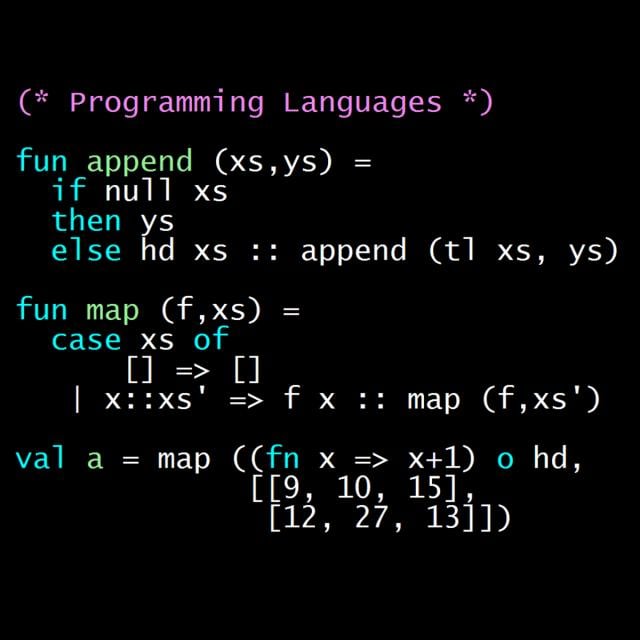
This course is an introduction to the basic concepts of programming languages, with a strong emphasis on functional programming. The course uses the languages ML, Racket, and Ruby as vehicles for teaching the concepts, but the real intent is to teach enough about how any language “fits together” to make you more effective programming in any language -- and in learning new ones.

Oct 5th 2026
5-12 Weeks
Responsible AI - Principles and Ethical Considerations (Coursera) Coursera
Fractal Analytics

Responsible AI - Principles and Ethical Considerations (Coursera)

Welcome to "Responsible AI – Principles and Ethical Considerations"! Dive deep into the very essence of Responsible AI with us. Uncover the significance of key principles shaping technology's future. From ethical considerations to fairness, transparency, and accountability, we discuss these principles with real-world examples, putting them into the context of data science.

Oct 5th 2026
5-12 Weeks