EdX

Ergonomics in Action (edX)

Ergonomics in Action (edX)

The course is designed to provide an understanding of how anthropometric and biomechanical information can be used in the design of workstations and products such as footwear with the aim of improving safety, productivity, comfort and health of people.

Class Deals by MOOC List - Click here and see EdX's Active Discounts, Deals, and Promo Codes.

Ergonomics is the application of scientific information about people in order to design products and systems so that they are safe, productive, comfortable and healthy for people to use.
People are of different shapes, sizes, strength, speed, judgment, skills, and capabilities. Hence, there is a need to evaluate and quantify differing metrics to evaluate the differences. What is important is to fit the task and equipment used to the person rather than fitting a person to a task or equipment so that a majority of the people are able to and like to do what needs to be done.
The course will focus on recognizing the basic needs of people in terms of biomechanics and present the various design strategies so that products and systems are compatible with people who use them thereby improving human performance, reducing the risk of discomfort and injury.
With the knowledge gained, you can experience the excitement of redesigning or retrofitting workplaces and other types of products whether it be for continuing education or just for knowledge.
Prerequisites: Part 1 – Ergonomics in Design ISDN4330.1x

What you'll learn
At the end of the course, you will be able to:

  • Design a workplace according to ergonomic principles
  • Determine anthropometric measures
  • Apply anthropometric tables for evaluation and design criteria for products
  • Identify engineering solutions to improve human performance and reduce the risk of discomfort and injury when interacting with products

Syllabus

Week 1: Design for Seated and Standing Work
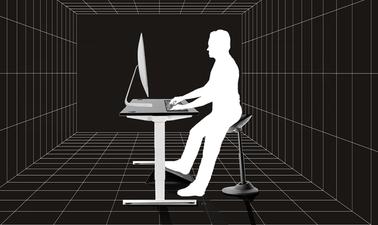
Spine basics, sitting and standing posture

Week 2: Seat Design
Sitting considerations and principles

Week 3: Anthropometric Measures and Basic Statistics
Introduction to anthropometry, measurement techniques, basic statistical analysis and anthropometric databases

Week 4: Anthropometry in Use
Use of anthropometric tables, estimating data, design criteria

Week 5: Ergonomics in Footwear
Foot and related dimensions, footwear characteristics, fitting feet to footwear

Week 6: Course Summary

Go to Class
MOOC List is learner-supported. When you buy through links on our site, we may earn an affiliate commission.

Related Courses

Human-Centered Design for Work at a Distance: Prototype Solutions (edX) EdX
The University of British Columbia,UBCx

Human-Centered Design for Work at a Distance: Prototype Solutions (edX)

Draw from human-centered design tools learned in Human-Centered Design for Work at a Distance: Toolbox Essentials to identify and solve real-world case studies for individuals reinventing their work at a distance. This course builds on the teachings in Human-Centered Design for Work at a Distance: Toolbox Essentials. It must be completed before enrolling in this course.

Self Paced
Self-Paced
Internationalization: Creating Digital Content for the World (edX) EdX
University of Washington,UWashingtonX

Internationalization: Creating Digital Content for the World (edX)

Learn how a digital product becomes world-ready: how does it need to be designed for worldwide release without altering its code for each market? Who needs to be involved in which stages of the process? How do you do assure quality for world-readiness?

Self Paced
Self-Paced
Introduction to Game Design (edX) EdX
MIT,MITx

Introduction to Game Design (edX)

A practical introduction to game design and game design concepts, emphasizing the basic tools of game design: paper and digital prototyping, design iteration, and user testing. We have all played and enjoyed games, but how do people actually design them? How do you describe a game? What are the basic elements? How do designers create an experience for the player? What about prototyping and iterating?

No sessions available
5-12 Weeks
Design Thinking: Prototyping and User Testing (edX) EdX
Rochester Institute of Technology,RITx

Design Thinking: Prototyping and User Testing (edX)

Learn the importance of prototyping and user testing solutions before going to market and how to assess and evaluate solutions post-launch. Creating prototypes puts a proposed solution into action. In this course, you will learn the value of prototypes and user testing as critical components of the design thinking process.

Self Paced
Self-Paced
Human-Centered Design for Work at a Distance: Toolbox Essentials (edX) EdX
The University of British Columbia,UBCx

Human-Centered Design for Work at a Distance: Toolbox Essentials (edX)

Learn and apply human-centered design tools to transform your work with others at a distance. In this course, you will gain a foundational understanding of human-centered design tools, and apply lessons learned to improve your work with others at a distance. Learn how HCD principles can be applied to multiple aspects of working at a distance, and can be used to help decipher complex organizational challenges.

Self Paced
Self-Paced
IoT Networks and Protocols (edX) EdX
Curtin University,CurtinX

IoT Networks and Protocols (edX)

Learn about IoT networks and the protocols and standards associated with the Internet and how these apply to the IoT. The Internet of Things (IoT) is expanding at a rapid rate, and it is becoming increasingly important for professionals to understand what it is, how it works, and how to harness its power to improve your business.

Self Paced
Self-Paced
UX Design (edX) EdX
HECMontrealX,HEC Montréal

UX Design (edX)

Master Design Thinking and UX Design through user-centred design to deliver innovative user experiences. Learn divergent ideation methods to bring creativity to problem-solving, and convergent ideation methods to innovate within your business context. Brainstorm, brainstorm! UX Design is not just about having ideas! The user-centred approach fuels innovation in ways that support incremental, radical and disruptive innovations towards great user experience like no other.

Self Paced
Self-Paced