EdX

Energy Supply Systems for Buildings (edX)

Energy Supply Systems for Buildings (edX)

Discover how to convert natural resources into heat, cold and electricity, what the capabilities of renewable systems are, how to match energy supply with buildings’ energy demand, and what that means for energy efficiency and carbon emissions. In this course, you will discover the supply side of buildings’ energy chain.

Class Deals by MOOC List - Click here and see EdX's Active Discounts, Deals, and Promo Codes.

The first step is to consider how to convert natural resources into the energy needed by buildings: what are the options to create heat, cold and electricity? You will learn about efficiency and use this concept to estimate building’s primary energy use and carbon emissions. This concept is widely used in many national and international policies and building regulations, and is essential to counteract climate change.
You will study the performances of single heating systems like electrical heating, gas, or renewables like biomass, solar boilers and geothermal heat, followed by single cooling systems like evaporative cooling and environmental cold.
We will also examine the systems that concurrently produce heat and cold. Do you know for instance that a heat pump and a cooling machine are identical devices? You will learn about the basic working principles of heat pumps and how to make sure they achieve high performance levels. After this course you will know how an Aquifer Thermal Storage makes smart use of the ground to deliver cold in summer and heat in winter.
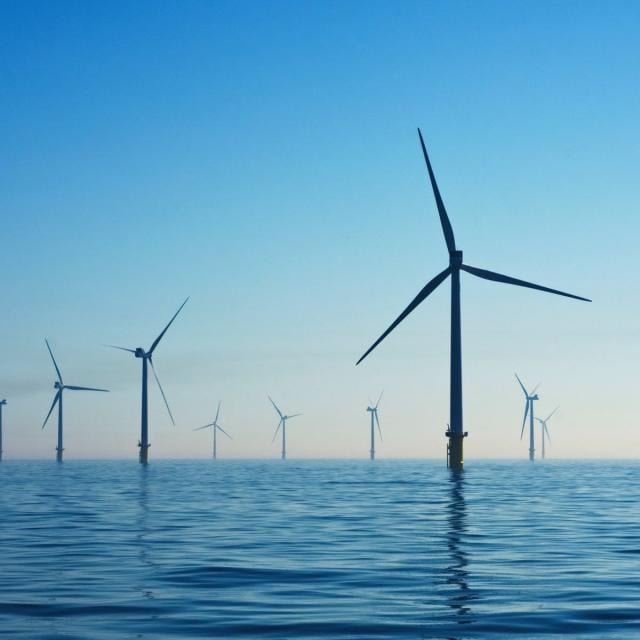
Diverse electricity generation methods using turbines (wind, hydro), photovoltaics or hydrogen fuel cells will also be examined. You will learn how cogeneration of heat and power works and why this is important for the rational use of energy resources. You will also know why heat pumps are often combined with boilers or to which extent it is worth to invest in batteries for your solar panels.
By the end of the course you will be able to decide on how to combine energy conversion systems at building level in order to match buildings’ energy demand while keeping costs acceptable, using a minimum of natural resources and producing a minimum of carbon emissions.
This course is part of the PCP Buildings as Sustainable Energy Systems. In the other courses in this program you can learn how to design buildings with low energy demand, how to create a comfortable indoor environment, and how to control and optimize HVAC systems.
The development of this course is supported by Climate-KIC.
This course is part of the Buildings as Sustainable Energy Systems Professional Certificate.

What you'll learn

  • What the different heating, cooling and electricity generation systems are and what their working principles are.
  • How to combine the concept of efficiency with the building’s energy demand to estimate primary energy usage and carbon emissions.
  • How cogeneration of heat/cold and heat/power works and how to cope with mismatches between supply and demand.
  • What rational use of energy entails in practice.
  • How to use load curves from energy demand profiles to decide on the right combinations of energy conversion systems.
Go to Class
MOOC List is learner-supported. When you buy through links on our site, we may earn an affiliate commission.

Related Courses

Microeconomics: The Power of Markets (Coursera) Coursera
University of Pennsylvania

Microeconomics: The Power of Markets (Coursera)

We make economics decisions every day: what to buy, whether to work or play, what to study. We respond to markets all the time: prices influence our decisions, markets signal where to put effort, they direct firms to produce certain goods over others. Economics is all around us. This course is an introduction to the microeconomic theory of markets: why we have them, how they work, what they accomplish.

Sep 28th 2026
5-12 Weeks
Sustainable Soil Management: Soil for life (edX) EdX
Wageningen University,WageningenX

Sustainable Soil Management: Soil for life (edX)

Learn why soil is so important, how it’s being threatened and what we can do to protect this natural resource so vital to our lives. Soil is the earth’s fragile skin that anchors all life. We depend on soil to build our homes and cities, to grow crops for food and raise livestock, to support transportation and enable recreation. Yet we disregard this crucial and precious resource that lies right under our feet.

Self Paced
Self-Paced
Environmental Security and Sustaining Peace (edX) EdX
SDGAcademyX,SDG Academy

Environmental Security and Sustaining Peace (edX)

Natural resources and the environment as a vehicle for peace. Conflicts over natural resources and the environment are among the greatest challenges in 21st-century geopolitics. These conflicts present serious threats to human security at both the national and local levels. Natural resources and the environment can nonetheless serve as a vehicle for peace if managed in a sustainable and equitable manner.

Self Paced
5-12 Weeks
How Do We Manage Climate Change? (Coursera) Coursera
University of Colorado Boulder

How Do We Manage Climate Change? (Coursera)

In this course, learners will identify the types of actions that we can pursue to address climate change. These actions fall into two broad categories: 1) mitigation, which refers to efforts to reduce greenhouse gas emissions or enhance carbon sinks, and 2) adaptation, which refers to our preparations for climate impacts. We will explore the technologies, programs, and policies related to both mitigation and adaptation. Learners should leave the course with an improved ability to identify and evaluate climate actions undertaken by communities, governments, and businesses.

Sep 21st 2026
3 Weeks
Achieving Transitions to Zero Carbon Emissions and Sustainable Urban Mobility (FutureLearn) FutureLearn
University College London,Transforming Urban Mobility Initiative - TUMI,EIT Urban Mobility,ICLEI

Achieving Transitions to Zero Carbon Emissions and Sustainable Urban Mobility (FutureLearn)

Discover how cities can transform their urban mobility systems to become more sustainable and reach zero carbon emissions. Understand the steps to becoming sustainable city. Transport accounts for a large proportion of carbon emissions, so ensuring urban mobility systems are sustainable is key to helping cities to achieve zero-carbon goals. On this four-week course, you’ll discover how cities can transition their mobility systems to become sustainable, innovative, and inclusive.

Self Paced
4 Weeks
Bioeconomy: How Renewable Resources Can Help the Future of Our Planet (FutureLearn) FutureLearn
University of York,BioYorkshire

Bioeconomy: How Renewable Resources Can Help the Future of Our Planet (FutureLearn)

Explore the sustainable technologies, strategies, and careers helping the world transition to a biobased economy. Investigate how you can utilise renewable resources. With a predicted global population of nine billion people in 2050, a well-documented climate crisis, and a global food waste problem, the world needs to change.

Self Paced
3 Weeks
Efficient HVAC Systems (edX) EdX
Delft University of Technology,DelftX

Efficient HVAC Systems (edX)

Learn how to decide on efficient combinations of energy conversion systems and how to distribute and control air and energy flows in buildings whilst minimizing carbon emissions and optimizing thermal comfort in close consideration with the architect. In this course you will start by identifying the different steps a HVAC (Heating, Ventilation and Air Conditioning) engineers need to follow to come to a proper design while collaborating with the architect.

Self Paced
Self-Paced
Sustainability in Architecture: An Interdisciplinary Introduction (edX) EdX
Universitat Politècnica de València,UPValenciaX

Sustainability in Architecture: An Interdisciplinary Introduction (edX)

This course introduces the basic elements and trends that define sustainability practices in Architecture today. It follows an interdisciplinary approach that includes performance assessment and urban policies. This course offers an interdisciplinary approach to sustainability in Architecture. Learners will be introduced to the basic elements of sustainability assessments (first model layer), as well as trends informing the space today.

Self Paced
Self-Paced
Net-Zero Building Fundamentals (Coursera) Coursera
Indian Institute for Human Settlements

Net-Zero Building Fundamentals (Coursera)

Interested in decarbonisation, high performance, and climate resilient buildings? Then this course is for you. Our future is low-carbon, net-zero buildings that are super-efficient and self-sufficient in terms of their energy and water use. Decarbonisation, digitisation, and deglobalisation are driving the infrastructure revolution over the next 20 years. This course, offered jointly by the Alliance for an Energy Efficient Economy (AEEE) and the Indian Institute for Human Settlements (IIHS), will enable you to reap the benefits of this revolution and work on climate change.

Sep 28th 2026
5-12 Weeks
Energy Demand in Buildings (edX) EdX
Delft University of Technology,DelftX

Energy Demand in Buildings (edX)

Discover how building design and occupancy determines the energy demand in buildings and learn how to (re)design low energy buildings. Building design strongly influences the quantity of heating, cooling and electricity needed during building operation. Therefore, a correct thermal design is essential to achieve low energy and low carbon buildings, with good indoor air quality.

Self Paced
Self-Paced
Resource and Waste Management in Buildings (Coursera) Coursera
L&T EduTech

Resource and Waste Management in Buildings (Coursera)

This course explores the concept of energy efficiency and sustainability in building design, covering topics such as forms of energy, strategies for energy efficiency, and the role of renewable energy and water management. The module emphasizes the importance of certified fixtures and rainwater harvesting for water efficiency. It also discusses waste management, including types of waste, treatment methods, and strategies for different building purposes.

Sep 21st 2026
4 Weeks