Einführung in das Rechnungswesen (iversity)

Offered by RWTH Aachen,
Einführung in das Rechnungswesen (iversity)

Erlerne die kaufmännische Sprache von Unternehmen! Damit kannst du Finanzberichte lesen, verstehen und interpretieren. Du kannst Entscheidungen kostenrechnerisch vorbereiten, Produkte bewerten und Kostenabweichungen analysieren.

In der Veranstaltung "Einführung in das Rechnungswesen" erlernst du die kaufmännische Sprache des Unternehmens. Damit kannst du Finanzberichte lesen, verstehen und interpretieren. Du kannst Entscheidungen kostenrechnerisch vorbereiten, Produkte bewerten und Kostenabweichungen analysieren. Damit kannst du unternehmerisch sowohl in die Vergangenheit als auch in die Zukunft schauen. Der Inhalt der Vorlesung umfasst den kompletten Stoff einer umfassenden Einführung in das Rechnungswesen (internes und externes Rechnungswesen), wie er an vielen Universitäten und Hochschulen in Deutschland gelehrt wird.

Kursstruktur

Der Kurs besteht aus 7 Module von jeweils 2 Wochen:
Modul 1: Einführung und Abbildung von Eigenkapitalveränderungen
Modul 2: Doppelte Buchführung und Verbuchung von Geschäftsvorfällen
Modul 3: Buchungen am Ende des Abrechnungszeitraums und Abschlussarbeiten
Modul 4: Einführung in das interne Rechnungswesen
Modul 5: Kostenträgerrechnung
Modul 6: Kostenstellen- und Kostenartenrechnung
Modul 7: Unternehmenssteuerung, Planungsrechnungen und Kostenabweichungen
Go to Class
MOOC List is learner-supported. When you buy through links on our site, we may earn an affiliate commission.

Related Courses

The Art and Science of Economic Policy (Coursera) Coursera
Indian Institute for Human Settlements

The Art and Science of Economic Policy (Coursera)

Economic policy affects every citizen. And economic policymaking is best done as a collaborative process with a wide range of stakeholders. This course brings an understanding of the relevance and impacts of economic policymaking in everyday life, and the ways for citizens to be involved in shaping economic policy, in an accessible and interesting manner. Taught by Dr. Vijay Kelkar and Dr. Ajay Shah, along with Aromar Revi, Director, IIHS, the course synthesises more than one hundred years of their combined experience as professional economists and public intellectuals.

Nov 2nd 2026
5-12 Weeks
Social and Economic Networks: Models and Analysis (Coursera) Coursera
Stanford University

Social and Economic Networks: Models and Analysis (Coursera)

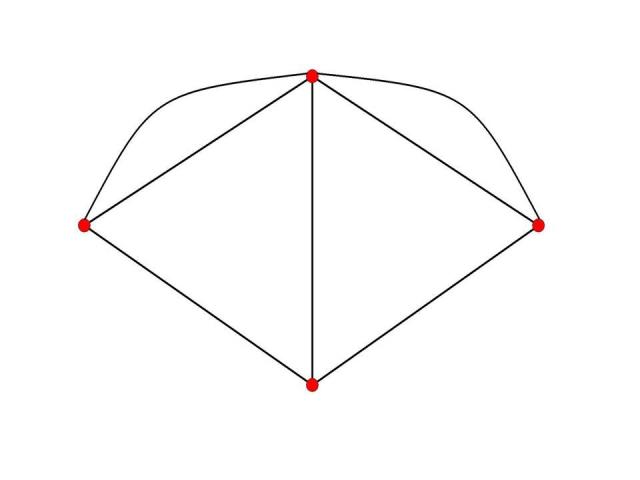
Learn how to model social and economic networks and their impact on human behavior. How do networks form, why do they exhibit certain patterns, and how does their structure impact diffusion, learning, and other behaviors? We will bring together models and techniques from economics, sociology, math, physics, statistics and computer science to answer these questions.

Oct 26th 2026
5-12 Weeks
Accounting for Decision Making (Coursera) Coursera
University of Michigan

Accounting for Decision Making (Coursera)

Through this course, you will start by addressing the two “big questions” of accounting: “What do I have?” and “How did I do over time?” You will see how the two key financial statements – the balance sheet and the income statement - are designed to answer these questions and then move on to consider how individual transactions aggregate to make up these financial statements.

Nov 9th 2026
5-12 Weeks
Managerial Economics: Buyer and Seller Behavior (Coursera) Coursera
Illinois Tech

Managerial Economics: Buyer and Seller Behavior (Coursera)

Why are markets commonly believed to be the best way of allocating resources and organizing economic activity? This course will answer this critical question while examining its implications for pricing, market entry and exit, short-term and long-term business strategies, and the forecasting of key market variables. The course introduces fundamental topics in the economic analysis of markets, and some of the analytical tools used to study them, as a means to build an economic intuition and fostering an understanding of a variety of market conditions and market forces.

Nov 9th 2026
4 Weeks
Firm Level Economics: Markets and Allocations (Coursera) Coursera
University of Illinois at Urbana-Champaign

Firm Level Economics: Markets and Allocations (Coursera)

In this class, we will derive equilibrium outcomes across a variety of market structures. We will begin by understanding equilibrium under a market structure called Perfect Competition, a benchmark construction. Economists have tools to measure the efficiency of market outcomes. We next consider the polar extreme of a competitive market: a monopoly market. We will determine the monopoly equilibrium price and quantity and efficiency properties. Much economic activity takes place in markets with just a handful of very large producers.

Oct 26th 2026
4 Weeks
Narrative Economics (Coursera) Coursera
Yale University

Narrative Economics (Coursera)

This course, Narrative Economics, is relatively short and proposes a simple concept: we need to incorporate the contagion of narratives into our economic theory. You can think of narratives as stories that shape public beliefs, which in turn influence our decision making. Understanding how people arrived at certain decisions in the past can aid our understanding of the economy today and improve our forecasts of the future.

Nov 2nd 2026
4 Weeks
More Introduction to Financial Accounting (Coursera) Coursera
University of Pennsylvania

More Introduction to Financial Accounting (Coursera)

The course builds on my Introduction to Financial Accounting course, which you should complete first. In this course, you will learn how to read, understand, and analyze most of the information provided by companies in their financial statements. These skills will help you make more informed decisions using financial information.

Oct 26th 2026
5-12 Weeks
Accounting Analysis I: The Role of Accounting as an Information System (Coursera) Coursera
University of Illinois at Urbana-Champaign

Accounting Analysis I: The Role of Accounting as an Information System (Coursera)

This course is the first course in a five-course Financial Reporting Specialization that covers the collection, processing, and communication of accounting information (via financial reports) about economic entities to interested parties (i.e., managers and external stakeholders such as stockholders and creditors).

Nov 9th 2026
5-12 Weeks
Understanding economic policymaking (Coursera) Coursera
IE Business School

Understanding economic policymaking (Coursera)

This course will employ a non-technical approach to analyze how governments use policy to influence a country's economy. Upon completing the course you should be able to discuss national debts and deficits, examine fiscal and monetary policy and their appropriateness to the situation of an economy, and anticipate the results of fiscal and monetary policies and structural reform on a country.

Oct 26th 2026
5-12 Weeks
Chinese Politics Part 1 - China and Political Science (Coursera) Coursera
The Hong Kong University of Science and Technology - HKUST

Chinese Politics Part 1 - China and Political Science (Coursera)

This course offers a conceptual framework for understanding China that highlights the intersection of politics and economics. It shows that rather than develop into a full blown market economy, state and party officials at all levels of the political system maintain significant influence in economic development. Such a “political” economy has had both positive and negative outcomes, which we will assess in detail.

Nov 9th 2026
5-12 Weeks
Economics of Money and Banking (Coursera) Coursera
Columbia University

Economics of Money and Banking (Coursera)

The last three or four decades have seen a remarkable evolution in the institutions that comprise the modern monetary system. The financial crisis of 2007-2009 is a wakeup call that we need a similar evolution in the analytical apparatus and theories that we use to understand that system. Produced and sponsored by the Institute for New Economic Thinking, this course is an attempt to begin the process of new economic thinking by reviving and updating some forgotten traditions in monetary thought that have become newly relevant.

Oct 26th 2026
13-24 Weeks