Economics of the Media (MRUniversity)

Economics of the Media (MRUniversity)

In the Information Age, media is everywhere. This course will help you make sense of it all, providing insight into the structure of media firms, the nature of their products and how they make money.

Is media biased? Is consolidation of media companies bad for consumers? This course will address those questions as well as how the government effects the structure of media through policies such as net neutrality, copyright, TV regulation and spectrum allocation.
This course will provide a general background on the research from economists on media and journalism. There will be a lot of economics and not too much math.

Go to Class
MOOC List is learner-supported. When you buy through links on our site, we may earn an affiliate commission.
Related Courses

Economics of Money and Banking (Coursera) Coursera
Columbia University

Economics of Money and Banking (Coursera)

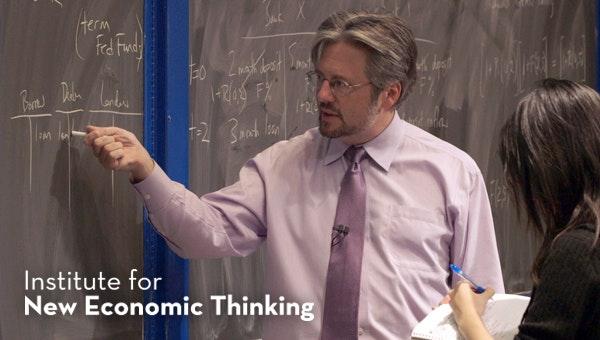
The last three or four decades have seen a remarkable evolution in the institutions that comprise the modern monetary system. The financial crisis of 2007-2009 is a wakeup call that we need a similar evolution in the analytical apparatus and theories that we use to understand that system. Produced and sponsored by the Institute for New Economic Thinking, this course is an attempt to begin the process of new economic thinking by reviving and updating some forgotten traditions in monetary thought that have become newly relevant.

Sep 28th 2026
13-24 Weeks
Data Literacy Capstone – Evaluating Research (Coursera) Coursera
Johns Hopkins University

Data Literacy Capstone – Evaluating Research (Coursera)

This is the final course in the Data Literacy Specialization. In this capstone course, you'll apply the skills and knowledge you have acquired in the specialization to the critical evaluation of an original quantitative analysis. The project will first require you to identify and read a piece of high-quality, original, quantitative research on a topic of your choosing. You’ll then interpret and evaluate the findings as well as the methodological approach. As part of the project, you’ll also review other students’ submissions. By the end of the project, you should be empowered to be a critical consumer and user of quantitative research.

Sep 21st 2026
3 Weeks
Everyday Economics (MRUniversity) MRUniversity
Marginal Revolution University

Everyday Economics (MRUniversity)

What role does economics play in your day-to-day life? You might be surprised to find that economics is a big part of nearly everything you do! Everyday Economics explores just that — how the “big ideas” from economics relate to everyday topics.

Self Paced
Self-Paced
Game Theory II: Advanced Applications (Coursera) Coursera
Stanford University,The University of British Columbia

Game Theory II: Advanced Applications (Coursera)

Popularized by movies such as "A Beautiful Mind", game theory is the mathematical modeling of strategic interaction among rational (and irrational) agents. Over four weeks of lectures, this advanced course considers how to design interactions between agents in order to achieve good social outcomes. Three main topics are covered: social choice theory (i.e., collective decision making and voting systems), mechanism design, and auctions.

Oct 5th 2026
5-12 Weeks
Financial Markets (Coursera) Coursera
Yale University

Financial Markets (Coursera)

An overview of the ideas, methods, and institutions that permit human society to manage risks and foster enterprise. Emphasis on financially-savvy leadership skills. Description of practices today and analysis of prospects for the future. Introduction to risk management and behavioral finance principles to understand the real-world functioning of securities, insurance, and banking industries. The ultimate goal of this course is using such industries effectively and towards a better society.

Sep 28th 2026
5-12 Weeks
Doing Economics: Measuring Climate Change (Coursera) Coursera
University of London,University College London,CORE

Doing Economics: Measuring Climate Change (Coursera)

This course will give you practical experience in working with real-world data, with applications to important policy issues in today’s society. Each week, you will learn specific data handling skills in Excel and use these techniques to analyse climate change data, with appropriate readings to provide background information on the data you are working with. You will also learn about the consequences of climate change and how governments can address this issue.

Sep 21st 2026
4 Weeks
The Art and Science of Economic Policy (Coursera) Coursera
Indian Institute for Human Settlements

The Art and Science of Economic Policy (Coursera)

Economic policy affects every citizen. And economic policymaking is best done as a collaborative process with a wide range of stakeholders. This course brings an understanding of the relevance and impacts of economic policymaking in everyday life, and the ways for citizens to be involved in shaping economic policy, in an accessible and interesting manner. Taught by Dr. Vijay Kelkar and Dr. Ajay Shah, along with Aromar Revi, Director, IIHS, the course synthesises more than one hundred years of their combined experience as professional economists and public intellectuals.

Oct 5th 2026
5-12 Weeks
實驗經濟學 (Experimental Economics: Behavioral Game Theory) (Coursera) Coursera
National Taiwan University

實驗經濟學 (Experimental Economics: Behavioral Game Theory) (Coursera)

人是否會如同理論經濟學的預測進行決策?這門課將透過每週的課程影片以及課後作業帶你了解實驗經濟學的基本概念。每週將會有習題練習以及指定閱讀的期刊論文。你將會參與一些線上的實驗、報告論文並且互評其他同學的報告。

Sep 30th 2026
5-12 Weeks
Model Thinking (Coursera) Coursera
University of Michigan

Model Thinking (Coursera)

We live in a complex world with diverse people, firms, and governments whose behaviors aggregate to produce novel, unexpected phenomena. We see political uprisings, market crashes, and a never ending array of social trends. How do we make sense of it? Models. Evidence shows that people who think with models consistently outperform those who don't. And, moreover people who think with lots of models outperform people who use only one. Why do models make us better thinkers? Models help us to better organize information - to make sense of that fire hose or hairball of data (choose your metaphor) available on the Internet.

Sep 21st 2026
5-12 Weeks
Case studies in business analytics with ACCENTURE (Coursera) Coursera
ESSEC Business School

Case studies in business analytics with ACCENTURE (Coursera)

This course is RESTRICTED TO LEARNERS ENROLLED IN Strategic Business Analytics SPECIALIZATION as a preparation to the capstone project. During the first two MOOCs, we focused on specific techniques for specific applications. Instead, with this third MOOC, we provide you with different examples to open your mind to different applications from different industries and sectors. The objective is to give you an helicopter overview on what's happening in this field. You will see how the tools presented in the two previous courses of the Specialization are used in real life projects.

Sep 21st 2026
3 Weeks
Microeconomics: The Power of Markets (Coursera) Coursera
University of Pennsylvania

Microeconomics: The Power of Markets (Coursera)

We make economics decisions every day: what to buy, whether to work or play, what to study. We respond to markets all the time: prices influence our decisions, markets signal where to put effort, they direct firms to produce certain goods over others. Economics is all around us. This course is an introduction to the microeconomic theory of markets: why we have them, how they work, what they accomplish.

Sep 28th 2026
5-12 Weeks