Dyslexia and Foreign Language Teaching (FutureLearn)

Offered by Lancaster University,
Dyslexia and Foreign Language Teaching (FutureLearn)

Learn more about dyslexia, and gain practical teaching tools and insights to help dyslexic students learn foreign languages. Discover teaching strategies to help dyslexic students learn a foreign language. Dyslexia affects 10-15% of the population. Dyslexic students are often either exempted from the study of additional languages or they underperform in foreign language classes.

Class Deals by MOOC List - Click here and see FutureLearn's Active Discounts, Deals, and Promo Codes.

On this course, you’ll discover the most up-to-date dyslexia definition, and how it affects a student’s ability to learn languages. You’ll explore the latest strategies for teaching dyslexic students and have access to a host of dyslexia teaching resources.
The materials and tasks in the course are designed to also be applicable to a variety of language learning contexts, including teaching English as a foreign language.

Syllabus

Week 1: What is dyslexia?
Week 2: Dyslexia and learning an additional language
Week 3: Teaching vocabulary and grammar to students with dyslexia
Week 4: Developing phonological and orthographic awareness and reading skills

What will you achieve?
By the end of the course, you'll be able to...

  • Demonstrate an understanding of dyslexia and other learning difficulties and their effects on learning additional languages
  • Assess the needs of students with dyslexia and other learning difficulties when learning another language
  • Evaluate resources used in teaching languages to students with dyslexia and other learning difficulties
  • Design language teaching tasks for students with dyslexia and other learning difficulties
  • Apply inclusive language teaching practices in their contexts
Go to Class
MOOC List is learner-supported. When you buy through links on our site, we may earn an affiliate commission.

Related Courses

Introduction to Dutch (FutureLearn) FutureLearn
University of Groningen

Introduction to Dutch (FutureLearn)

Learn to speak, write and understand basic Dutch, with this free, three-week, introductory foreign language course. Are you planning to visit, or work or study in the Netherlands soon? This free online course is perfect if you have little or no prior knowledge of Dutch, but would like to master the fundamentals in order to survive life in the Low Countries.

Self Paced
3 Weeks
Innovative Teaching: Engaging Adult Learners with Active Learning (FutureLearn) FutureLearn
University of Padova

Innovative Teaching: Engaging Adult Learners with Active Learning (FutureLearn)

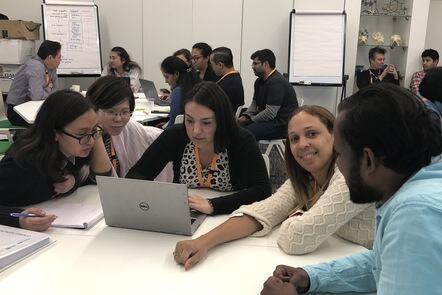
Discover the power of active participation in adult learning, encouraging teamwork and collaboration among students. Explore the power of teaching and how interactive learning can aid the classroom. Active learning is the leading innovative teaching approach in education today. It encourages teachers to foster a more student-centred, interactive and participatory approach to learning.

Self Paced
4 Weeks
Teaching Climate and Sustainability in Primary Schools: An Outdoor Learning Approach (FutureLearn) FutureLearn
University of Reading

Teaching Climate and Sustainability in Primary Schools: An Outdoor Learning Approach (FutureLearn)

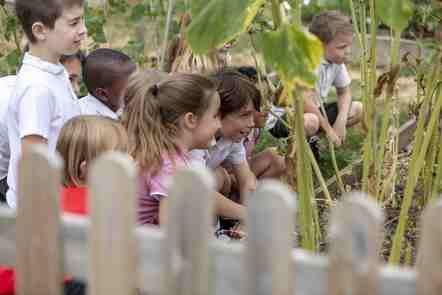
Build your confidence teaching climate and sustainability outdoors and develop ideas to implement in your school. Discover the importance of climate education and outdoor learning. Children around the world are demanding comprehensive and up-to-date education on climate and sustainability. Most teachers agree climate change education should be compulsory in schools, yet many feel ill-equipped to teach it.

Self Paced
2 Weeks
Supporting Successful Learning in Secondary School (FutureLearn) FutureLearn
University of Reading

Supporting Successful Learning in Secondary School (FutureLearn)

Develop your understanding of learning and teaching and build your confidence in supporting students in secondary school. Improve the support you provide to students' learning in secondary school. Engaging young people in the classroom can be a challenge for teachers and teaching assistants. Secondary school students often learn differently to younger students. This can require a different teaching approach.

Self Paced
4 Weeks
Train the Trainer: Design Genomics and Bioinformatics Training (FutureLearn) FutureLearn
Wellcome Connecting Science

Train the Trainer: Design Genomics and Bioinformatics Training (FutureLearn)

Discover how to plan and design engaging learning for those wanting to generate and analyse genomic data. Explore techniques for genomics training. Genomics and bioinformatics is a growing area of research with important practical implications for sectors as diverse as healthcare, food production, and environmental research. On this course, you’ll learn how to train students, peers, professionals, and future experts in genomic techniques, and come away able to plan and design engaging lessons for adult learners.

Self Paced
3 Weeks
Teaching Entrepreneurial Thinking (FutureLearn) FutureLearn
Queensland University of Technology

Teaching Entrepreneurial Thinking (FutureLearn)

Get an introduction to what entrepreneurial thinking is, and how and why we should teach it. We live in an uncertain and complex world, where the big problems of today and tomorrow are yet to be identified. Teaching young people the skills and resilience to live and thrive in such a world is the purpose of entrepreneurial thinking. This course will introduce you to what entrepreneurial thinking is, and why it’s an important skill for young people to learn.

Self Paced
2 Weeks
Inclusive Learning for Students: Building inclusive practice into your life during higher education, and beyond (FutureLearn) FutureLearn
University of York

Inclusive Learning for Students: Building inclusive practice into your life during higher education, and beyond (FutureLearn)

Discover how inclusive practices can improve learning environments and student experiences for individuals and communities. Develop your interpersonal skills in preparation for student life. Inclusive practice is essential to the development of interpersonal skills and reflective thinking used throughout academic and professional life. On this three-week course from the University of York, you’ll learn to approach student life with an appreciation of the advantages and disadvantages that exist for different groups. This understanding will allow you to communicate in academic and social situations with openness and empathy.

Self Paced
3 Weeks
Teaching Physical Computing to 5-11 year olds (FutureLearn) FutureLearn
Raspberry Pi Foundation,National Centre for Computing Education

Teaching Physical Computing to 5-11 year olds (FutureLearn)

Teach your young learners how to create electronic circuits, then learn to control them using block-based programming languages. Learn how to create physical computing projects using a Crumble or micro:bit. Physical computing is the process of designing, building, and programming systems that use physical components such as buttons, lights, and motors.

Mar 6th 2023
3 Weeks
Getting Started with Teaching Data Science in Schools (FutureLearn) FutureLearn
University of Glasgow

Getting Started with Teaching Data Science in Schools (FutureLearn)

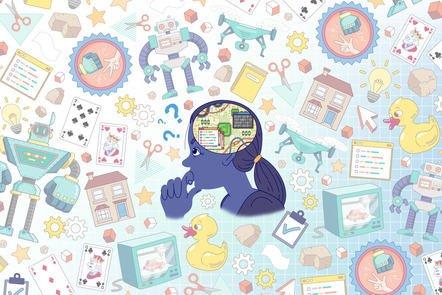
Learn the basics of data science and how to introduce data science in the classroom. Learn practical ways to teach data science. Understanding how to use and interpret data will be essential for the next generation, but many schools and teachers aren’t equipped to teach basic data science to students. This course will help you introduce data science in the classroom so that your students are prepared for the future.

Self Paced
3 Weeks
Short Film in Language Teaching (FutureLearn) FutureLearn
The British Film Institute - BFI,INTO FILM

Short Film in Language Teaching (FutureLearn)

Find out how teaching with short film can bring alive the learning of languages and introduce rich cultural content to lessons. Learners of a new language face exciting challenges in developing their abilities to speak, listen, read and write and in learning about other cultures. Through short film, teachers can bring new worlds into the classroom and bring language learning alive.

Self Paced
3 Weeks
Teaching Programming to 5 - 11 year olds (FutureLearn) FutureLearn
Raspberry Pi Foundation,National Centre for Computing Education

Teaching Programming to 5 - 11 year olds (FutureLearn)

Increase your programming knowledge and develop effective lessons to teach programming to primary school pupils (aged 5-11 years). Build your subject knowledge and develop your skills in teaching programming. Programming gives children the opportunity to be creators rather than just consumers of technology. Instead of only using existing programs to complete tasks, children can use the programs they have written themselves to solve problems and develop new ideas.

Jan 2nd 2023
4 Weeks
Learning through Play with LEGO® Braille Bricks (FutureLearn) FutureLearn
The LEGO Foundation

Learning through Play with LEGO® Braille Bricks (FutureLearn)

Discover the benefits of using a play-based approach to teaching children braille – and life skills – using LEGO Braille Bricks. Experience the benefits of play to engage children with learning braille. Children are engaged in learning from birth – tackling problem solving, communication, collaboration, and exploration from their earliest weeks.

Self Paced
5-12 Weeks