FUN

Dynamiques des paysages (FUN)

Dynamiques des paysages (FUN)

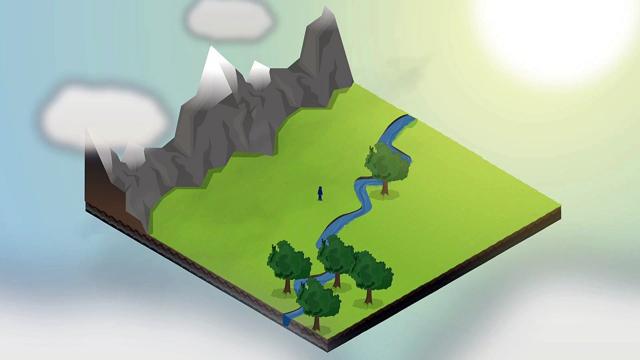
Le paysage désigne "une partie de territoire telle que perçue par les populations, dont le caractère résulte de l'action de facteurs naturels et/ou humains et de leurs interrelations" (convention européenne du paysage). Partout sur la planète, les paysages peuvent évoluer rapidement. On parle de dynamiques des paysages. Artificialisation des sols, urbanisation, pratiques agricoles, fonte des glaciers, élévation du niveau de la mer, avancées des déserts, etc. sont autant de changements qui imposent la prise en compte du paysage dans les politiques publiques au niveau international.

Préserver, c’est avant tout connaître. Le paysage est par essence mutli-dimensionnel et sa connaissance implique un nombre important de disciplines et d’acteurs.
Ce MOOC produit par le campus numérique ENVAM se propose de vous faire découvrir la « vie » des paysages, leur naissance, leurs évolutions, et comment l’homme peut intervenir pour les gérer. La transdisciplinarité qui opère autour de cette thématique génère des recherches originales et créatives. Vous découvrirez également que les paysages regorgent d’une variété de métiers et d’emplois plus grande qu’il n’y paraît.
Au cours de ce MOOC articulé en 6 semaines, votre progression est évaluée chaque semaine par un quizz. En semaine 4 et 6, il vous sera proposé des analyses paysagères qui intégreront des notions déjà vues.

Plan du cours

Semaine 1 : PAYSAGE, PAYSAGES
Semaine 2 : DE LA GENESE DES RELIEFS AUX PAYSAGES
Semaine 3 : ENVELOPPES SUPERFICIELLES DES PAYSAGES ET HYDROGRAPHIE
Semaine 4 : DIMENSION ECOLOGIQUE DE LA DYNAMIQUE DES PAYSAGES
Semaine 5 : INTERVENTIONS HUMAINES TRANSFORMANT LES PAYSAGES : EFFETS NON INTENTIONNELS ET INTENTIONNELS
Semaine 6 : PROJETS DE PAYSAGES ET INTERVENTIONS DE PAYSAGISTES

Go to Class
MOOC List is learner-supported. When you buy through links on our site, we may earn an affiliate commission.

Related Courses

Santé des plantes : de l’observation au diagnostic (FUN) FUN
Agrocampus Ouest

Santé des plantes : de l’observation au diagnostic (FUN)

La suppression prochaine des produits phytosanitaires de synthèse pour les Jardins, Espaces Végétalisés et Infrastructures (JEVI) dont font partie les jardins amateurs, impose un accompagnement des utilisateurs. Ces produits peuvent être remplacés par des techniques dites « alternatives ». Ces techniques sont propres à chaque bioagresseur pour une période donnée. Il est donc primordial de savoir reconnaitre les bioagresseurs et autres causes de désordre affectant la santé et le développement des plantes pour viser au plus juste. Ce MOOC donne toutes les clefs pour passer d’une simple observation au diagnostic, afin d’identifier précisément les causes de désordre affectant la santé des plantes : comprendre le fonctionnement des plantes, connaitre et identifier les principaux ravageurs et maladies des plantes.

No session available
5-12 Weeks
Environmental Challenges: Rights and Values in Ecosystem Services (FutureLearn) FutureLearn
University of Leeds

Environmental Challenges: Rights and Values in Ecosystem Services (FutureLearn)

Differences in values can create conflict. How can we learn to manage our natural resources with integrity? Humans are very innovative, but we’ve also created many ecological problems. We’ve changed the face of the planet, fished the oceans, and we’re causing climate change through emissions. Designing institutional arrangements that recognise ecosystem services in the values we place upon natural systems will be an important way to help governing the planet, for both present and future generations.

Self Paced
2 Weeks
Climate Change Science and Negotiations (edX) EdX
SDGAcademyX,SDG Academy

Climate Change Science and Negotiations (edX)

Humanity is up against a tight timeline to address climate change. Learn how we can deeply decarbonize the global energy systems, and put the world on a 2°C pathway. In this course, learn solutions to mitigate the effects of the global greenhouse gas emissions causing temperature rise, and how to apply these solutions in different national contexts improvements.

Self Paced
Self-Paced
Environmental Management & Ethics (Coursera) Coursera
Technical University of Denmark - DTU

Environmental Management & Ethics (Coursera)

Decision-makers often turn to scientists and engineers to assist them to navigate through complex environmental, health and societal challenges pervaded by systemic uncertainty, ambiguity and ethical implications. This course prepares you to meet the requests and demands of current and future decision-makers and in this course, you will analyze ethical challenges associated with environmental dilemmas and apply different decision making tools relevant to environmental management and regulation.

Aug 3rd 2026
5-12 Weeks
Ingénierie écologique (FUN) FUN
Université Virtuelle Environnement et Développement - UVED

Ingénierie écologique (FUN)

Restaurer des écosystèmes dégradés, dépolluer des milieux, créer des continuités écologiques, développer une agriculture plus respectueuse de l'environnement, sont autant de défis qui se posent aujourd'hui à nous. Pour y répondre, de plus en plus de réflexions et de pratiques se tournent vers l'ingénierie écologique, solutions que l'on dit "basées sur la nature". Ce MOOC vous propose d'en découvrir les fondements, les enjeux, les outils, les acteurs ainsi que les conditions de mise en œuvre.

No sessions available
4 Weeks
An Introduction to Global Health (Coursera) Coursera
University of Copenhagen

An Introduction to Global Health (Coursera)

This course will provide you with an overview of the most important health challenges facing the world today. You will gain insight into how challenges have changed over time, we will discuss the likely determinants of such changes and examine future projections. Successful international strategies and programs promoting human health will be highlighted and global health governance structures will be mapped and the role of the key actors explored.

Aug 3rd 2026
5-12 Weeks
Introduction to Environmental Science (edX) EdX
DartmouthX,Dartmouth College

Introduction to Environmental Science (edX)

A scientific study of the natural world and how it is influenced by people. Major topics include: food, energy, human population, biodiversity and global change. Environmental science is the study of patterns and processes in the natural world and their modification by human activity. To understand current environmental problems, we need to consider physical, biological and chemical processes that are often the basis of those problems.

Self Paced
4 Weeks
Environmental Challenges: Hierarchy in Property Rights (FutureLearn) FutureLearn
University of Leeds

Environmental Challenges: Hierarchy in Property Rights (FutureLearn)

How does language help us develop our relationship with nature and determine the rights of access and ownership? Increasing populations and social changes are pressurising our relationship with the environment. Property rights are embedded in power structures and land management. This course explores the different ways that nature is perceived by different types of societies and the impact of property rights on natural resource management.

Self Paced
2 Weeks
Natural Attenuation of Groundwater Contaminants: New Paradigms, Technologies, and Applications (Coursera) Coursera
Rice University

Natural Attenuation of Groundwater Contaminants: New Paradigms, Technologies, and Applications (Coursera)

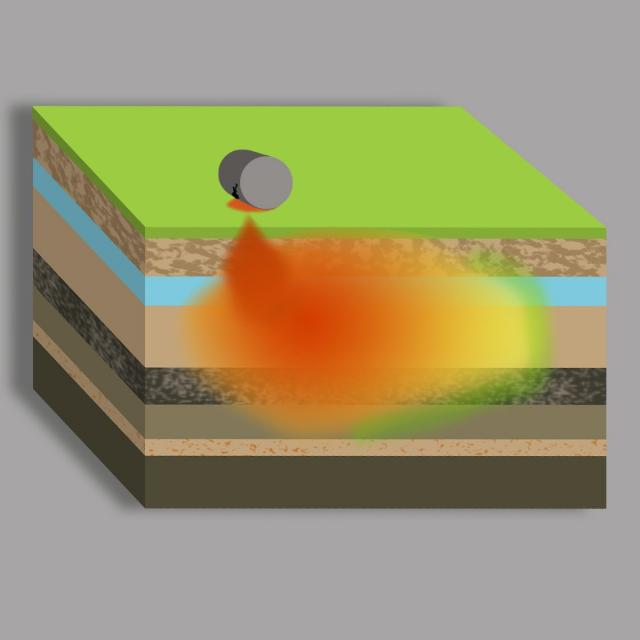
Cleaning up the large number of groundwater contamination sites is a significant and complex environmental challenge. The environmental industry is continuously looking for remediation methods that are both effective and cost-efficient. Over the past 10 years there have been amazing, important developments in our understanding of key attenuation processes and technologies for evaluating natural attenuation processes, and a changing institutional perspective on when and where Monitored Natural Attenuation (MNA) may be applied.

Aug 3rd 2026
5-12 Weeks
A Business Approach to Sustainable Landscape Restoration (Coursera) Coursera
Erasmus University Rotterdam

A Business Approach to Sustainable Landscape Restoration (Coursera)

Integrated landscape management and large-scale landscape restoration should be in every company’s business strategy because in order to reach the Sustainable Development Goal on Land Degradation Neutrality (SDG Number 15.3) scaling up and acceleration of business-driven landscape restoration is urgently needed.

Aug 10th 2026
5-12 Weeks
Energy and Environment (Coursera) Coursera
Dartmouth College

Energy and Environment (Coursera)

This course deals with both renewable and non-renewable energy. By applying scientific principles and considering real-world examples, you will examine: 1. Non-renewable fossil fuels with a focus on coal, petroleum and natural gas and the benefits and consequences of using each. 2. Renewable fuels such as wind and solar and identify that even renewable “green” energy sources have impacts as well as benefits. 3. Biodiversity and global change, which are the integrating units of environmental science.

Aug 3rd 2026
4 Weeks
Agroressources et agro-industries durables (FUN) FUN
Université Fédérale Toulouse Midi-Pyrénées

Agroressources et agro-industries durables (FUN)

Coproduit par l'INP Toulouse et l'INSA Toulouse, ce cours est ouvert sur 6 semaines et vous propose de découvrir ce que sont les agroressources. Pourquoi en parler ? Quelle utilité ? Comment les transformer et les valoriser ? Les agroressources sont des matières premières issues de l'agriculture. Vous découvrirez au cours de ce MOOC le potentiel de valorisation de ces matières issues du carbone renouvelable au travers de leurs utilisations, leurs impacts économiques, environnementaux et sociétaux.

No sessions available
5-12 Weeks