EdX

Drawing Nature, Science and Culture: Natural History Illustration 101 (edX)

Drawing Nature, Science and Culture: Natural History Illustration 101 (edX)

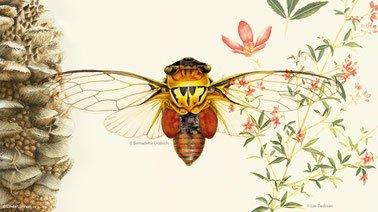
Learn how to see and draw nature like an illustrator. Build observational and visual interpretation skills in an interactive and enjoyable way. Whether an aspiring scientific or medical illustrator or someone who enjoys drawing nature’s wonders, this first-of-its-kind MOOC course is for you. The field of Natural History Illustration is about observing and illustrating subjects from nature, science and culture, with their linkages to the environment being central.

Class Deals by MOOC List - Click here and see EdX's Active Discounts, Deals, and Promo Codes.

Our natural world is a fascinating place. Being able to observe and replicate it through illustration provides insights into life that can change how we think about ourselves and our surroundings.

You will learn essential skills and techniques that form the base for creating accurate and stunning replications of subjects from the natural world. This art and culture course is suitable for people looking to enter the illustration discipline as a serious pursuit or just looking to explore a passion.
As world-standard instructors, we will show you practical ways to develop your skills from the outset. Step by step, we will cover the fundamentals of Natural History Illustration, from the first observation of a subject in the field to the final replication in the studio.
This online course will teach you enduring skills that can be used in many different ways. Join us to explore, observe and draw the natural world and become part of a scientific tradition steeped in history.

What you'll learn:

  • Core scientific observational skills
  • Field drawing and sketching techniques
  • Concept sketch development
  • Composition for natural history illustration
  • Form, proportion and structure essentials
  • Drawing and rendering techniques

Syllabus

Week 1: Introduction
Introduction to course and overview of NHI of historical and contemporary practice to set the scene for an immersive skills building experience.

Week 2: Observational drawing
Introduction to Natural History Illustration methods and demonstration on observational drawing.

Week 3: Field sketching and recording techniques
Introduction to working in the field and recording subjects and their environmental surroundings quickly and accurately.

Week 4: The structure of flowers and leaves
Understanding plant anatomy.

Week 5: The structure of mammals and birds
Understanding animal anatomy.

Week 6: Rendering
Creating finished artworks.

Go to Class
MOOC List is learner-supported. When you buy through links on our site, we may earn an affiliate commission.

Related Courses

Conceptual Change: How New Ideas Take Root (edX) EdX
Smithsonian,SmithsonianX

Conceptual Change: How New Ideas Take Root (edX)

Conceptual Change: How New Ideas Take Root — explores the ways students learn and develop new conceptual understandings, and shows how student misconceptions can be uncovered and addressed as a part of effective learning. This online workshop: Conceptual Change: How New Ideas Take Root? is based on ideas presented in Good Thinking! an original animated series developed by the Smithsonian Science Education Center (SSEC) and FableVision Studios as a professional development resource for K-12 science educators.

Self Paced
Self-Paced
Astrophysics: The Violent Universe (edX) EdX
Australian National University - ANU,ANUx

Astrophysics: The Violent Universe (edX)

Explore the deadliest places in the universe, from black holes to supernovae. Interested in exploring the deadliest and most mysterious parts of our universe? Or, investigating black holes, which warp the very fabric of space-time around them? We will look at what we know about these objects, and also at the many unsolved mysteries that surround them. We will also study white-dwarf stars and neutron stars, where the mind-bending laws of quantum mechanics collide with relativity. And, examine dwarf novae, classical novae, supernovae and even hypernovae: the most violent explosions in the cosmos.

Self Paced
Self-Paced
Engineering for Your Classroom K – 3 (edX) EdX
The University of British Columbia,UBCx

Engineering for Your Classroom K – 3 (edX)

Self-paced, asynchronous course aimed to help educators introduce Science, Math, Engineering and Technology (STEM) concepts to K-3 students. This course is designed for educators to learn about ways to teach Engineering and STEM concepts to their students through fun, hands-on activities.

Self Paced
Self-Paced
PredictionX: Diviner’s Guide (edX) EdX
HarvardX,Harvard University

PredictionX: Diviner’s Guide (edX)

This course is an overview of divination systems, ranging from ancient Chinese bone burning to modern astrology. Humans have always sought to know their own future, be it the destiny of an empire or an individual's fate. Across cultures and history, we find people trying to find their place in the Universe by attempting to gaze into the future.

Self Paced
Self-Paced
The Chemistry of Life (edX) EdX
Kyoto University,KyotoUx

The Chemistry of Life (edX)

Learn how to generate ideas at the interface between chemistry and biology. Chemistry and biology are traditionally taught as separate subjects at the high school level, where students memorize fundamental scientific principles that are universally accepted. However, at the university level and in industry, we learn that science is not as simple as we once thought. We are constantly confronted by questions about the unknown and required to use creative, integrated approaches to solve these problems.

Self Paced
Self-Paced
Buyer Behaviour and Analysis (edX) EdX
Curtin University,CurtinX

Buyer Behaviour and Analysis (edX)

Learn how to analyse and apply consumer and buyer behaviour fundamentals to develop an effective marketing campaign. For marketers, an understanding of how a consumer selects, purchases, uses and disposes of products and services is pertinent to successfully managing the marketing function. In this course, you will learn about the role of consumer behaviour within marketing. We will discuss how this behaviour is shaped by the social and cultural environment, as well as a number of psychological factors.

Mar 26th 2024
5-12 Weeks
Anthropology of Current World Issues (edX) EdX
University of Queensland,UQx

Anthropology of Current World Issues (edX)

Learn to use anthropological ideas to see the world from a range of perspectives and points of view. This course will allow you to better understand the world around you through utilising the anthropological lens. You will learn about the way in which anthropology as a discipline can shed new perspectives on current world issues, from indigeneity to migration and material culture.

Self Paced
Self-Paced
Science & Cooking: From Haute Cuisine to Soft Matter Science (chemistry) (edX) EdX
HarvardX,Harvard University

Science & Cooking: From Haute Cuisine to Soft Matter Science (chemistry) (edX)

Top chefs and Harvard researchers explore how everyday cooking and haute cuisine can illuminate basic principles in chemistry, physics, and engineering. Learn about food molecules and how chemical reactions can affect food texture and flavor. During each module of this course, chefs reveal the secrets behind some of their most famous culinary creations — often right in their own restaurants. Inspired by such cooking mastery, the Harvard team will then explain the science behind the recipe.

Self Paced
Self-Paced
The Science and Business of Biotechnology (edX) EdX
MIT,MITx

The Science and Business of Biotechnology (edX)

Explore the latest scientific innovations in biotechnology, and novel business and financing models for commercializing them. This course focuses on early-stage biotechnology companies, with particular emphasis on understanding the underlying science, technology, and disease targets—together with the application of novel business structures and financing methods—to facilitate drug discovery, clinical development, and greater patient access to new therapies.

Self Paced
Self-Paced
Science: A Work in Progress (edX) EdX
Smithsonian,SmithsonianX

Science: A Work in Progress (edX)

Science: A Work in Progress - shows how science isn’t produced through one linear method, but through an interconnected set of practices, and examines ways that teachers can make learning science in the classroom more authentic. This online workshop: Science: A Work in Progress, is based on ideas presented in Good Thinking! an original animated series developed by the Smithsonian Science Education Center.

Self Paced
Self-Paced
Question Everything: Scientific Thinking in Real Life (edX) EdX
University of Queensland,UQx

Question Everything: Scientific Thinking in Real Life (edX)

Learn how to use math and science to solve everyday problems and better prepare yourself to continue studying science in high school and beyond. Have you ever wondered how you can apply math and science skills to real life? Do you wish you could go beyond what you've learned in the classroom? This science course will advance your knowledge as we unpack some important scientific thinking skills using real-world examples.

Self Paced
Self-Paced
Psychology of Personal Growth (edX) EdX
The Hong Kong University of Science and Technology - HKUST,HKUSTx

Psychology of Personal Growth (edX)

Learn to understand personal growth from a comparative perspective. Want to learn about how you become who you are, but not sure where to kick off that journey? This is a fantastic course for you. This course covers important factors influencing your growing up. We discuss personality and emotion, romantic and intimate relationships, as well as the interplay between culture and these factors on your personal growth journey.

Self Paced
Self-Paced