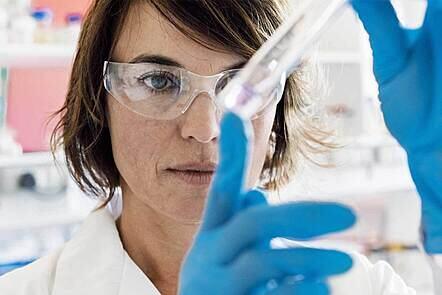
Diagnóstico de HIV (TELELAB)

Diagnóstico de HIV (TELELAB)

O curso aborda a morfologia do vírus da imunodeficiência humana (HIV), sua multiplicação e a presença de marcadores sorológicos circulantes. Descreve os princípios metodológicos de métodos para o diagnóstico da infecção e explica os procedimentos para a coleta de material, realização dos testes, leitura e interpretação dos resultados. Apresenta as normas e os fluxogramas indicados pelo Ministério da Saúde para o diagnóstico da infecção.

Objetivo:
Atualizar os profissionais de saúde sobre os testes recomendados pelo Ministério da Saúde, os procedimentos para a leitura e interpretação dos testes e as condutas e fluxogramas indicados no diagnóstico da infecção pelo vírus da imunodeficiência humana (HIV).

Conteúdo do Curso:

  • Identificar a estrutura, as proteínas e as enzimas do HIV envolvidas no processo de multiplicação viral importantes para o diagnóstico laboratorial
  • Identificar o processo de replicação viral para relacionar com a patogênese viral e com diagnóstico
  • Identificar a sequencia de surgimento dos marcadores sanguíneos decorrentes da infecção e a relação com o diagnóstico
  • Identificar os princípios metodológicos de testes sorológicos utilizados no diagnóstico da Infecção pelo HIV
  • Analisar e interpretar os resultados de testes rápidos
  • Aplicar os fluxogramas indicados pelo Ministério da Saúde na rotina de trabalho
Go to Class
MOOC List is learner-supported. When you buy through links on our site, we may earn an affiliate commission.
Related Courses

PrEParing: PrEP for Providers and Patients (Coursera) Coursera
Johns Hopkins University

PrEParing: PrEP for Providers and Patients (Coursera)

Pre-Exposure Prophylaxis (PrEP) using the antiretroviral medication emtricitibine/tenofovir approved in countries around the world is a highly effective means of reducing transmission of HIV through sexual encounters and needle sharing. This Johns Hopkins University course PrEPares you with essential information, concepts and practical advice regarding PrEP from leaders in the field. A first of its kind learning opportunity, both providers and patients learn from the same experts through content that meets the needs of both audiences, while facilitating the opportunity for a shared community space.

Oct 12th 2026
5-12 Weeks
Epidemics - the Dynamics of Infectious Diseases (Coursera) Coursera
Pennsylvania State University

Epidemics - the Dynamics of Infectious Diseases (Coursera)

Not so long ago, it was almost guaranteed that you would die of an infectious disease. In fact, had you been born just 150 years ago, your chances of dying of an infectious disease before you've reached the tender age of 5 would have been extremely high. Since then, science has come a long way in understanding infectious diseases - what they are, how they spread, and how they can be prevented. But diseases like HIV/AIDS, Malaria, Tuberculosis, or the flu are still major killers worldwide, and novel emerging diseases are a constant threat to public health. In addition, the bugs are evolving. Antibiotics, our most potent weapon against bacterial infections, are losing their power because the bacteria are becoming resistant. In this course, we'll explore the major themes of infectious diseases dynamics.

Jun 22nd 2026
5-12 Weeks
HIV Treatment and Prevention in Asia (AME) AME
Virology Education

HIV Treatment and Prevention in Asia (AME)

This Online Education Activity is accredited by the European Accreditation Council for Continuing Medical Education (EACCME) for 1 European CME credit (ECMEC®).
 Welcome to the HIV Treatment and Prevention in Asia edition of the Online Meeting Highlights. Here you will learn about the use of PrEP and INSTIs in Asia as well as the prevalence of HIV drug resistance across the region, and its implications on the decision-making process when designing an optimal treatment regimen.

Self Paced
Self-Paced
Global Updates on HIV (AME) AME
Virology Education

Global Updates on HIV (AME)

This Online Education Activity is accredited by the European Accreditation Council for Continuing Medical Education (EACCME) for 1 European CME credit (ECMEC®). Welcome to the Global Updates of HIV edition of the Online Meeting Highlights. Here you will learn about the latest updates on novel HIV drugs and their formulation for HIV prevention and treatment.

Self Paced
Self-Paced
HIV Science (FUN) FUN
Institut Pasteur

HIV Science (FUN)

Since the start of the epidemic HIV has infected over 75 million people and provoked more than 35 million deaths. Today, although HIV replication can be controlled by antiretroviral treatment, HIV infection remains an outstanding global health issue, with 36.7 million infected people and 1 million HIV-related deaths in 2016, according to WHO. Half of the infected population does not have access to antiretroviral treatment and 2 million new infections are registered every year. In addition there is currently no cure for HIV and antiretroviral treatment needs to be maintained for life. In this MOOC we will review different aspects of HIV infection: from its biological origin and its identification as the causative agent of AIDS to the perspectives of eradication.

No sessions available
5-12 Weeks
Diagnosing Rare Diseases: from the Clinic to Research and back (FutureLearn) FutureLearn
Foundation for Rare Diseases,European Joint Programme on Rare Diseases

Diagnosing Rare Diseases: from the Clinic to Research and back (FutureLearn)

Discover the role of research, clinical investigation and data sharing in diagnosing rare diseases. Learn about rare diseases diagnosis, genetic testing and diagnostic research. Around 30 million people in Europe are living with a rare genetic disease (a disease that affects less than 1 in 2,000 people).

Self Paced
5-12 Weeks
Doença Falciforme - Conhecer para cuidar (TELELAB) TELELAB
Universidade Federal de Santa Catarina - UFSC

Doença Falciforme - Conhecer para cuidar (TELELAB)

Este curso visa a transmitir aos participantes informações adequadas obre a Doença Falciforme, bem como estabelecer subsídios que possam contribuir com a melhoria do atendimento às pessoas com a doença. Você aprenderá a história da doença e sua dispersão pelo mundo, quais os principais sintomas que a caracterizam e quais os métodos utilizados para o diagnóstico laboratorial. Aprenderá também sobre como os profissionais nos diversos níveis das Redes de Atenção à Saúde devem realizar o acolhimento e o atendimento das pessoas diagnosticadas com a doença falciforme.

Self Paced
Self-Paced
Doença de Chagas - Triagem e diagnóstico sorológico em Unidades Hemoterápicas e Laboratórios de Saúde Pública (TELELAB) TELELAB
Universidade Federal de Santa Catarina - UFSC

Doença de Chagas - Triagem e diagnóstico sorológico em Unidades Hemoterápicas e Laboratórios de Saúde Pública (TELELAB)

O curso propõe tratar de questões referentes à preparação de realização do método de diagnóstico da Doença de Chagas - da infeção por Trypanossoma cruzi - em ambiente de laboratórios de Saúde Pública, considerando a identificação e utilização adequada dos equipamentos e procedimentos.

Self Paced
Self-Paced
Syndromic Testing and Antimicrobial Stewardship (FutureLearn) FutureLearn
British Society for Antimicrobial Chemotherapy - BSAC

Syndromic Testing and Antimicrobial Stewardship (FutureLearn)

Explore how syndromic testing can aid rapid disease diagnostics and what this means for antimicrobial stewardship (AMS) programs. Learn about the value of a syndromic approach to infectious disease testing. This course offers healthcare professionals the chance to explore the background, benefits, and challenges of a syndromic approach to the diagnosis of clinical infections.

Self Paced
2 Weeks