EdX

CS50's Introduction to Computer Science (edX)

CS50's Introduction to Computer Science (edX)

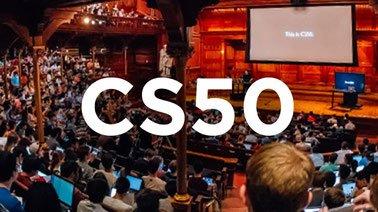
An introduction to the intellectual enterprises of computer science and the art of programming. This is CS50, Harvard University's introduction to the intellectual enterprises of computer science and the art of programming for majors and non-majors alike, with or without prior programming experience. An entry-level course taught by David J. Malan, CS50 teaches students how to think algorithmically and solve problems efficiently.

Class Deals by MOOC List - Click here and see EdX's Active Discounts, Deals, and Promo Codes.

Topics include abstraction, algorithms, data structures, encapsulation, resource management, security, software engineering, and web development. Languages include C, PHP, and JavaScript plus SQL, CSS, and HTML. Problem sets inspired by real-world domains of biology, cryptography, finance, forensics, and gaming. As of Fall 2014, the on-campus version of CS50 was Harvard's largest course.
Students who earn a satisfactory score on 9 problem sets (i.e., programming assignments) and a final project will receive a certificate from HarvardX. This is a self-paced course–you may take CS50 on your own schedule.

This course is part of the following programs:
-Computer Science for Game Development Professional Certificate
-Computer Science and Mobile Apps Professional Certificate
-Computer Science for Web Programming Professional Certificate
-Computer Science for Artificial Intelligence Professional Certificate
-CS50's AP® Computer Science Principles XSeries

What you'll learn

  • A broad and robust understanding of computer science and programming
  • How to think algorithmically and solve programming problems efficiently
  • Concepts like abstraction, algorithms, data structures, encapsulation, resource management, security, software engineering, and web development
  • Familiarity in a number of languages, including C, Python, SQL, and JavaScript plus CSS and HTML
  • How to engage with a vibrant community of like-minded learners from all levels of experience
  • How to develop and present a final programming project to your peers

Go to Class
MOOC List is learner-supported. When you buy through links on our site, we may earn an affiliate commission.

Related Courses

Statistics Using Python (edX) EdX
University of Wisconsin–Madison,WisconsinX

Statistics Using Python (edX)

Learn the fundamentals of statistics using Python. This course is a compact primer in statistics as a foundation for data-driven business analysis. A selection of concepts include descriptive statistics, probability, inference, correlation, and regression. The course also exposes students to basic Python programming for use in statistics.

Jan 23rd 2024
5-12 Weeks
Autonomous Mobile Robots (edX) EdX
ETH Zurich,ETHx

Autonomous Mobile Robots (edX)

Basic concepts and algorithms for locomotion, perception, and intelligent navigation. Robots are rapidly evolving from factory workhorses, which are physically bound to their work-cells, to increasingly complex machines capable of performing challenging tasks in our daily environment. The objective of this course is to provide the basic concepts and algorithms required to develop mobile robots that act autonomously in complex environments.

Self Paced
Self-Paced
Recommender Systems: Behind the Screen (edX) EdX
Université de Montréal,UMontrealX

Recommender Systems: Behind the Screen (edX)

How are items recommended when you’re browsing for movies, jobs or clothing online? Register here and you’ll discover the fundamental concepts and methods allowing the most relevant item suggestions to users from e-commerce to online advertisement. In this course, you will explore and learn the best methods and practices in recommender systems, which are an essential component of the online ecosystem. This course was developed by IVADO and HEC Montréal as part of a workshop that took place in Montreal.

Sep 26th 2023
5-12 Weeks
Introduction to Functional Programming (edX) EdX
Delft University of Technology,DelftX

Introduction to Functional Programming (edX)

The aim of this course is to teach the foundations of functional programming and how to apply them in the real world. Broadly speaking, functional programming is a style of programming in which the primary method of computation is the application of functions to arguments. Among other features, functional languages offer a compact notation for writing programs, powerful abstraction methods for structuring programs, and a simple mathematical basis that supports reasoning about programs.

No sessions available
5-12 Weeks
Introduction to Computational Thinking and Data Science (edX) EdX
MIT,MITx

Introduction to Computational Thinking and Data Science (edX)

This course is an introduction to using computation to understand real-world phenomena. This course will teach you how to use computation to accomplish a variety of goals and provides you with a brief introduction to a variety of topics in computational problem solving. This course is aimed at students with some prior programming experience in Python and a rudimentary knowledge of computational complexity.

Mar 20th 2024
5-12 Weeks
Understanding the World Through Data (edX) EdX
MIT,MITx

Understanding the World Through Data (edX)

Become a data explorer – learn how to leverage data and basic machine learning algorithms to understand the world. Speech recognition, drones, and self-driving cars – things that once seemed like pure science fiction – are now widely available technologies, and just a few examples of how humans have taught machines to analyze data and make decisions. In this hands-on, introductory course, you will examine all the forms in which data exists, learn tools that uncover relationships between data, and leverage basic algorithms to understand the world from a new perspective.

Mar 13th 2024
5-12 Weeks
Applied Quantum Computing III: Algorithm and Software (edX) EdX
Purdue University,PurdueX

Applied Quantum Computing III: Algorithm and Software (edX)

Learn domain-specific quantum algorithms and how to run them on present-day quantum hardware. This course is part III of the series of Quantum computing courses, which covers aspects from fundamentals to present-day hardware platforms to quantum software and programming. The goal of part III is to discuss some of the key domain-specific algorithms that are developed by exploiting the fundamental quantum phenomena (e.g. entanglement)and computing models discussed in part I.

Mar 25th 2024
5-12 Weeks