The course provides the basics of criminal law.
More info:http://www.uninettunouniversity.net/en/mooc-program.aspx?lf=it&courseid=3504&degree=208&planid=242&faculty=0
The course provides the basics of criminal law.
More info:http://www.uninettunouniversity.net/en/mooc-program.aspx?lf=it&courseid=3504&degree=208&planid=242&faculty=0
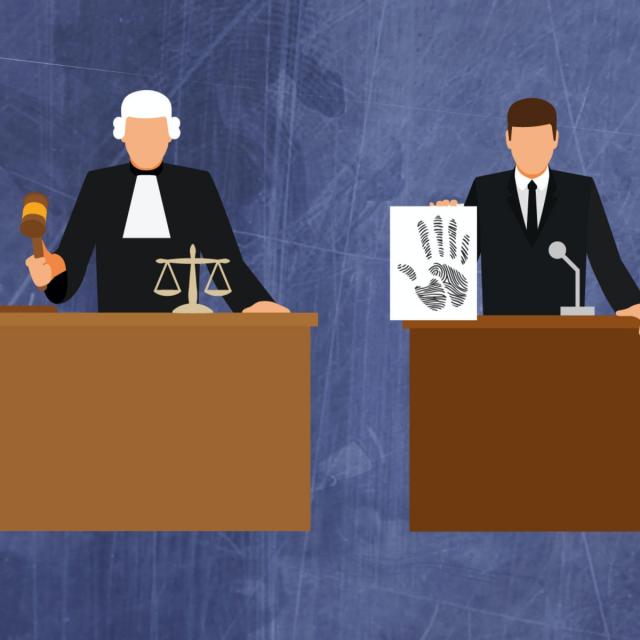
L’objectif de ce cours est d’encourager la réflexion critique en ce qui concerne la « science forensique », également appelée police technique et scientifique ou criminalistique. À l’heure actuelle, de manière générale, la plupart des gens sont fascinés par les possibilités techniques qu’offre la police scientifique. Ils sont bercés par une certaine illusion que les preuves de la science forensique sont infaillibles et fournissent des résultats factuels sûrs à 100 %. Ce cours – dispensé par des spécialistes du domaine – dépasse l’image conventionnelle véhiculée par des séries télévisées comme « Les Experts ».
Big data, artificial intelligence, machine learning, autonomous cars, chatbots, just a few terms that have become a part of our professional legal and political vocabulary. Emerging technologies and technological advancement have confronted us in our daily practice and will continue to do so in the future. Whether we’re buying something online, taking part in an election, or chatting with friends across the globe. Technology is here and it is here to stay.
The course of logic and legal informatics is divided into two sections. The first, is applied to the analysis of legal reasoning, therefore, of 'interpretation and argumentation. The second, however, relates to that particular relationship that is established between law and computer science, or more generally between law and new technologies.
The object of the course are the bankruptcy procedure and the procedures with wich enterprises can ride the crises over.
From the Nuremberg trial to the case against Saddam Hussein, from the prosecution of Al-Qaeda terrorists to the trial of Somali pirates – no area of law is as important to world peace and security as international criminal law. Taught by one of the world’s leading experts in the field, this course will educate students about the fundamentals of international criminal law and policy. We will explore the contours of international crimes such as genocide, war crimes, terrorism, and piracy. We will examine unique modes of international criminal liability and specialized defenses. And we will delve into the challenges of obtaining custody of the accused and maintaining control of the courtroom.
An introduction to the main themes of the American Constitution—popular sovereignty, separation of powers, federalism, and rights.
Environmental law may be the one institution standing between us and planetary exhaustion. It is also an institution that needs to be reconciled with human liberty and economic aspirations. This course considers these issues and provides a tour though existing legal regimes governing pollution, water law, endangered species, toxic substances, environmental impact analyses, and environmental risk.
Drawing on the contributions of several academic disciplines including law, psychology, sociology, history, educational and health sciences, economy and anthropology, an interdisciplinary approach guides the student into a selection of critical issues concerning children’s rights. Participants will gain insight relative to the development of this specific human rights category, as well as to the evolution of the challenges faced by children over time and society’s efforts to respond.
This is a course about the history of Skepticism from the ancient Greeks to today, with special attention to the political ramifications of questioning man's ability to know the world and himself with any certainty. We will discuss the debates raging between Plato and the Sophists, the rise of Christianity in the Roman world, and the so-called 'Skeptical Crisis' of the Renaissance as well as Pierre Bayle's Skepticism and David Hume's.
Le cours porte sur les usages généralement admis en matière de rédaction de contrats commerciaux, dans leur forme continentale ou anglo-saxonne. Les principales clauses de ces contrats sont examinées, à l’aide d’exemples tirés de contrats classiques.
Vast amounts of personal information are processed in the cloud. But who is legally responsible for such ‘personal data’ in cloud environments? What duties do cloud providers like Amazon, Microsoft, and Google have? And what rights can you, as an individual, exercise under data protection law? If you’d like to find out, then this course is for you!
“International Humanitarian Law in Theory and Practice” is the first MOOC of the Kalshoven-Gieskes Forum on International Humanitarian Law, which is the platform within the Grotius Centre for International Legal Studies of Leiden University for the research, teaching and dissemination of international humanitarian law (IHL).