Comportamiento adaptativo (Coursera)

Comportamiento adaptativo (Coursera)

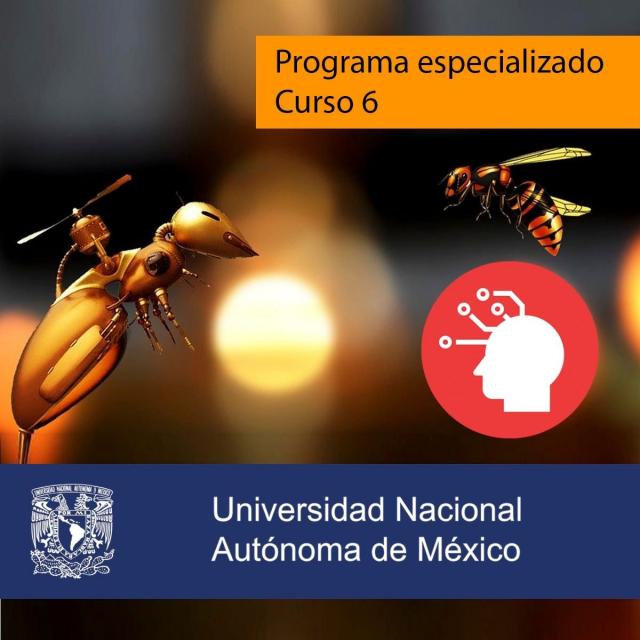
Los seres vivos han evolucionado en entornos cambiantes, por lo que han desarrollado mecanismos que les permiten exhibir comportamiento adaptativo. Usando el método sintético, podemos construir sistemas artificiales adaptativos que implementen dichos mecanismos, con lo cual también podemos incrementar nuestra comprensión de los sistemas naturales.

Class Deals by MOOC List - Click here and see Coursera's Active Discounts, Deals, and Promo Codes.

En este curso veremos diversos conceptos que se han aplicado en la inteligencia artificial con orígenes en la biología y en la cibernética. Construyendo sobre ejemplos de sistemas vivos, revisaremos diversos algoritmos que permiten a los sistemas adaptarse y de esta manera enfrentar a la complejidad y cambios de su entorno. También cubriremos temas relacionados con la robustez, la cual complementa a la adaptación. Finalmente, veremos algunas aplicaciones de este tipo de inteligencia artificial. En el proyecto final, se desarrollará un sistema artificial que exhiba comportamiento adaptativo.

Course 6 of 9 in the Introducción a la inteligencia artificial Specialization

Syllabus

WEEK 1
Adaptación en animales y máquinas
En este módulo se realizará un breve recorrido histórico donde revisaremos los principales conceptos del comportamiento adaptativo.

WEEK 2
Auto-organización
Un mecanismo que puede generar adaptación es la auto-organización. Se revisarán conceptos y casos particulares de auto-organización en diversos ámbitos.

WEEK 3
Robustez
En este módulo revisaremos cómo es que la robustez complementa a la adaptación, ya que mantiene la funcionalidad de los sistemas en presencia de cambios

WEEK 4
Aplicaciones
Para ilustrar los conceptos vistos hasta ahora, se presentarán ejemplos de aplicaciones, mostrando cómo la adaptabilidad puede beneficiar a la movilidad urbana en distintos casos.

Go to Class
MOOC List is learner-supported. When you buy through links on our site, we may earn an affiliate commission.

Related Courses

Prompt Engineering for Web Developers (Coursera) Coursera
Scrimba

Prompt Engineering for Web Developers (Coursera)

Not quite getting the results you want from ChatGPT? Wondering how you can use AI language models to your advantage? Then this course is for you! If you’ve spent any amount of time with AI language models like ChatGPT and Google Bard, you may have noticed the results can sometimes be, well, frustrating. When it comes to leveraging AI language models, your output is often only as good as your input. In other words, it’s all about learning how best to communicate your desired results. Effective prompt engineering is the secret sauce for getting the most out of AI.

Oct 12th 2026
3 Weeks
AI for Business: Generation & Prediction (Coursera) Coursera
Coursera Instructor Network

AI for Business: Generation & Prediction (Coursera)

Artificial Intelligence (AI) is not a new technology, it has been in development for decades. Today, however, AI is in the spotlight as it reshapes the way businesses operate, innovate, and engage with customers. Generative AI stands at the forefront of this transformation. This course demonstrates the foundations and practices of using Generative AI in Business settings.

Oct 12th 2026
1 Week
Our Earth's Future (Coursera) Coursera
American Museum of Natural History

Our Earth's Future (Coursera)

Our Earth’s Future is about the science of climate change and how to talk about it. You will learn from scientists in the fields of climatology, oceanography, Earth science, and anthropology who study how climate change is affecting people, populations, and ways of life. Explore the multiple lines of evidence for the human-induced climate change that is happening today, and consider what that means for the future of our planet. At the end of this course you will be able to understand key scientific principles, identify and address misconceptions, and contribute confidently to conversations about climate change.

Oct 5th 2026
5-12 Weeks
Artificial Intelligence and legal issues (Coursera) Coursera
Politecnico di Milano

Artificial Intelligence and legal issues (Coursera)

The purpose of the course is to help students understand the legal implications related to the design and use of artificial intelligence systems, providing an overview of the risks and legal protections that can be envisaged and giving an overview of the legislation and legal principles currently applicable on the subject.

Oct 5th 2026
4 Weeks
Technologies and platforms for Artificial Intelligence (Coursera) Coursera
Politecnico di Milano

Technologies and platforms for Artificial Intelligence (Coursera)

This course will address the hardware technologies for machine and deep learning (from the units of an Internet-of-Things system to a large-scale data centers) and will explore the families of machine and deep learning platforms (libraries and frameworks) for the design and development of smart applications and systems.

Oct 12th 2026
4 Weeks
Designing Autonomous AI (Coursera) Coursera
University of Washington,Microsoft

Designing Autonomous AI (Coursera)

When children learn how to hit a baseball, they don’t start with fastballs. Their coaches begin with the basics: how to grip the handle of the bat, where to put their feet and how to keep their eyes on the ball. Similarly, an autonomous AI system needs a subject matter expert (SME) to break a complex process or problem into easier tasks that give the AI important clues about how to find a solution faster.

Oct 12th 2026
4 Weeks
The AI Awakening: Implications for the Economy and Society (Coursera) Coursera
Stanford University

The AI Awakening: Implications for the Economy and Society (Coursera)

This course explores how the advances in artificial intelligence can and will transform our economy and society in the near future. You will hear insights from esteemed AI researchers and industry leaders in technology, economics, and business. The curriculum addresses the technological underpinnings of Generative AI, its profound implications for businesses and the broader economy, and the potential risks associated with AI-driven transformations in the workforce.

Oct 12th 2026
3 Weeks
Introduction to Complexity Science (Coursera) Coursera
National University of Singapore

Introduction to Complexity Science (Coursera)

This course explores the features of complexity science. Our world is connected by an abundance of complex systems. Across all levels of organizations from physical, biological world to the social world, we may think of the connectivity between individual elements and how they interact and influence each other. For example, how humans transmit pandemics within a group, how cars interact in the traffic system and how networks connect in governmental organizations. Although these systems are diverse and different, they have surprisingly huge features in common.

Oct 5th 2026
5-12 Weeks
Machine Teaching for Autonomous AI (Coursera) Coursera
University of Washington

Machine Teaching for Autonomous AI (Coursera)

Just as teachers help students gain new skills, the same is true of artificial intelligence (AI). Machine learning algorithms can adapt and change, much like the learning process itself. Using the machine teaching paradigm, a subject matter expert (SME) can teach AI to improve and optimize a variety of systems and processes. The result is an autonomous AI system.

Oct 5th 2026
4 Weeks
Legal Tech and the Digital Transformation of Law (Coursera) Coursera
Universidad Austral

Legal Tech and the Digital Transformation of Law (Coursera)

The digital revolution changed the way we communicate and trade. Now, it is coming into the world of law. This program will give you a broad overview of the main trends that are affecting the legal industry: the birth of the legal tech market and the application of technology in law; the role of artificial intelligence in the automation of the work of lawyers; blockchain technology and its impact on the way we sign and execute contracts; initiatives to ensure access to justice through virtual courts and robot judges.

Oct 5th 2026
5-12 Weeks