From Climate Science to Action (Coursera)

Offered by The World Bank,
From Climate Science to Action (Coursera)

Showcasing the most recent scientific evidence, explaining the different regional impacts and divulging climate action strategies, along with interactive tools such as a Carbon Footprint Tracker and (I) NDC Platform, this MOOC provides some opportunities, where you can take action on climate change.

Class Deals by MOOC List - Click here and see Coursera's Active Discounts, Deals, and Promo Codes.

Each part of the world faces specific vulnerabilities to climate change and has different opportunities to mitigate the effects and build resilience in the 21st century. With the ratification of the Paris Agreement, many countries have acceded to act in combatting climate change. Indeed, without climate action, decades of sustainable development is at risk, thus making this a ‘make or break’ point in time.
This action-oriented MOOC gives you the opportunity to learn about regional climate change impacts and sector-specific strategies to increase resilience and move towards a low-carbon future. You will have the opportunity to explore these issues in depth and tailor your learning experience for one or more of the following regions:
• Latin America and Caribbean
• Sub-Saharan Africa
• Middle East and North Africa
• Eastern Europe and Central Asia
• East Asia and Pacific
• South Asia
In this endeavor, the MOOC brings together renowned scientists and policymakers to provide a synthesis of the most recent scientific evidence on climate change, regional low emissions and climate resilient development strategies across sectors. A team of expert Instructors will lead discussions around the Paris Agreement, reflections from COP22 and the progress on Nationally Determined Contributions (NDCs).

Syllabus

WEEK 1
Climate Change in the 21st Century
• Historical and projected observed changes in the climate system, leading up to the end of the 21st century
• The potential of Intended Nationally Determined Contributions (INDCs) submitted at COP 21 from 187 countries to induce climate action
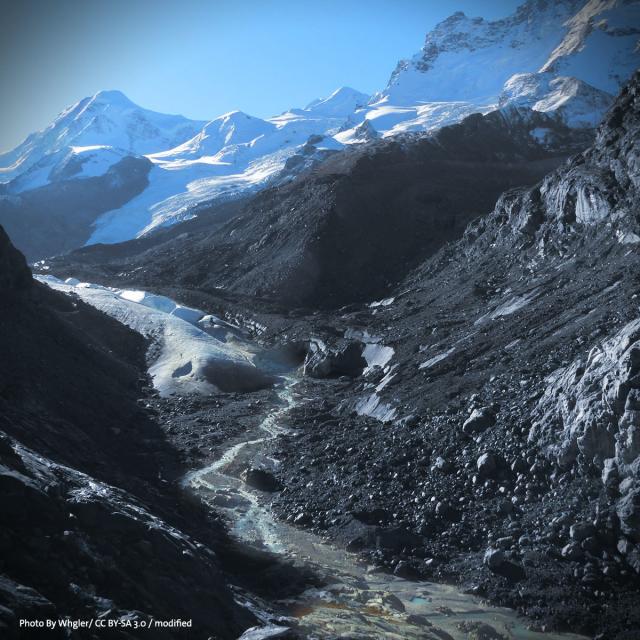
• Trends in climate change impacts, including loss of Arctic sea ice, melting glaciers, increased heat waves and extreme temperatures, and drought and aridity
• Possible responses from natural systems, explaining how warming could result in sea-level rise, heat waves and extreme temperatures, and ocean acidification

WEEK 2
Sectoral and Regional Impacts
• Impacts on key development sectors—from warming above pre-industrial temperatures and projected climate trends—across each of the world’s regions
• Sectoral impacts focusing on agricultural production, water resources, ecosystem services, and coastal vulnerability for affected populations
• Importance of risks with the potential to reverse hard-won development gains and potentially trap millions in poverty, illustrating the need for urgent action now

WEEK 3
From Science to Action on Climate Change
• Region-specific discussions on mitigation actions needed to reduce emissions while decreasing vulnerability to climate change impacts through adaptation and by building climate resilience
• Perspectives from regional experts on their experiences in strategies and actions proposed in each region to help transition towards a low-emissions, climate-resilient development path
• Discussions on the progress of the Nationally Determined Contributions (NDCs), outcomes of the Paris Agreement and reflections from the Conference of Parties (COP)22

WEEK 4
What You Can Do
• Transformative impact of day-to-day changes when brought to a global scale
• The rationale for acting now, acting together and acting differently
• Examples and expected benefits of mitigation and adaptation policies, considering both contributions to global emission reductions and local development opportunities
In addition to the core resources and assignments, you may choose to go further, engaging in fun optional exercises, networking, discussion, and diving deeper into our rich selection of supplemental resources. You will have the opportunity to explore these issues in depth and tailor your learning experience for one or more of the following regions:
• Latin America and Caribbean
• Sub-Saharan Africa
• Middle East and North Africa
• Eastern Europe and Central Asia
• East Asia and Pacific
• South Asia

Go to Class
MOOC List is learner-supported. When you buy through links on our site, we may earn an affiliate commission.

Related Courses

Learning for a Sustainable Future: Live at COP28 (Coursera) Coursera
University of Edinburgh

Learning for a Sustainable Future: Live at COP28 (Coursera)

The 28th UN Climate Change Conference (COP28) is being held in Dubai, UAE from 30 November – 12 December 2023. It will bring together heads of state, climate experts and campaigners to agree and accelerate coordinated global action on climate change. This two-week course, which runs in parallel with the COP28 conference, offers you an opportunity to examine what COP28 is, why it’s important and reflect on how you can add your voice to the call for collective action for a sustainable future.

Aug 10th 2026
2 Weeks
Companies and climate change (Coursera) Coursera
ESSEC Business School

Companies and climate change (Coursera)

How can companies act in the fight against global warming? This is a question that is being asked more and more urgently to all economic actors. To shed some light on your thoughts, we have met with four companies of various sizes and sectors of activity that are very committed to the subject. They will share with you their progress in aligning themselves with the objectives of the Paris Accord.

Aug 3rd 2026
4 Weeks
Our Energy Future (Coursera) Coursera
University of California, San Diego

Our Energy Future (Coursera)

This course is designed to introduce students to the issues of energy in the 21st century – including food and fuels – which are inseparably linked – and will discuss energy production and utilization from the biology, engineering, economics, climate science, and social science perspectives. This course will cover the current production and utilization of energy, as well as the consequences of this use, examining finite fossil energy reserves, how food and energy are linked, impacts on the environment and climate, and the social and economic impacts of our present energy and food production and use.

Jul 27th 2026
5-12 Weeks
Planning for Climate Change in African Cities (Coursera) Coursera
Erasmus University Rotterdam,United Cities and Local Governments of Africa,African Local Government Academy,Institute for Housing and Urban Development

Planning for Climate Change in African Cities (Coursera)

Climate change poses a threat to economic growth and long-term prosperity of many countries around the world. Africa is not an exception, considering the actual and potential impacts of climate change and climate variability that will threaten its vulnerable sectors and human populations. African countries are projected to experience changing rainfall patterns, rising sea levels, and higher temperatures that will affect food security, agricultural production, water availability, and public health, among others. These climate change impacts and climate variability can further produce social and political problems, such as rural-urban migration and water resource disputes.

Aug 17th 2026
5-12 Weeks
Climate Change and Water in Mountains: A Global Concern (Coursera) Coursera
University of Geneva

Climate Change and Water in Mountains: A Global Concern (Coursera)

What is climate change? How are mountain regions affected by the evolution of water resources and their uses? What kind of risks need to be considered? Mountains are recognized as particularly sensitive physical environments where intense and rapid changes have in the past, and may increasingly in the future, place pressure on their resource base.

Aug 10th 2026
5-12 Weeks
Climate Adaptation in Africa (Coursera) Coursera
University of Cape Town

Climate Adaptation in Africa (Coursera)

This course explores why climate change adaptation is important in the African context. Africa is considered one to be one of the most vulnerable regions to climate change. Historically, climate-related hazards such as drought, flooding, pest and disease outbreaks, coastal storms and heat waves have had devastating impacts on people and the environment in which they live.

Aug 3rd 2026
5-12 Weeks
An Introduction to the U.S. Food System: Perspectives from Public Health (Coursera) Coursera
Johns Hopkins University

An Introduction to the U.S. Food System: Perspectives from Public Health (Coursera)

A food system encompasses the activities, people and resources involved in getting food from field to plate. Along the way, it intersects with aspects of public health, equity and the environment. In this course, we will provide a brief introduction to the U.S. food system and how food production practices and what we choose to eat impacts the world in which we live. Through several case studies, we will discuss some key historical and political factors that have helped shape the current food system and consider alternative approaches from farm to fork.

Aug 3rd 2026
5-12 Weeks
Public Health Perspectives on Sustainable Diets (Coursera) Coursera
Johns Hopkins University

Public Health Perspectives on Sustainable Diets (Coursera)

What we eat and how we produce that food have significant effects on human health and the sustainability of our planet. But what is a ‘sustainable’ diet? A sustainable diet, as defined by the FAO, promotes health and well-being and provides food security for the present population while sustaining human and natural resources for future generations. This short course looks at the urgent need to address the sustainability of our food systems, including better understanding the complex relationship between diet and climate change. We’ll explore current research on dietary shifts needed in high, middle, and low-income countries to achieve both sustainability and food security goals and discuss evidence-based strategies to promote sustainable diets.

Aug 10th 2026
3 Weeks
An Introduction to Global Health (Coursera) Coursera
University of Copenhagen

An Introduction to Global Health (Coursera)

This course will provide you with an overview of the most important health challenges facing the world today. You will gain insight into how challenges have changed over time, we will discuss the likely determinants of such changes and examine future projections. Successful international strategies and programs promoting human health will be highlighted and global health governance structures will be mapped and the role of the key actors explored.

Aug 3rd 2026
5-12 Weeks
Climate change and Indigenous People and local communities (Coursera) Coursera
Universitat Autònoma de Barcelona

Climate change and Indigenous People and local communities (Coursera)

Climate change is a global phenomenon, but its impacts vary among different social groups, who perceive and adapt to climate change impacts in different ways. In this course, you will: a) understand the different debates around climate change impacts on Indigenous Peoples and local communities (IPLC); b) familiarize yourself with different impacts of climate change on IPLC, with the IPLC understanding of climate change impacts and with their strategies to adapt to climate change; and c) learn about different strategies to incorporate Indigenous peoples and local communities in climate change research and policy.

Aug 3rd 2026
5-12 Weeks