EdX

Chinese Thought: Ancient Wisdom Meets Modern Science - Part 1 (edX)

Chinese Thought: Ancient Wisdom Meets Modern Science - Part 1 (edX)

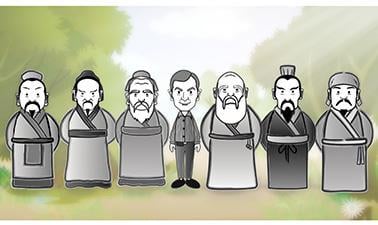
An introduction to early Chinese thought, exploring connections among Chinese thought and Western philosophy, modern science and everyday life. This course is designed to give students a thorough introduction to early (pre-221 BCE) Chinese thought, its contemporary implications, and the role of religion in human well-being. Important themes to be discussed include the ideal of wu-wei or “effortless action,” the paradox of how one can consciously try not to try, mindfulness techniques and self-cultivation, models of the self and society, rationality versus emotions, trust and human cooperation, and the structure and impact of different spiritual and political ideals.

Class Deals by MOOC List - Click here and see EdX's Active Discounts, Deals, and Promo Codes.

This period of Chinese history witnessed the formation of all of the major indigenous schools of Chinese thought (Confucianism, Daoism, Mohism and Legalism), which in turn had an impact on the development of East Asian cultural history that is still felt today.

We will also explore parallels with Western philosophical and religious traditions, the relevance of early Chinese thought for contemporary debates in ethics, moral education, and political philosophy, and the manner in which early Chinese models of the self anticipate recent developments in the evolutionary and cognitive sciences.
This course provides a full university semester’s worth of material broken into two parts. Each part of the course will last 5 weeks, with a week-long break in between. For each part, there will be four weeks worth of new material. The fifth week will be reserved for review and completion of the final exam.
Part 1 introduces the basic philosophical, religious and scientific concepts that will be drawn upon throughout the course, and then goes on to cover early Shang and Zhou religious thought, the Analects of Confucius, the Daodejing (a Daoist text attributed to Laozi), the utilitarian thinker Mozi, the newly discovered and very exciting Guodian texts, and the momentous philosophical changes that occurred in the mid Warring States period.

What you'll learn:

  • An empirically-grounded framework for studying other cultures and cultural history
  • The origins of early Chinese culture and religion
  • Early Confucianism, Daoism and Mohism
  • The mid-Warring States “language crisis” and “physiological turn”
  • How to analyze philosophical and religious arguments and debates
  • Alternative models of ethics, the self, and the individual-society relationship
  • The universality and contemporary relevance of basic ethical dilemmas
  • The power of spontaneity, and the tensions involved in attaining it
  • Religion or spirituality and the role of meaning in human well-being
Go to Class
MOOC List is learner-supported. When you buy through links on our site, we may earn an affiliate commission.

Related Courses

Visualizing Postwar Tokyo, Part 1 (edX) EdX
The University of Tokyo,UTokyoX

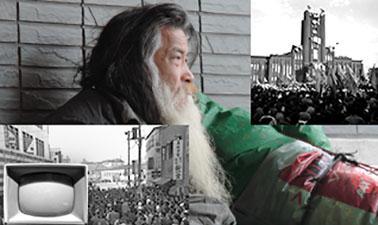
Visualizing Postwar Tokyo, Part 1 (edX)

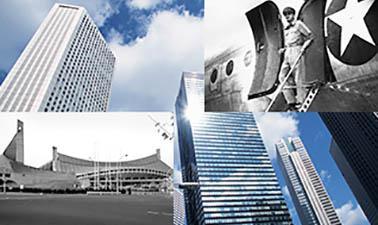
Analyze the history of change and development in postwar Tokyo from different perspectives using archived photographs, films, and TV programs. Tokyo emerged out of the ruins of war to become a large city of 10 million people in only a quarter of a century. During this process of change, the capital of a military empire that once invaded East Asia experienced occupation by the U.S. armed forces, hosted the Olympic Games, and transformed into a consumer hub where young people could enjoy economic “wealth.”

Self Paced
Self-Paced
European Paintings: From Leonardo to Rembrandt to Goya (edX) EdX
Universidad Carlos III de Madrid - UC3M,UC3Mx

European Paintings: From Leonardo to Rembrandt to Goya (edX)

Uncover the meaning behind the art of the great painters from 1400 to 1800. Learn about the inspirational work of the leading European painters from approximately 1400 to 1800, and explore the issues expressed through the art of painting. Included in this broad time frame are the works of Leonardo da Vinci, Caravaggio, Velázquez, Rembrandt, Vermeer and Goya.

Self Paced
Self-Paced
East Asian Religions & Ecology (Coursera) Coursera
Yale University

East Asian Religions & Ecology (Coursera)

At first glance the fields of religion and ecology may seem and unlikely pairing, but a deeper consideration reveals the two have a great deal to contribute to one another and are indeed inextricably linked. Religions recognize the unity and interdependence of humans with nature. Ecological sciences affirm this deep interconnection with the natural world. This partnership can inspire work for the wellbeing of the Earth community

Sep 28th 2026
5-12 Weeks
Religion and Thought in Modern China: the Song, Jin, and Yuan (Coursera) Coursera
The Chinese University of Hong Kong

Religion and Thought in Modern China: the Song, Jin, and Yuan (Coursera)

This sequence of four courses will propose a multi-disciplinary approach to the study of Chinese cultural history conceived of as a succession of modes of rationality (philosophical, bureaucratic, and economic). The focus will be on the moments of paradigm shift from one mode of rationality to another. For each of these moments, cultural facts and artifacts—thought, literature, ritual—will be examined in relationship to changing social, political, and economic systems.

Oct 12th 2026
5-12 Weeks
Visualizing Postwar Tokyo, Part 2 (edX) EdX
The University of Tokyo,UTokyoX

Visualizing Postwar Tokyo, Part 2 (edX)

Identify the geopolitics historically involved in the practice of “visualizing postwar Tokyo.” The history of postwar Tokyo reveals an essential feature of the modern city, i.e., the city as a place of visualities. In postwar Tokyo, countless gazes fell upon others; gazes from and upon Americans and the Emperor, gazes going up skyscrapers or rushing aggressively through the cityscape, and gazes twining and wriggling among classes, genders, and ethnic groups in downtown Tokyo.

Self Paced
Self-Paced
Academic and Business Writing (edX) EdX
University of California, Berkeley,BerkeleyX

Academic and Business Writing (edX)

An introduction to academic and business writing for English Language Learners, focusing on grammar, vocabulary, structure, editing, and publication. College Writing 2.2x providesan introduction to academic and business writing for English Language Learners. In this course, students focus on understanding the demands of different styles of writing, andwork to improve grammatical correctness, vocabulary development, and revision and editing skills.

Self Paced
Self-Paced
English Grammar and Style (edX) EdX
University of Queensland,UQx

English Grammar and Style (edX)

Learn key concepts and strategies in grammar and style to help enhance your writing and confidently respond to the demand of high levels of literacy in the 21st century. With the rise of social media and the Internet, many people are writing more today for different mediums than ever before. We’ll present materials that cover grammatical principles, word usage, writing style, sentence and paragraph structure, and punctuation.

Self Paced
Self-Paced
Chinese Thought: Ancient Wisdom Meets Modern Science - Part 2 (edX) EdX
The University of British Columbia,UBCx

Chinese Thought: Ancient Wisdom Meets Modern Science - Part 2 (edX)

An introduction to early Chinese thought, exploring connections with Western philosophy, spirituality, mindfulness, modern science and everyday life. This course is designed to give students a thorough introduction to early (pre-221 BCE) Chinese thought, its contemporary implications, and the role of religion in human well-being. Important themes to be discussed include the ideal of wu-wei or “effortless action,” the paradox of how one can consciously try not to try, mindfulness techniques and self-cultivation, models of the self and society, rationality versus emotions, trust and human cooperation, and the structure and impact of different spiritual and political ideals.

No sessions available
5-12 Weeks
文物精品与文化中国:天文与医药 | Relics of Chinese History - Part 2: Astronomy and Medicine (edX) EdX
Tsinghua University,TsinghuaX

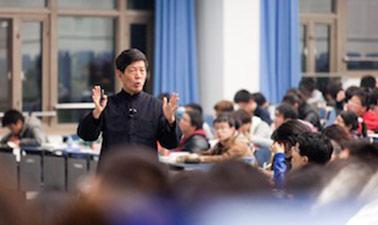
文物精品与文化中国:天文与医药 | Relics of Chinese History - Part 2: Astronomy and Medicine (edX)

Discover how Astronomy and Medicine impacted the history of China as we use artifacts and relics as a guide to Chinese civilization. 本课程以精品文物作引子,将学术界探索中华文明的过程作为线索,介绍古代中国在造船、玉器等诸多领域的杰出成就

Self Paced
Self-Paced
Humanity and Nature in Chinese Thought (edX) EdX
University of Hong Kong,HKUx

Humanity and Nature in Chinese Thought (edX)

We make ethical or behaviour guiding right / wrong judgments all the time but have you ever wondered where Ethics comes from, what it is about and why it is important? This course provides an introduction to traditional Chinese ethical thought and focuses on the pervasive contrast in the way Chinese and Westerners think about ethical guidance or guidance concerning what is right and what is wrong, good or bad.

No sessions available
5-12 Weeks
文物精品与文化中国:文字与乐礼 | Relics of Chinese History - Part 3: Writing System, Rites and Music (edX) EdX
Tsinghua University,TsinghuaX

文物精品与文化中国:文字与乐礼 | Relics of Chinese History - Part 3: Writing System, Rites and Music (edX)

Discover how writing systems and music played a major role in Chinese history through the study of artifacts and relics. 本课程以精品文物作引子,将学术界探索中华文明的过程作为线索,介绍古代中国在造船、玉器等诸多领域的杰出成就

Self Paced
Self-Paced
Pintura europea: Leonardo, Rembrandt, Goya (edX) EdX
Universidad Carlos III de Madrid - UC3M,UC3Mx

Pintura europea: Leonardo, Rembrandt, Goya (edX)

Descubre el significado del arte de los grandes pintores de 1400 a 1800. Conoce la obra inspiradora de los principales pintores europeos desde 1400 hasta 1800 aproximadamente, y descubre los problemas que encuentran su expresión en el arte de la pintura. En este amplio marco temporal se incluyen artistas de la importancia de Leonardo da Vinci, Caravaggio, Velázquez, Rembrandt, Vermeer o Goya.

Self Paced
Self-Paced