EdX

Calculus II: Multivariable Functions (edX)

Calculus II: Multivariable Functions (edX)

This course provides an overview of bachelor-level calculus of multivariable functions (Calculus II). You will review many basic concepts related to differentiation and integration of multivariable functions. A strong foundation in mathematics is critical for success in all science and engineering disciplines. Whether you want to make a strong start to a master’s degree, prepare for more advanced courses, solidify your knowledge in a professional context or simply brush up on fundamentals, this course will get you up to speed.

Class Deals by MOOC List - Click here and see EdX's Active Discounts, Deals, and Promo Codes.

Calculus is the branch of Mathematics that deals with differentiation and integration of functions; techniques that play a major role in solving many of the problems encountered in an engineer’s everyday life.
This course will lay the foundations of multivariable calculus as it introduces differentiation and integration techniques for functions of two or more variables. Among other things you will learn to differentiate and linearize multivariable functions, find critical points and extreme values, and integrate multivariable functions using a variety of coordinate systems.
Our courses in calculus offer enough depth to cover what you need to succeed in your engineering master’s or profession in areas such as modeling, physics, fluid dynamics, dynamical systems and more.
This is a review course
This self-contained course is modular, so you do not need to follow the entire course if you wish to focus on a particular aspect. As a review course you are expected to have previously studied or be familiar with most of the material. Hence the pace will be higher than in an introductory course.
This format is ideal for refreshing your bachelor level mathematics and letting you practice as much as you want. Through the Grasple platform, you will have access to plenty of exercises – often with different numbers – and receive intelligent, personal and immediate feedback.
This course is part of our series Mastering Mathematics for Engineers , and together with the course Calculus I part of the program Mastering Calculus.
This course is part of the Mastering Calculus Professional Certificate.

What you'll learn

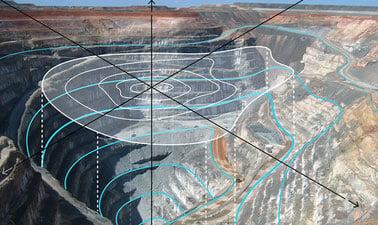
  • Visualize functions of two variables and read off qualitative information from graphs and contour plots.
  • Calculate (higher order) partial derivatives for a variety of multivariable functions.
  • Calculate and interpret directional derivatives and gradients of multivariable functions.
  • Find and classify critical points of functions of two variables and determine extreme values for functions of compact domains.
  • Evaluate double integrals over general integration domains using cartesian or polar coordinates.
  • Evaluate triple integrals over general integration domains using cartesian, cylindrical or spherical coordinates.

Prerequisites:
Prior knowledge of all the material covered.
This course is a continuation of Calculus I and as such relies heavily on many of the concepts learned in pre-university mathematics and in Calculus I. Prerequisites include elementary functions, trigonometry, algebra, knowledge of functions and their domains and ranges, basic differentiation techniques, vectors, dot-product, cross-product, basic integration techniques.
This course is a review course. As such the course requires you to have studied Calculus I in the past or are at least familiar with its course contents.

Syllabus

Week 1:

  • multivariable functions
  • graphs of functions of two variables
  • contour plots

Week 2:

  • partial derivatives
  • tangent planes and linearizations
  • higher order partial derivatives
  • chain rule

Week 3:

  • directional derivatives and gradients
  • maximizing directional derivatives
  • applications of gradients

Week 4:

  • extreme values
  • critical points
  • finding extreme values

Week 5:

  • double integrals
  • integrals over rectangles
  • double integrals over general regions
  • polar coordinates

Week 6:

  • triple integrals
  • triple integrals over general regions
  • cylindrical coordinates
  • spherical coordinates
Go to Class
MOOC List is learner-supported. When you buy through links on our site, we may earn an affiliate commission.

Related Courses

Advanced Linear Algebra: Foundations to Frontiers (edX) EdX
University of Texas at Austin,UTAustinX

Advanced Linear Algebra: Foundations to Frontiers (edX)

Learn advanced linear algebra for computing. Linear algebra is one of the fundamental tools for computational and data scientists. In Advanced Linear Algebra: Foundations to Frontiers (ALAFF), you will build your knowledge, understanding, and skills in linear algebra, practical algorithms for matrix computations, and the analysis of the effects of floating-point arithmetic as performed by computers.

Self Paced
Self-Paced
Mathematical understanding of uncertainty (edX) EdX
Seoul National University,SNUx

Mathematical understanding of uncertainty (edX)

This lecture series discusses how the concept of probability can be used to handle, control, and exploit uncertainty in the real-world. It is an undergraduate-level lecture series on probability, but is entirely different from the usual courses on probability theory. The lectures cover the basics of probability theory including the relevant mathematics, but instead of focusing on mathematics, the lectures explain how probability theory can help understand real-world uncertainty using various examples.

Self Paced
Self-Paced
Linear Algebra II: Matrix Algebra (edX) EdX
Georgia Institute of Technology,GTx

Linear Algebra II: Matrix Algebra (edX)

This course takes you through roughly three weeks of MATH 1554, Linear Algebra, as taught in the School of Mathematics at The Georgia Institute of Technology. Your ability to apply the concepts that we introduced in our previous course is enhanced when you can perform algebraic operations with matrices. At the start of this class, you will see how we can apply the Invertible Matrix Theorem to describe how a square matrix might be used to solve linear equations.

Self Paced
Self-Paced
Introducción a las ecuaciones diferenciales (edX) EdX
Galileo University,GalileoX

Introducción a las ecuaciones diferenciales (edX)

Aprende el lenguaje de las ecuaciones diferenciales ordinarias y su aplicación en la modelación de muchos de los fenómenos que nos rodean. Este curso en línea se centra en el estudio de las ecuaciones diferenciales ordinarias (EDOs) de primer orden y consta de una introducción a la terminología y teoría, haciendo especial énfasis en la solución analítica de las mismas, sus propiedades y su aplicación en el modelado y resolución de problemas en física e ingeniería, entre otros.

Self Paced
Self-Paced
Cours préparatoire: Fonctions trigonométriques, logarithmiques et exponentielles (edX) EdX
École Polytechnique Fédérale de Lausanne,EPFLx

Cours préparatoire: Fonctions trigonométriques, logarithmiques et exponentielles (edX)

Ce cours donne les connaissances fondamentales liées aux fonctions trigonométriques, logarithmiques et exponentielles. Le cours propose une approche très détaillée et précise des notions fondamentales liées aux fonctions trigonométriques, logarithmiques et exponentielles.

Self Paced
Self-Paced
Linear Algebra I: Vectors and Linear Equations (edX) EdX
Delft University of Technology,DelftX

Linear Algebra I: Vectors and Linear Equations (edX)

This course provides an overview of bachelor-level linear algebra. You will review all the concepts and practice and refresh the skills related to vectors and linear equations. A strong foundation in mathematics is critical for success in all science and engineering disciplines. Whether you want to make a strong start to a master’s degree, prepare for more advanced courses, solidify your knowledge in a professional context or simply brush up on fundamentals, this course will get you up to speed.

Self Paced
Self-Paced
Further Mathematics Year 13 course 2: Applications of Differential Equations, Momentum, Work, Energy & Power, The Poisson Distribution, The Central Limit Theorem, Chi Squared Tests, Type I and II Errors (edX) EdX
Imperial College London,ImperialX

Further Mathematics Year 13 course 2: Applications of Differential Equations, Momentum, Work, Energy & Power, The Poisson Distribution, The Central Limit Theorem, Chi Squared Tests, Type I and II Errors (edX)

Develop your thinking skills, fluency and confidence in the applied mathematics content of A-level further maths and prepare for undergraduate STEM degrees. This course by Imperial College London is designed to help you develop the skills you need to succeed in your A-level further maths exams. You will investigate key topic areas to gain a deeper understanding of the skills and techniques that you can apply throughout your A-level study.

Self Paced
5-12 Weeks
MathTrackX: Differential Calculus (edX) EdX
University of Adelaide,AdelaideX

MathTrackX: Differential Calculus (edX)

Discover concepts and techniques relating to differentiation and how they can be applied to solve real world problems. This course will cover basic concepts and techniques relating to differentiation; a fundamental tool of calculus. Derivatives are key to the understanding of rates of change, that is the extent to which a function responds to changes in a dependent variable.

Self Paced
Self-Paced
Calculus I: From Functions to Differential Equations (edX) EdX
Delft University of Technology,DelftX

Calculus I: From Functions to Differential Equations (edX)

Refresh and review your bachelor-level calculus. This course covers all the various differentiation and integration techniques and guides you through several important methods for solving differential equations. A strong foundation in mathematics is critical for success in all science and engineering disciplines. Whether you want to make a strong start to a master’s degree, prepare for more advanced courses, solidify your knowledge in a professional context or simply brush up on fundamentals, this course will get you up to speed.

Self Paced
Self-Paced
Maths Essentials (edX) EdX
Imperial College Business School,Imperial College London

Maths Essentials (edX)

Discover and acquire the fundamental maths skills that you will need to use while studying an MBA program, from algebra to differentiation and geometric series. Planning to study for an MBA but unsure of your basic maths skills? All MBA programs, and in business generally require some maths, particularly on quantitative subjects such as Accounting, Economics and Finance.

Self Paced
Self-Paced