FUN

Bioinformatique : algorithmes et génomes (FUN)

Offered by INRIA,
Bioinformatique : algorithmes et génomes (FUN)

Dans ce cours, nous verrons comment l’informatique permet d’interpréter le texte des génomes. Doté d’algorithmes adaptés, mis en œuvre sous forme de programmes efficaces, l’ordinateur produit des prédictions quant à la localisation des milliers de gènes d’un organisme vivant et les fonctions que remplissent les protéines qu’ils codent.

Nouveauté : cours ouvert pour une durée d'un an

Vous n’êtes pas biologiste? Ce cours vous apportera les connaissances nécessaires à la compréhension des entités et phénomènes biologiques impliqués : cellule, chromosome, ADN, génome, gènes, transcription, traduction, code génétique, protéines, tous ces termes et d’autres encore vous seront expliqués dans ce contexte de l’interprétation des génomes par des moyens informatiques.

Vous n’êtes pas informaticien? Ce cours se veut simultanément une introduction à l’algorithmique sur des séquences de caractères. Recherche de motifs, similarité de séquences, chaînes de Markov, reconstruction d’arbres phylogénétiques. Les algorithmes de base impliqués dans ces démarches seront présentés.

Vous n’êtes ni biologiste, ni informaticien? Ce cours est une opportunité pour aborder conjointement la génomique et l’algorithmique, ou si vous préférez, l’algorithmique et la génomique…
Grâce à un outil dédié (notebooks iPython), vous aurez la possibilité de faire exécuter les algorithmes présentés et d’apprécier ainsi leur pertinence sur des données réelles. Et si vous souhaitez aller encore plus loin, cet outil vous permettra de modifier les programmes écrits en Python qui mettent en œuvre les algorithmes, voire d’en écrire de nouveaux et de les tester.

Plan du cours

Semaine 1 : ADN et séquences génomiques
Semaine 2 : Gènes et protéines
Semaine 3 : Prédiction des gènes
Semaine 4 : Comparaison de séquences
Semaine 5 : Arbres phylogénétiques

Go to Class
MOOC List is learner-supported. When you buy through links on our site, we may earn an affiliate commission.

Related Courses

The Brain and Space (Coursera) Coursera
Duke University

The Brain and Space (Coursera)

This course is about how the brain creates our sense of spatial location from a variety of sensory and motor sources, and how this spatial sense in turn shapes our cognitive abilities. Knowing where things are is effortless. But “under the hood,” your brain must figure out even the simplest of details about the world around you and your position in it.

Oct 12th 2026
5-12 Weeks
Se former pour l’ICN Informatique et Création Numérique (FUN) FUN
INRIA

Se former pour l’ICN Informatique et Création Numérique (FUN)

Un MOOC d’initiation à l'Informatique et à la Création Numérique, pour aider les enseignants de l'option ICN au Lycée et au delà tout citoyen ou citoyenne désirant être éclairé sur ces sujets. Les lycéennes et lycéens de toutes sections commencent à apprendre de l'informatique pour ne plus être de simples consommateurs mais devenir créateurs du numérique : c’est l’enseignement de l'option "Informatique et Création Numérique, I.C.N.", de la seconde à la terminale pour toutes les sections.

No sessions available
2 Weeks
De l'atome à l'humain : à la racine des mots scientifiques (FUN) FUN
Université de Lorraine

De l'atome à l'humain : à la racine des mots scientifiques (FUN)

Ce cours en ligne gratuit porte donc sur l’étymologie du vocabulaire scientifique et médical. Il s’adresse aux lycéens se préparant à la PACES, aux formations paramédicales, aux études scientifiques, aux STAPS... Il s’adresse également aux étudiants de ces différentes filières, ainsi qu’à toute personne intéressée par l’étymologie.

Sep 27th 2021
4 Weeks
Finding Mutations in DNA and Proteins (Bioinformatics VI) (Coursera) Coursera
University of California, San Diego

Finding Mutations in DNA and Proteins (Bioinformatics VI) (Coursera)

In previous courses in the Specialization, we have discussed how to sequence and compare genomes. This course will cover advanced topics in finding mutations lurking within DNA and proteins. In the first half of the course, we would like to ask how an individual's genome differs from the "reference genome" of the species.

Oct 12th 2026
5-12 Weeks
Bacterial Bioinformatics (Coursera) Coursera
University of Virginia

Bacterial Bioinformatics (Coursera)

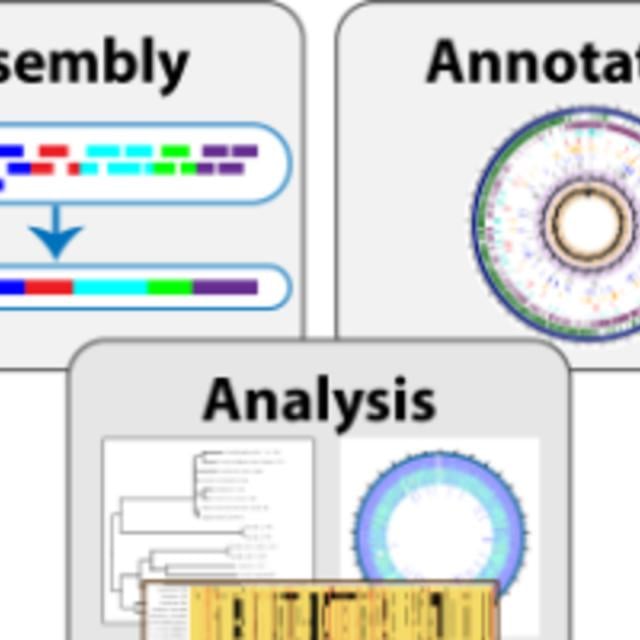
This course provides demonstrations and exercises for performing common genomics-based analysis tasks of bacterial sequence data. It uses PATRIC, the PathoSystems Resource Integration Center, as the platform for analysis. PATRIC is the NIH/NIAID-funded bacterial Bioinformatics Resource Center, providing comprehensive bacterial genomic data with integrated analysis tools and visualizations.

Oct 12th 2026
5-12 Weeks
Contemporary Biology (Coursera) Coursera
University of North Texas

Contemporary Biology (Coursera)

This course is an introduction to biology as it applies to our everyday life. Learners will explore the interplay between science and self through a personalized case study of themselves and their environment. By the end of the course, learners will be able to recognize the interactions among natural phenomena and the implications of the scientific principles behind the physical world and their experiences living in it.

Oct 12th 2026
4 Weeks
Genome Sequencing (Bioinformatics II) (Coursera) Coursera
University of California, San Diego

Genome Sequencing (Bioinformatics II) (Coursera)

You may have heard a lot about genome sequencing and its potential to usher in an era of personalized medicine, but what does it mean to sequence a genome? Biologists still cannot read the nucleotides of an entire genome as you would read a book from beginning to end. However, they can read short pieces of DNA. In this course, we will see how graph theory can be used to assemble genomes from these short pieces. We will further learn about brute force algorithms and apply them to sequencing mini-proteins called antibiotics.

Oct 12th 2026
5-12 Weeks
Comparing Genes, Proteins, and Genomes (Bioinformatics III) (Coursera) Coursera
University of California, San Diego

Comparing Genes, Proteins, and Genomes (Bioinformatics III) (Coursera)

Once we have sequenced genomes in the previous course, we would like to compare them to determine how species have evolved and what makes them different. In the first half of the course, we will compare two short biological sequences, such as genes (i.e., short sequences of DNA) or proteins. We will encounter a powerful algorithmic tool called dynamic programming that will help us determine the number of mutations that have separated the two genes/proteins.

Oct 12th 2026
5-12 Weeks
Analytic Combinatorics (Coursera) Coursera
Princeton University

Analytic Combinatorics (Coursera)

Analytic Combinatorics teaches a calculus that enables precise quantitative predictions of large combinatorial structures. This course introduces the symbolic method to derive functional relations among ordinary, exponential, and multivariate generating functions, and methods in complex analysis for deriving accurate asymptotics from the GF equations. All the features of this course are available for free. It does not offer a certificate upon completion.

Oct 5th 2026
5-12 Weeks
Digital Signal Processing 1: Basic Concepts and Algorithms (Coursera) Coursera
École Polytechnique Fédérale de Lausanne

Digital Signal Processing 1: Basic Concepts and Algorithms (Coursera)

Digital Signal Processing is the branch of engineering that, in the space of just a few decades, has enabled unprecedented levels of interpersonal communication and of on-demand entertainment. By reworking the principles of electronics, telecommunication and computer science into a unifying paradigm, DSP is a the heart of the digital revolution that brought us CDs, DVDs, MP3 players, mobile phones and countless other devices.

Oct 12th 2026
4 Weeks