Beginning Game Programming with C# (Coursera)

Beginning Game Programming with C# (Coursera)

The Beginning Game Programming with C# course is all about learning how to develop video games using the C# programming language. Why use C# instead of C++, Java, ActionScript, or some other programming language you may have heard of? First, using C# lets us use the open-source MonoGame framework, which help us quickly develop games for Windows, Android, iOS, Mac OS X, and others. Second, the Unity game engine is very popular with indie game developers, and C# is one of the programming languages you can use in the Unity environment. And finally, C# is a really good language for learning how to program.

Class Deals by MOOC List - Click here and see Coursera's Active Discounts, Deals, and Promo Codes.

That learning how to program comment is important because this course doesn't assume you have any previous programming experience. Don't worry if you've never written code before; we'll start at the very beginning and work our way up to building a small, complete game by the end of the course. Throughout the course you'll learn core programming concepts that apply to lots of programming languages, including C#, and you'll also learn how to apply those concepts when you develop games: drawing all the entities in the game world, updating the game world based on user input and simple physics, playing music and sound effects in your games, and so on.
Computer programming is really fun in general, and programming games is even better!
Go to Class
MOOC List is learner-supported. When you buy through links on our site, we may earn an affiliate commission.

Related Courses

Parallel programming (Scala 2 version) (Coursera) Coursera
École Polytechnique Fédérale de Lausanne

Parallel programming (Scala 2 version) (Coursera)

With every smartphone and computer now boasting multiple processors, the use of functional ideas to facilitate parallel programming is becoming increasingly widespread. In this course, you'll learn the fundamentals of parallel programming, from task parallelism to data parallelism. In particular, you'll see how many familiar ideas from functional programming map perfectly to to the data parallel paradigm. We'll start the nuts and bolts how to effectively parallelize familiar collections operations, and we'll build up to parallel collections, a production-ready data parallel collections library available in the Scala standard library.

Oct 5th 2026
4 Weeks
Introduction à la programmation orientée objet (en Java) (Coursera) Coursera
École Polytechnique Fédérale de Lausanne

Introduction à la programmation orientée objet (en Java) (Coursera)

Ce cours introduit la programmation orientée objet (encapsulation, abstration, héritage, polymorphisme) en l'illustrant en langage Java. Il présuppose connues les bases de la programmation (variables, types, boucles, fonctions, ...). Il est conçu comme la suite du cours « Initiation à la programmation (en Java) ».

Oct 11th 2026
5-12 Weeks
Programming Languages, Part A (Coursera) Coursera
University of Washington

Programming Languages, Part A (Coursera)

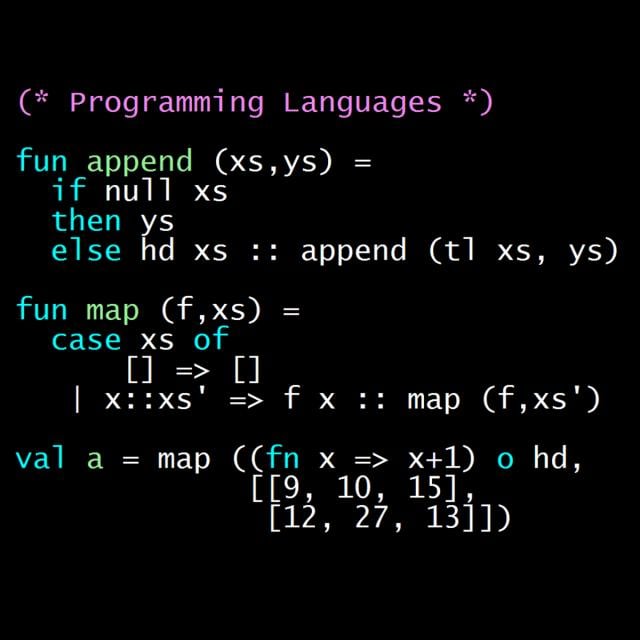
This course is an introduction to the basic concepts of programming languages, with a strong emphasis on functional programming. The course uses the languages ML, Racket, and Ruby as vehicles for teaching the concepts, but the real intent is to teach enough about how any language “fits together” to make you more effective programming in any language -- and in learning new ones.

Oct 5th 2026
5-12 Weeks
Principles of Computing (Part 2) (Coursera) Coursera
Rice University

Principles of Computing (Part 2) (Coursera)

This two-part course introduces the basic mathematical and programming principles that underlie much of Computer Science. Understanding these principles is crucial to the process of creating efficient and well-structured solutions for computational problems. To get hands-on experience working with these concepts, we will use the Python programming language. The main focus of the class will be weekly mini-projects that build upon the mathematical and programming principles that are taught in the class.

Oct 5th 2026
4 Weeks
An Introduction to Interactive Programming in Python (Part 1) (Coursera) Coursera
Rice University

An Introduction to Interactive Programming in Python (Part 1) (Coursera)

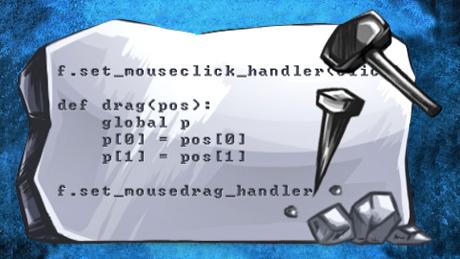
This two-part course is designed to help students with very little or no computing background learn the basics of building simple interactive applications. Our language of choice, Python, is an easy-to learn, high-level computer language that is used in many of the computational courses offered on Coursera. To make learning Python easy, we have developed a new browser-based programming environment that makes developing interactive applications in Python simple.

Oct 5th 2026
5-12 Weeks
An Introduction to Interactive Programming in Python (Part 2) (Coursera) Coursera
Rice University

An Introduction to Interactive Programming in Python (Part 2) (Coursera)

This two-part course is designed to help students with very little or no computing background learn the basics of building simple interactive applications. Our language of choice, Python, is an easy-to learn, high-level computer language that is used in many of the computational courses offered on Coursera. To make learning Python easy, we have developed a new browser-based programming environment that makes developing interactive applications in Python simple.

Oct 5th 2026
4 Weeks
Emprendimiento y métodos ágiles de desarrollo en videojuegos (Coursera) Coursera
Universidad de los Andes

Emprendimiento y métodos ágiles de desarrollo en videojuegos (Coursera)

¡Bienvenido al curso de emprendimiento y métodos ágiles de desarrollo en videojuegos! Este curso es parte del Programa Especializado Coursera en Diseño y Desarrollo de Videojuegos, en la cual aprenderás a diseñar y programar cierto tipo de videojuegos, aumentarás tu comprensión acerca del mercado actual de videojuegos y de lo que se requiere para crear un juego exitoso comercialmente.

Sep 28th 2026
5-12 Weeks
Python Data Structures (Coursera) Coursera
University of Michigan

Python Data Structures (Coursera)

This course will introduce the core data structures of the Python programming language. We will move past the basics of procedural programming and explore how we can use the Python built-in data structures such as lists, dictionaries, and tuples to perform increasingly complex data analysis. This course will cover Chapters 6-10 of the textbook “Python for Everybody”. This course covers Python 3.

Sep 28th 2026
5-12 Weeks
Programming Mobile Applications for Android Handheld Systems: Part 1 (Coursera) Coursera
University of Maryland, College Park

Programming Mobile Applications for Android Handheld Systems: Part 1 (Coursera)

This course introduces you to the design and implementation of Android applications for mobile devices. You will develop an app from scratch, assuming a basic knowledge of Java, and learn how to set up Android Studio, work with various Activities and create simple user interfaces to make your apps run smoothly.

Sep 28th 2026
5-12 Weeks
Functional Program Design in Scala (Scala 2 version) (Coursera) Coursera
École Polytechnique Fédérale de Lausanne

Functional Program Design in Scala (Scala 2 version) (Coursera)

In this course you will learn how to apply the functional programming style in the design of larger Scala applications. You'll get to know important new functional programming concepts, from lazy evaluation to structuring your libraries using monads. We'll work on larger and more involved examples, from state space exploration to random testing to discrete circuit simulators. You’ll also learn some best practices on how to write good Scala code in the real world. Finally, you will learn how to leverage the ability of the compiler to infer values from types.

Oct 5th 2026
5-12 Weeks
Online Games: Literature, New Media, and Narrative (Coursera) Coursera
Vanderbilt University

Online Games: Literature, New Media, and Narrative (Coursera)

Intended for both newcomers who are curious about video games and experienced gamers who want to reflect on their passion, this course will explore what happens to stories, paintings, and films when they become the basis of massively multiplayer online games. The Lord of the Rings trilogy—the novels, films, and video game—are our central example of how “remediation” transforms familiar stories as they move across media.

Oct 12th 2026
5-12 Weeks