Begin Robotics (FutureLearn)

Offered by University of Reading,
Begin Robotics (FutureLearn)

Learn robotics by exploring the history, anatomy and intelligence of robots and test drive robots using exciting simulations Explore our introduction to robotics. Robots today are roving Mars, hoovering our floors, building cars and entertaining us in films. You may even share Stephen Hawking’s world view that super-intelligent ones may one day bring about the end of the human race.

Class Deals by MOOC List - Click here and see FutureLearn's Active Discounts, Deals, and Promo Codes.

But what are the different forms of robots today? And how do they achieve particular tasks? In this introduction to robotics course, you’ll explore these answers and more.

Discover the history of robots and their modern application
You’ll kick things off by taking a look at the basics of robotics. By exploring the history of robots, you’ll learn about some of the uses of these fascinating machines.
Next, you’ll explore some of the modern applications of robotics and our relationship with them, helping you gain context for what’s to follow.

Learn about the basics of robot design
On this robotics for beginners course, you’ll discover some of the fundamentals of how robots are made. As well as looking at some of the key components of robot design, you’ll also examine how they operate.

Examine robot anatomy, control and behaviour through a set of simulated tasks
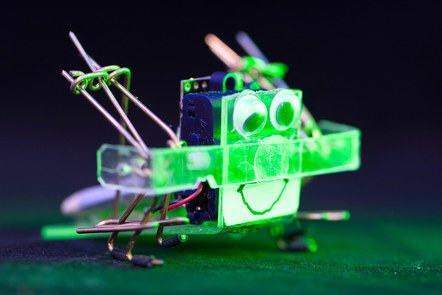
If you’d like to find out more, but don’t have Hawking’s brain or an advanced qualification in cybernetics, this course is for you. You won’t require a soldering iron, but you’ll explore the basics of robot design, control and behaviour through a series of simulations that will have you test driving an ERIC – our very own University of Reading mobile robot.

Syllabus

Week 1: Introduction to Robotics
Week 2: Robot anatomy
Week 3: Cybernetics and control
Week 4: Robot behaviours

What will you achieve?

  • Describe different forms of robot and applications where they may be used
  • Determine the appropriate commands to allow a robot to achieve particular tasks using information from sensors
  • Appreciate how aspects of robotics can be applied in many different scenarios

Go to Class
MOOC List is learner-supported. When you buy through links on our site, we may earn an affiliate commission.

Related Courses

Robotics: Perception (Coursera) Coursera
University of Pennsylvania

Robotics: Perception (Coursera)

How can robots perceive the world and their own movements so that they accomplish navigation and manipulation tasks? In this module, we will study how images and videos acquired by cameras mounted on robots are transformed into representations like features and optical flow. Such 2D representations allow us then to extract 3D information about where the camera is and in which direction the robot moves. You will come to understand how grasping objects is facilitated by the computation of 3D posing of objects and navigation can be accomplished by visual odometry and landmark-based localization.

Jan 13th 2025
4 Weeks
Modern Robotics, Course 5: Robot Manipulation and Wheeled Mobile Robots (Coursera) Coursera
Northwestern University

Modern Robotics, Course 5: Robot Manipulation and Wheeled Mobile Robots (Coursera)

Do you want to know how robots work? Are you interested in robotics as a career? Are you willing to invest the effort to learn fundamental mathematical modeling techniques that are used in all subfields of robotics? If so, then the "Modern Robotics: Mechanics, Planning, and Control" specialization may be for you. This specialization, consisting of six short courses, is serious preparation for serious students who hope to work in the field of robotics or to undertake advanced study. It is not a sampler.

Aug 3rd 2026
4 Weeks
Robotic Vision: Processing Images (FutureLearn) FutureLearn
Queensland University of Technology

Robotic Vision: Processing Images (FutureLearn)

How do computers process images? Learn about image processing and image features, and how robots can be programmed to see. Programming a robot to see requires knowing the principles of vision, mathematical knowledge and programming skills. We explore how computers process images, learning the operations required to process an image using MATLAB.

No sessions available
4 Weeks
Introducing Robotics: Robotics and Society (FutureLearn) FutureLearn
Queensland University of Technology

Introducing Robotics: Robotics and Society (FutureLearn)

How do you feel about robots? Learn how robotics is used today and explore how it might help solve the big issues of our time. Once only found in fiction, robots are being applied in an increasing array of ways in society, from mechanisation of industrial tasks to exploring places humans can’t go. This course starts with your perceptions of robotics, describes different types of robots, and leads into a discussion of the future: knowing we can use robots, should we?

No sessions available
3 Weeks
Collaborative Robot Safety: Design & Deployment (Coursera) Coursera
University at Buffalo,The State University of New York

Collaborative Robot Safety: Design & Deployment (Coursera)

As robots evolve and increasingly interact with humans, enhancing the safety of personnel working with these “collaborative robots” (cobots) is vital. This course equips you to assess the safety of a collaborative robot workcell and prevent the chances of injury or harm. It imparts industry-endorsed safety standards, technical report recommendations and best practices from the International Organization for Standardization (ISO), Robotic Industries Association (RIA) and Occupational Safety and Health Administration (OSHA).

Aug 3rd 2026
4 Weeks
Comportamiento adaptativo (Coursera) Coursera
Universidad Nacional Autónoma de México

Comportamiento adaptativo (Coursera)

Los seres vivos han evolucionado en entornos cambiantes, por lo que han desarrollado mecanismos que les permiten exhibir comportamiento adaptativo. Usando el método sintético, podemos construir sistemas artificiales adaptativos que implementen dichos mecanismos, con lo cual también podemos incrementar nuestra comprensión de los sistemas naturales.

Aug 3rd 2026
4 Weeks
Modern Robotics, Course 3: Robot Dynamics (Coursera) Coursera
Northwestern University

Modern Robotics, Course 3: Robot Dynamics (Coursera)

Do you want to know how robots work? Are you interested in robotics as a career? Are you willing to invest the effort to learn fundamental mathematical modeling techniques that are used in all subfields of robotics? If so, then the "Modern Robotics: Mechanics, Planning, and Control" specialization may be for you. This specialization, consisting of six short courses, is serious preparation for serious students who hope to work in the field of robotics or to undertake advanced study. It is not a sampler.

Jul 27th 2026
4 Weeks
Ethical Issues in Computing Applications (Coursera) Coursera
University of Colorado Boulder

Ethical Issues in Computing Applications (Coursera)

Computing systems and technologies fundamentally impact the lives of most people in the world, including how we communicate, get information, socialize, and receive healthcare. This course is the third of a three course sequence that examines ethical issues in the design and implementation of computing systems and technologies, and reflects upon the broad implication of computing on our society. It covers medical applications, uses of robotics, autonomous vehicles, and the future of work.

Jul 27th 2026
5-12 Weeks