التقانة والمستشعرات النانوية - الجزء الاول (Coursera)

التقانة والمستشعرات النانوية - الجزء الاول (Coursera)

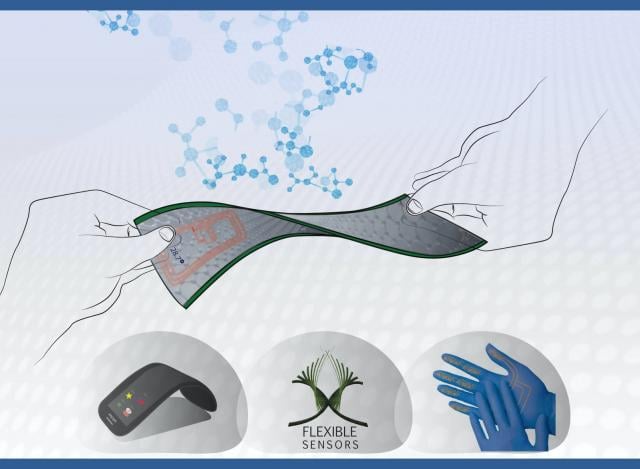
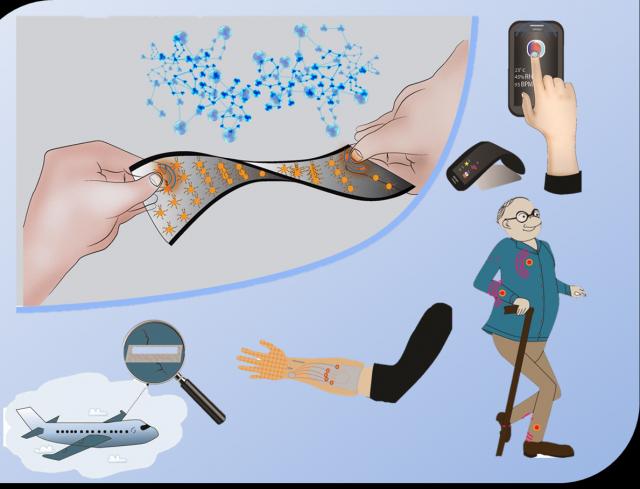
هو مساق للمهتمين في التعرف على أدوات الاستشعار الحديثة التي تستعين بتقانة النانو (وهي التقانة التي تبحث في المجال بين واحد إلى مئة نانوميتر، أي في أجزاء من المليار من المتر) لفرز ومراقبة الأحداث المختلفة في حياتنا الشخصية أو العملية. في أطار هذا المساق، سنكتشف معا عالم النانو المذهل الذي يتعامل مع الوحدات الأساسية في بناء المادة. وبهذا سوف نمهد الطريق لتطبيقات إبداعية لانهائية تطبق في كل جزء من حياتنا اليومية، بدءا من تشخيصات وعلاجات (في الجسم الحي أو خارجه) للأمراض، وثم نستمر في تقانة مراقبة جودة المنتوجات وما يختص بالبيئة، وننهي في تقانة مراقبة القضايا الأمنية. سنتعلم في هذا السعي كيف نصَنع هذه الأدوات الجديدة، وكيف نميزها، وكيف نتحكم بها، وكيف ندمجها في التطبيقات المختلفة.

Class Deals by MOOC List - Click here and see Coursera's Active Discounts, Deals, and Promo Codes.

وصف المساق
تقانة ومستشعرات النانو هو مجال يحوي اختصاصات عديدة ومتداخلة ويجمع بين الكيمياء/البيوكيمياء، الفيزياء، البيولوجيا، علم المواد، هندسة الإلكترونيات وغيرها. سيعرض المساق الحالي بعض مبادئ التقانة ومواد النانو الاساسيّة ودورها الهام في اجهزة و خواص الاستشعار. في هذا المساق سيتم نقاش معلومات شيقة من تخصصات متعددة في مجال العلوم والهندسة في المستوى النانوي, مستهدفا فهم الاختلافات الفيزيائية الأساسية لمستشعرات النانو. عند إنهاء هذا المساق، يكون قد تعلم الطالب تصنيع، تمييز ومعالجة مواد النانو ومستشعرات النانو، وكيفية تسخيرها لبناء تطبيقات جديدة. وأيضا سيطبق الطالب معرفته في تقانة ومستشعرات النانو ضمن مشروع حسب اهتمامه الشخصي.
اهداف المساق
هدف المساق الرئيسي هو تطوير التفكير النقدي, الابداعي والمبتكر. ان المساق يشجع العمل ضمن فريق ذو افراد من مجالات وحضارات مختلفة, لبناء "مخازن أفكار" عالمية لابتكار افكار جديدة. سوف يطلب منكم خلال المساق ان تقوموا بالتفكير بطريقة مبدعة, غير اعتيادية وان تقترحوا افكار جديدة.
يستهدف هذا المساق تشجيع المعرفة بالمواضيع التالية:
1) أهمية المواد النانوية في تطبيقات الاستشعار.
2) الأساليب المستخدمة في تحديد خصائص المستشعرات النانوية·
3) الأساليب المستخدمة لتكييف مواد النانو بهدف استعمالها في تطبيقات استشعار خاصة.
4) جسيمات النانو الفلزية والشبه موصلة.
5) أنابيب النانو وأسلاك النانو العضوية وغير العضوية.
6) المستشعرات الضوئية، الميكانيكية، والكيميائية المبنية من مواد النانو.
7) المستشعرات المبنية من هجين من المواد النانوية.

Syllabus

WEEK 1: الاسبوع الاول - مقدمة للتقانة النانويّة الجزء الأول
WEEK 2: الاسبوع الثاني - مقدمة للتقانة النانويّة الجزء الثاني
WEEK 3: الاسبوع الثالث - مقدمة لعلم وتقانة المستشعرات
WEEK 4: الاسبوع الرابع - المستشعرات المستندة الى جسيمات النانو الفلزية

الكتب المطلوبة:
Principles of Chemical Sensors
Novel Sensors and Sensing (Series in Sensors)
Go to Class
MOOC List is learner-supported. When you buy through links on our site, we may earn an affiliate commission.

Related Courses

Charles Darwin: El origen del evolucionismo moderno (Coursera) Coursera
Universidad Nacional Autónoma de México

Charles Darwin: El origen del evolucionismo moderno (Coursera)

Este curso está dirigido a cualquier persona que desee conocer de manera general qué es y cómo se ha explicado la evolución de las especies. Será de gran interés para alumnos, profesores y profesionales del área de ciencias biológicas y de la salud que deseen conocer los antecedentes históricos, así como los fundamentos centrales de la teoría de Charles Darwin, que configuraron el pensamiento evolutivo moderno.

Aug 10th 2026
4 Weeks
Evolution Today (Coursera) Coursera
Leiden University,Naturalis Biodiversity Center

Evolution Today (Coursera)

In this course you will learn how evolution works. You will develop an understanding of evolutionary processes and their formative power. You will see how evolution has shaped biodiversity, and continuously influences our daily life. Evolution impacts human endeavors as varied as medicine, agriculture, psychology, economy, and culture. It is the major unifying principle for biology and a fundamental natural law.

Aug 10th 2026
5-12 Weeks
Dynamical Modeling Methods for Systems Biology (Coursera) Coursera
Icahn School of Medicine at Mount Sinai

Dynamical Modeling Methods for Systems Biology (Coursera)

An introduction to dynamical modeling techniques used in contemporary Systems Biology research. We take a case-based approach to teach contemporary mathematical modeling techniques. The course is appropriate for advanced undergraduates and beginning graduate students. Lectures provide biological background and describe the development of both classical mathematical models and more recent representations of biological processes. The course will be useful for students who plan to use experimental techniques as their approach in the laboratory and employ computational modeling as a tool to draw deeper understanding of experiments.

Aug 10th 2026
5-12 Weeks
Introduction to Genomic Technologies (Coursera) Coursera
Johns Hopkins University

Introduction to Genomic Technologies (Coursera)

This course introduces you to the basic biology of modern genomics and the experimental tools that we use to measure it. We'll introduce the Central Dogma of Molecular Biology and cover how next-generation sequencing can be used to measure DNA, RNA, and epigenetic patterns. You'll also get an introduction to the key concepts in computing and data science that you'll need to understand how data from next-generation sequencing experiments are generated and analyzed.

Aug 17th 2026
4 Weeks
Nanotechnology and Nanosensors, Part 1 (Coursera) Coursera
Technion - Israel Institute of Technology

Nanotechnology and Nanosensors, Part 1 (Coursera)

Nanotechnology and nanosensors are broad, interdisciplinary areas that encompass (bio)chemistry, physics, biology, materials science, electrical engineering and more. The present course will provide a survey on some of the fundamental principles behind nanotechnology and nanomaterials and their vital role in novel sensing properties and applications. The course will discuss interesting interdisciplinary scientific and engineering knowledge at the nanoscale to understand fundamental physical differences at the nanosensors.

Aug 10th 2026
5-12 Weeks
Paleontology: Early Vertebrate Evolution (Coursera) Coursera
University of Alberta

Paleontology: Early Vertebrate Evolution (Coursera)

Paleontology: Early Vertebrate Evolution is a four-lesson course teaching a comprehensive overview of the origin of vertebrates. Students will explore the diversity of Palaeozoic lineages within a phylogenetic and evolutionary framework .This course examines the evolution of major vertebrate novelties including the origin of fins, jaws, and tetrapod limbs. Students also explore key Canadian fossil localities, including the Burgess Shale (British Columbia), Miguasha (Quebec), and Man On The Hill (Northwest Territories).

Aug 5th 2026
4 Weeks
Emergent Phenomena in Science and Everyday Life (Coursera) Coursera
University of California, Irvine

Emergent Phenomena in Science and Everyday Life (Coursera)

Before the advent of quantum mechanics in the early 20th century, most scientists believed that it should be possible to predict the behavior of any object in the universe simply by understanding the behavior of its constituent parts. For instance, if one could write down the equations of motion for every atom in a system, it should be possible to solve those equations (with the aid of a sufficiently large computing device) and make accurate predictions about that system’s future.

Aug 17th 2026
5-12 Weeks
Introduction to Systems Biology (Coursera) Coursera
Icahn School of Medicine at Mount Sinai

Introduction to Systems Biology (Coursera)

This course will introduce the student to contemporary Systems Biology focused on mammalian cells, their constituents and their functions. Biology is moving from molecular to modular. As our knowledge of our genome and gene expression deepens and we develop lists of molecules (proteins, lipids, ions) involved in cellular processes, we need to understand how these molecules interact with each other to form modules that act as discrete functional systems.

Aug 10th 2026
5-12 Weeks
Nanotechnology and Nanosensors, Part 2 (Coursera) Coursera
Technion - Israel Institute of Technology

Nanotechnology and Nanosensors, Part 2 (Coursera)

Learn about novel sensing tools that make use of nanotechnology to screen, detect and monitor various events in personal or professional life. Together, we will lay the groundwork for infinite innovative applications, starting from diagnosis and treatments of diseases, continuing with quality control of goods and environmental aspects, and ending with monitoring security issues.

Aug 10th 2026
5-12 Weeks
Introduction to Molecular Spectroscopy (Coursera) Coursera
University of Manchester

Introduction to Molecular Spectroscopy (Coursera)

The course introduces the three key spectroscopic methods used by chemists and biochemists to analyse the molecular and electronic structure of atoms and molecules. These are UV/Visible , Infra-red (IR) and Nuclear Magnetic Resonance (NMR) spectroscopies. The content is presented using short focussed and interactive screencast presentations accompanied by formative quizzes to probe understanding of the key concepts presented. Numerous exercises are provided to facilitate mastery of each topic. A unique virtual spectroscopic laboratory is made available to enable students to measure and analyse spectra online. Assessment is via summative quizzes completed during the course period.

Aug 10th 2026
4 Weeks
Engineering Life: Synbio, Bioethics & Public Policy (Coursera) Coursera
Johns Hopkins University

Engineering Life: Synbio, Bioethics & Public Policy (Coursera)

Synbio is a diverse field with diverse applications, and the different contexts (e.g., gain-of-function research, biofuels) raise different ethical and governance challenges. The objective of this course is to increase learners’ awareness and understanding of ethical and policy/governance issues that arise in the design, conduct and application of synthetic biology. The course will begin with a short history of recombinant DNA technology and how governance of that science developed and evolved, and progress through a series of areas of application of synbio.

Aug 10th 2026
5-12 Weeks