Why do People Migrate? Theories (FutureLearn)

Why do People Migrate? Theories (FutureLearn)

Explore theories about migration in greater depth and learn how migration is a constant phenomenon throughout human history. In the second course in this two-part series, you will learn about different theoretical models that seek to explain why migration starts and why it continues.

Class Deals by MOOC List - Click here and see FutureLearn's Active Discounts, Deals, and Promo Codes.

You will explore migration as a structural feature of our societies and examine individual’s choices to migrate. You will consider the role networks and institutions play in the movement of people. You will also hear from international experts about how migration theories can help us understand cases of labour migration in different world regions.

Syllabus

Week 1: Migration as a global phenomenon
Week 2: Explaining the start, the continuation and the completion of migration
Week 3: Theories at work: migration case studies

What will you achieve?
By the end of the course, you'll be able to...

  • Identify the fundamental terminology used in theoretical debates on migration
  • Explore the main theoretical approaches
  • Explain the motivations for people to move and settle outside their home countries
  • Apply main theories to the interpretation of real case-studies

Who is the course for?
This course is for anyone interested in learning about migration. It would be useful if you had completed the first course in this series Why do People Migrate? Facts.

Go to Class
MOOC List is learner-supported. When you buy through links on our site, we may earn an affiliate commission.

Related Courses

Integrating Newly Arrived Migrant Students in Schools (SchoolEducationGateway) SchoolEducationGateway
Teacher Academy

Integrating Newly Arrived Migrant Students in Schools (SchoolEducationGateway)

The course will explore the practicalities of integrating newly arrived migrant students in a school community and will look at how teachers can work at a very practical level with such students in their classrooms. The course will continue the work started by participants in course 2 of building a support infrastructure that can assist them beyond the course with guidance and resources.

No sessions available
3 Weeks
Switzerland in Europe: Money, Migration and Other Difficult Matters (FutureLearn) FutureLearn
University of Basel

Switzerland in Europe: Money, Migration and Other Difficult Matters (FutureLearn)

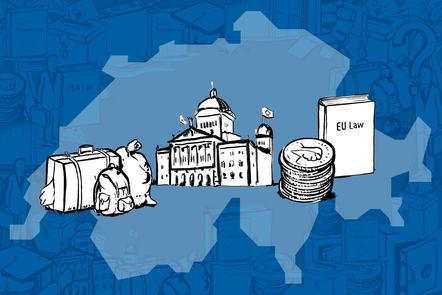
Learn about the position of Switzerland in Europe, in particular with respect to money, migration and other difficult matters. In times of economic uncertainty and increasing migration within Europe, the relationship between Switzerland and the European Union (EU) is severely tested. Located in the west of the European continent, Switzerland is a small but wealthy country, which is surprisingly not a member of the EU. Did you ever wonder what the reasons for this are? And have you ever thought about what legal conditions govern this exceptional relationship?

No sessions available
5-12 Weeks
An Introduction to Global Health (Coursera) Coursera
University of Copenhagen

An Introduction to Global Health (Coursera)

This course will provide you with an overview of the most important health challenges facing the world today. You will gain insight into how challenges have changed over time, we will discuss the likely determinants of such changes and examine future projections. Successful international strategies and programs promoting human health will be highlighted and global health governance structures will be mapped and the role of the key actors explored.

Sep 28th 2026
5-12 Weeks
Immigration and Labour Markets in Economic History (edX) EdX
University of Bayreuth,BayreuthX

Immigration and Labour Markets in Economic History (edX)

Do immigrants lower the wages of low-skilled workers? How quickly do immigrants integrate into the labour market and what policies foster integration? Explore these questions from the perspective of economic history, using empirical evidence and data analysis. This course may serve you to enhance your career options in the public or private sector.

Self Paced
Self-Paced
International migrations: a global issue (Coursera) Coursera
Sciences Po

International migrations: a global issue (Coursera)

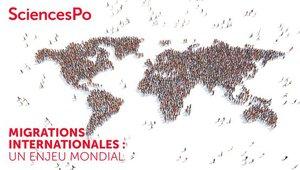
The world is moving, but not all opinions and governments are willing to accept this poorly understood reality. The issue affects both states and the planet, in a process of globalization and of regionalization of migrations, and raises new questions for international relations, now including the South. This course aims at improving knowledge of the subject, addressing the key issues raised by international migration, and assessing the trends of tomorrow.

Sep 21st 2026
5-12 Weeks
Nursing in Crisis? Exploring Current Challenges (FutureLearn) FutureLearn
Coventry University

Nursing in Crisis? Exploring Current Challenges (FutureLearn)

Explore the key issues affecting nurses' job satisfaction and practice today - from stress to changing roles and healthcare needs. Nurses play an important role in providing healthcare around the world and, in some countries, form more than 50% of the healthcare workforce. Yet, there is a global shortage with international organisations citing working conditions and image as contributing factors to nurses leaving the profession and to their initial recruitment.

Self Paced
2 Weeks
Climate change and migration: predictions, politics and policy (Climate Outreach) Other Providers
The Climate and Migration Coalition

Climate change and migration: predictions, politics and policy (Climate Outreach)

How will climate change reshape migration? And what are governments planning to do about it? This online course examines these questions in depth. Over the space of 10 months, this course examines the major issues around climate-linked migration and displacement. Climate change is set to play a key role in patterns of human settlement and migration in the future. Altered patterns of drought, storms and sea level rise are already creating new patterns of migration.

Self Paced
Self-Paced
International migrations :a global issue (FUN) FUN
Sciences Po

International migrations :a global issue (FUN)

The world is moving, but not all opinions and governments are willing to accept this poorly understood reality. The issue affects both states and the planet, in a process of globalization and of regionalization of migrations, and raises new questions for international relations, now including the South. This course aims at improving knowledge of the subject, addressing the key issues raised by international migration, and assessing the trends of tomorrow.

No sessions available
5-12 Weeks