What is Palliative Care? (Coursera)

What is Palliative Care? (Coursera)

Palliative care provides invaluable help for patients living with serious or life-limiting illness and their family caregivers. Palliative care should be part of healthcare services to improve quality of life, the ability to tolerate and benefit from treatment and improve survival. In this course, you will learn about the nature of suffering and how this concept can help you understand the experience of people living with serious illness.

Class Deals by MOOC List - Click here and see Coursera's Active Discounts, Deals, and Promo Codes.

Next, you will learn skills to more effectively communicate with patients, families and other care providers to both understand their experiences and provide an extra layer of support. In the next module you will explore your own core values and beliefs and how they impact your work with others. Finally, you will learn how to do a whole person assessment to understand the needs of people with serious illness so you can develop a plan to support them.
You will be able to immediately use these insights, skills and tools in your work with people living with serious illness. In later courses, you will learn to ease pain and other symptoms, such as loss of appetite, shortness of breath and fatigue. In the final course, you will explore ways to ease psycho-social-spiritual distress. These courses will prepare you to bring basic palliative care to all in need.
Course 1 of 5 in the Palliative Care: It's Not Just Hospice Anymore Specialization.

Syllabus

WEEK 1
Suffering
In this module, you will learn about suffering. Suffering is different for each person living with serious illness. Suffering has many causes, such as pain, and other physical symptoms. People also suffer because of emotional, spiritual and social concerns. If you have done a great job of easing pain, but you don’t offer help for other problems, the person will still suffer. You will learn how to help people feel like someone understands them and they are not alone. You will learn how to help people feel better, with less confusion and more hope. Finally, you will hear Ollie Green talk about his experiences of illness and suffering.

WEEK 2
SNAP
In this lesson, you’ll learn about SNAP, an easy-to-remember set of skills to use for effective conversations about values and beliefs.

WEEK 3
Communication in Palliative Care
In this module you will learn about the importance of good communication skills as we work with patients and families living with serious illness. People often believe that communication skills are something you are born with... She is just ‘a natural’ at talking with patients and families. They always love to talk with her. I am just not good at talking with others… We would never say “She is just a natural at walking, reading, driving a car or any of other things that we need to be able to do to live and enjoy our lives." We watch and learn from others and then we work and practice until we can master a new skill. We all can learn ways to be better at communicating with patients and families. We can learn basic skills of active listening, being supportive, providing and reinforcing information to patients and families, and encouraging the patient/family caregiver to talk with us. In this module, we will review some specific techniques to use when we share bad news with a patient and family caregiver. This can be scary and uncomfortable for both the patient, the family caregiver and the healthcare providers. However, this too, can become a natural part of our goal of patient-centered communication.

WEEK 4
Effective Palliative Care Begins with Self-Awareness
This module has three lessons. In the first lesson, you will explore your personal values and beliefs around health, illness and dying. This self-awareness will improve your ability to have effective palliative care conversations with people who have serious illnesses. In the second lesson, you will reflect on your values and beliefs from childhood and consider what's important to you as an adult. We will focus on values and beliefs around health, illness and dying, all of which are important to consider in palliative care. Lastly, you will reflect on your potential to judge or pull away from people who don't share your values and beliefs.

WEEK 5
Whole Person Assessment
In this module we will talk about the need to assess all dimensions of health. These include the physical, the spiritual, the psychological, the social and the economic areas that cause people living with serious illness distress.
Go to Class
MOOC List is learner-supported. When you buy through links on our site, we may earn an affiliate commission.

Related Courses

Tropical Parasitology: Protozoans, Worms, Vectors and Human Diseases (Coursera) Coursera
Duke University,Kilimanjaro Christian Medical University College

Tropical Parasitology: Protozoans, Worms, Vectors and Human Diseases (Coursera)

This course provides students an understanding of important human parasitic diseases, including their life cycles, vectors of transmission, distribution and epidemiology, pathophysiology and clinical manifestations, treatment, and prevention and control. Tropical Parasitology is taught by faculty from an area highly impacted by tropical parasites- the Kilimanjaro Christian Medical University College in Moshi, Tanzania. The faculty include Drs. Frank Mosha and Mramba Nyindo (and two lecturers, Drs. Johnson Matowo and Jovin Kitau). Dr. John Bartlett, Professor of Medicine, Global Health and Nursing at Duke University, joins his faculty colleagues in this effort.

Oct 5th 2026
5-12 Weeks
La Solución del Conflicto Ético (Coursera) Coursera
Universidad Nacional Autónoma de México

La Solución del Conflicto Ético (Coursera)

En este curso los participantes lograrán identificar y tomar decisiones sobre casos clínicos con conflictos éticos en el área de la salud por medio de la aplicación del razonamiento ético desde una perspectiva universal y considerando los aspectos médicos y éticos, el marco jurídico y la decisión ética.

Oct 5th 2026
5-12 Weeks
Sustainable Food Production Through Livestock Health Management (Coursera) Coursera
University of Illinois at Urbana-Champaign

Sustainable Food Production Through Livestock Health Management (Coursera)

Learn about the impact of infectious disease on sustainable animal-based food production by understanding the science of growth, immunity, and infection and by learning the problem-solving skills needed to advance animal health and food production through optimal management practices. In this course we will explore the effect of infectious disease on sustainable animal-based food production. The content and learning outcomes of this new course will be designed to be relevant across different food production sectors (i.e., beef, dairy, poultry, and pigs).

Oct 5th 2026
5-12 Weeks
PrEParing: PrEP for Providers and Patients (Coursera) Coursera
Johns Hopkins University

PrEParing: PrEP for Providers and Patients (Coursera)

Pre-Exposure Prophylaxis (PrEP) using the antiretroviral medication emtricitibine/tenofovir approved in countries around the world is a highly effective means of reducing transmission of HIV through sexual encounters and needle sharing. This Johns Hopkins University course PrEPares you with essential information, concepts and practical advice regarding PrEP from leaders in the field. A first of its kind learning opportunity, both providers and patients learn from the same experts through content that meets the needs of both audiences, while facilitating the opportunity for a shared community space.

Oct 12th 2026
5-12 Weeks
Introduction to Systems Biology (Coursera) Coursera
Icahn School of Medicine at Mount Sinai

Introduction to Systems Biology (Coursera)

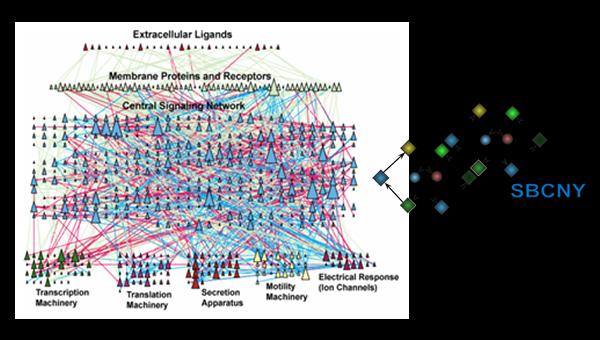
This course will introduce the student to contemporary Systems Biology focused on mammalian cells, their constituents and their functions. Biology is moving from molecular to modular. As our knowledge of our genome and gene expression deepens and we develop lists of molecules (proteins, lipids, ions) involved in cellular processes, we need to understand how these molecules interact with each other to form modules that act as discrete functional systems.

Oct 5th 2026
5-12 Weeks
Essentials of Global Health (Coursera) Coursera
Yale University

Essentials of Global Health (Coursera)

Essentials of Global Health is a comprehensive introduction to global health. It is meant to introduce you to this topic in well-structured, clear and easy to understand ways. Much of the course will focus on five questions: What do people get sick, disabled and die from; Why do they suffer from these conditions? Which people are most affected? Why should we care about such concerns? What can be done to address key health issues, hopefully at least cost, as fast as possible, and in sustainable ways?

Oct 5th 2026
5-12 Weeks
Introduction to Dental Medicine (Coursera) Coursera
University of Pennsylvania

Introduction to Dental Medicine (Coursera)

The mouth is the window into human health. This course provides an overview of dental medicine to engage, educate, excite and assist you in improving the oral health of your patients and members of your community. We will review topics in dental medicine including scope of the field, what to expect in function, and some of the many ways that dysfunction may present for different patients.

Oct 5th 2026
5-12 Weeks
Discover Best Practice Farming for a Sustainable 2050 (Coursera) Coursera
University of Western Australia

Discover Best Practice Farming for a Sustainable 2050 (Coursera)

The Discover Best Practice Farming for a Sustainable 2050 Course is based on a clear vision: imagine best practice farming for 2050, start to implement these strategies now, all the while making sure it will still be profitable. At UWA we're doing just that with the Future Farm 2050 Project, set on a mixed-enterprise farm in Western Australia and we want you to learn how it can be done in your part of the world.

Oct 5th 2026
5-12 Weeks
Hacking Exercise For Health. The surprising new science of fitness. (Coursera) Coursera
McMaster University

Hacking Exercise For Health. The surprising new science of fitness. (Coursera)

Renowned exercise physiologists Martin Gibala and Stuart Phillips of McMaster University teach the surprising new science of cardio fitness and strength-building—and then provide you with hacks to get fit and strong (and healthy!) in less time than you ever thought possible. What’s the right mix of exercise between cardio and strength? How do you know if you’re working out hard enough? What’s better, heavy or light weights? These questions and more are addressed through a course designed to provide even the most inexperienced of exercisers the tools you need to design time-efficient workouts that can be done virtually anywhere, from your own home to a city park or even at your workplace.

Oct 5th 2026
4 Weeks
Community Awareness Course: Sexuality and Disability (Coursera) Coursera
University of Minnesota

Community Awareness Course: Sexuality and Disability (Coursera)

This community awareness course from the University of Minnesota Program on Human Sexuality will provide you with a solid introduction to human sexuality for those living with disabilities. Often there are assumptions that the disabled or differently abled people are not sexual, do not have sexual needs, or cannot be involved sexually. In this professionally produced one-hour course, you'll learn about the basics of disabilities and human sexuality.

Oct 5th 2026
5-12 Weeks