Wellness Coaching: Powerful Skills for Everyday People (Canvas net)

Wellness Coaching: Powerful Skills for Everyday People (Canvas net)

This course will introduce the theory and practice of wellness coaching and emphasize the art and science of behavior change. As a participant, you’ll gain an appreciation for how coaching applies in your own life and how it can be used to benefit others.

CERTIFICATE OF COMPLETION: All students who successfully complete this course will earn a Certificate of Completion from IWE.
This course will help you answer the following questions:

  • What is health, wellness, and well-being?
  • What are the interrelationships among health, wellness, and well-being?
  • How do people change and make change stick?
  • What is wellness coaching?
  • What are the qualifications for being a wellness coach?
  • What is the training required to be a wellness coach?
  • Why does science tell us to take a holistic approach?
  • What evidence-based tools and strategies help people change?
  • What does wellness coaching look like in action?
  • What wellness coaching strategies can I put into action right now?
  • What is the outlook for wellness coaching as a new occupation?

Wellness coaches are experts in the art and science of change, so they can help people manage change to optimize well-being. Wellness coaches help people look at the factors that contribute to, or detract from, their well-being. This includes diet and exercise, but also relationships, finances, stress, personal environment, behavioral and emotional factors, and more. Wellness coaches help people set goals that are important and meaningful to them, give them tools and techniques to achieve those goals, and work with them to make sure the changes “stick.”
Wellness coaching is very different from teaching, directing, mentoring, counseling, problem-solving, or advising. Wellness coaches take a holistic approach and build on each person’s unique strengths, skills, and resources. They “walk alongside” the people they are coaching, rather than following behind or taking the lead by directing. Coaches believe that people are experts in themselves, so they use powerful techniques to help others explore what works for them to give them the results that they want using approaches that are a good fit for them and that they can sustain.

Wellness coaching skills can be incorporated into everyday living to improve one’s own well-being and to help family and friends, or on the job. Think of wellness coaching skills as something that can help you do better in your own life and then help others do better in theirs!
Go to Class
MOOC List is learner-supported. When you buy through links on our site, we may earn an affiliate commission.

Related Courses

Curanderismo: Traditional Healing Using Plants (Coursera) Coursera
University of New Mexico

Curanderismo: Traditional Healing Using Plants (Coursera)

As one of four courses on Curanderismo, the art of Hispanic/Latino traditional medicine, this course focuses specifically on the use of plants in traditional healing. As an educational and cultural platform, this course will share the history, influences, and contributions of traditional medicine. Trained traditional healers will share their knowledge of the healing properties of plants commonly found in the Southwestern United States and Mexico through practical applications that can still be used today.

Dec 28th 2026
5-12 Weeks
Leading Healthcare Quality and Safety (Coursera) Coursera
George Washington University

Leading Healthcare Quality and Safety (Coursera)

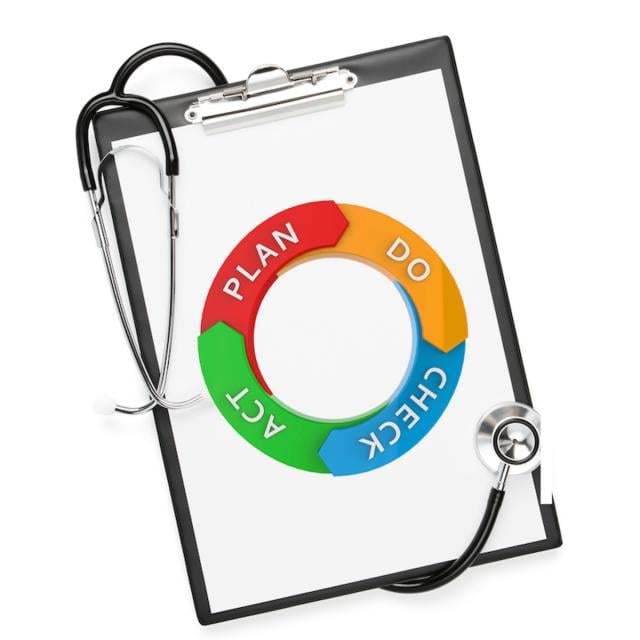
Ensuring patient safety and healthcare quality is critical and should be a key focus of everyone in healthcare practice. This course provides healthcare practitioners and others with an introduction to the knowledge and skills needed to lead patient safety and quality improvement initiatives at the micro and macro levels. Participants will explore the foundations of health care quality and the science underlying patient safety and quality improvement, design and select effective health care measures, analyze patient safety problems and processes using tools such as human factors analysis, apply systematic approaches including the Plan-Do-Study-Act (PDSA) model to address quality improvement challenges, and learn strategies to lead a culture of change

Dec 21st 2026
5-12 Weeks
Pediatric Advanced Life Support (Canvas.net) Canvas Network
National Health Care Provider Solutions,The Disque Foundation

Pediatric Advanced Life Support (Canvas.net)

Pediatric Advanced Life Support (PALS) will prepare you to respond to life-threatening emergencies in the pediatric population with advanced interventions. This PALS course is based on the latest guidelines, which focus on doing several tasks simultaneously as part of a group process that enables efficiency and minimizes error.

Self Paced
Self-Paced
Basic Life Support (Canvas.net) Canvas Network
National Health Care Provider Solutions,The Disque Foundation

Basic Life Support (Canvas.net)

Basic Life Support (BLS) will prepare you to respond to life-threatening emergencies in multiple populations with life-saving interventions. This BLS course is based on the latest guidelines, which focus on doing several tasks simultaneously as part of a group process that enables efficiency and minimizes error.

Self Paced
Self-Paced
Introduction to Reproduction (Coursera) Coursera
Northwestern University

Introduction to Reproduction (Coursera)

Do you have questions about sex hormones or menstrual cycles? This is a crash-course in human reproductive health through fact and biology-based information on a variety of topics. "Sex 101" will cover reproductive anatomy, key biological changes during puberty, sexual biology and contraceptive methods, reproductive disorders, and a special introduction to the exciting field of Oncofertility. Specific lecture titles are as follows: 1) Reproductive Anatomy & Hormones, 2) Menstrual Cycle, Oocyte Maturation, & Sperm Activation, 3) Sexual Biology, Fertilization, & Contraception, and 4) Reproductive Health & Disorders.

Dec 21st 2026
4 Weeks
Population Health: Predictive Analytics (Coursera) Coursera
Leiden University

Population Health: Predictive Analytics (Coursera)

Predictive analytics has a longstanding tradition in medicine. Developing better prediction models is a critical step in the pursuit of improved health care: we need these tools to guide our decision-making on preventive measures, and individualized treatments. In order to effectively use and develop these models, we must understand them better. In this course, you will learn how to make accurate prediction tools, and how to assess their validity. First, we will discuss the role of predictive analytics for prevention, diagnosis, and effectiveness. Then, we look at key concepts such as study design, sample size and overfitting.

Dec 21st 2026
4 Weeks
Take the Lead on Healthcare Quality Improvement (Coursera) Coursera
Case Western Reserve University

Take the Lead on Healthcare Quality Improvement (Coursera)

In this course you will learn about the importance of quality in healthcare and how you can contribute by implementing a quality improvement (QI) project to improve processes of care and patient outcomes. You will learn about powerful tools to add to your QI ‘toolbox’ during short lectures and reflective exercises. You will apply these tools to the implementation of a QI project in your own practice setting or an area of personal improvement. At the completion of the course, you will have a storyboard that captures your QI project success to share with others.

Dec 21st 2026
5-12 Weeks
Diagnosing Health Behaviors for Global Health Programs (Coursera) Coursera
Johns Hopkins University

Diagnosing Health Behaviors for Global Health Programs (Coursera)

Health behavior lies at the core of any successful public health intervention. While we will examine the behavior of individual in depth in this course, we also recognize by way of the Ecological Model that individual behavior is encouraged or constrained by the behavior of families, social groups, communities, organizations and policy makers. We recognize that behavior change is not a simplistic process but requires an understanding of dimensions like frequency, complexity and cultural congruity. Such behavioral analysis is strengthened through the use of a toolkit of theoretical models and practical frameworks.

Dec 21st 2026
4 Weeks
Biohacking Your Brain's Health (Coursera) Coursera
Emory University

Biohacking Your Brain's Health (Coursera)

With deteriorating health, particularly brain health, occurring at a global level, this course introduces you to methods for maximizing your brain's fitness through nutrition, exercise, meditation, and sleep. We'll debunk popular myths about prescribed practices for overall health and then uncover studies from the last few decades revealing practical routines and interventions that are proven to help improve the brain.

Dec 21st 2026
4 Weeks
Gender and Sexuality: Diversity and Inclusion in the Workplace (Coursera) Coursera
University of Pittsburgh

Gender and Sexuality: Diversity and Inclusion in the Workplace (Coursera)

What is sex? What is gender? What is sexuality? What do we mean by LGBTQIA? How are these concepts related to the workplace? How have our understandings of these terms changed over time, and how have these changes impacted work and culture? To help you answer these important questions, this course will introduce you to the exciting field of gender, sexuality, and women's studies, and to LGBTQIA identities.

Dec 21st 2026
4 Weeks
Voice Disorders: What Patients and Professionals Need to Know (Coursera) Coursera
Icahn School of Medicine at Mount Sinai

Voice Disorders: What Patients and Professionals Need to Know (Coursera)

Knowledge regarding vocal production physiology and management options for voice disorders have experienced rapid growth over the past 40 years. This growth has resulted in a knowledge gap amongst patients and practitioners. Entirely new subspecialties of laryngology under otolaryngology and vocology under speech-language pathology have developed in response to this gap. This MOOC (Massive Open Online Course) is designed to educated patients, allied healthcare providers, vocal trainers/coaches, general medical practitioners and otolaryngologists.

Dec 21st 2026
5-12 Weeks