Value-Based Care: Introduction to Value-Based Care and the U.S. Healthcare System (Coursera)

Offered by University of Houston,
Value-Based Care: Introduction to Value-Based Care and the U.S. Healthcare System (Coursera)

This course is designed to introduce you to the concept of value-based care (VBC). While the information you will explore is general, it will help you establish a solid foundation for continued learning and future thinking about the concept of VBC. Through a historical lens, you will explore the creation of Medicare and Medicaid and the evolution of commercial insurance, TRICARE, and the Veterans Health Administration. While history is an important filter for understanding healthcare in this country, you will learn how each of these mechanisms emerged, the populations served, and what changes occurred over time, with a focus on funding and expenditures. In addition, this course will help you establish a firm foundation for understanding the development and evolution of quality measures and outcomes in healthcare.

Class Deals by MOOC List - Click here and see Coursera's Active Discounts, Deals, and Promo Codes.

By developing an understanding of what quality is and how it is measured, you can begin a knowledge-building exploration of the components of quality in healthcare. Why is this important? In value-based care models, providers must meet quality measures and improve the health outcomes of their patients. In the summative assignment, you use a national system of quality measures to develop a plan that would positively impact value within your healthcare organization.
What You Will Learn

  • What value-based care is and why it is important
  • How the U.S. healthcare system has evolved
  • What quality is and how is it measured in healthcare

Syllabus

WEEK 1
Introduction to Value-Based Care
This module is designed to introduce you to the concept of value-based care. While the information you will explore is general, it will help you establish a solid foundation for continued learning and future thinking about the concept of VBC as you progress through this certificate program. Even if you have an understanding of or experience with VBC, this module might serve as a useful review. Remember, as you read or hear terms or concepts that are new to you, have your digital (Word doc) or analog (paper) notepad handy to write them down. At any time, you can use your favorite search engine to learn more. Be a self-directed learner!

WEEK 2
The U.S. Healthcare System (Medicare, Medicaid, Commercial Insurance, TRICARE, and the Veterans Health Administration: Creation, Evolution and Change
This module is designed as an overview of the U.S. healthcare system. Through a historical lens, you will explore the creation of Medicare and Medicaid and the evolution of commercial insurance, TRICARE, and the Veterans Health Administration (VHA). While history is an important filter for understanding healthcare in this country, the majority of this module will examine how each of these mechanisms emerged, the populations served, and changes over time, with a focus on funding and expenditures. You will also explore relationships and critical differences across these mechanisms.
While the information you will explore is general, it is designed to help you establish a solid foundation for continued learning and future thinking about the concept of VBC as you progress through this certificate program. Even if you have an understanding of the general healthcare landscape, this module might serve as a good review. Remember, as you read or hear terms or concepts that are new to you, have your digital (Word document) or analog (paper) notepad handy to write them down. At any time, you can use your favorite search engine to learn more. Be a self-directed learner!

WEEK 3
Development and Evolution in Healthcare Quality Measures and Outcomes
This module is designed to help you establish a firm foundation for understanding the development and evolution of quality measures and outcomes in healthcare. By developing an understanding of what quality is and how it is measured, you can begin a knowledge-building exploration of the components of quality in healthcare. From there, you’ll synthesize the importance of outcomes in healthcare management and how they have evolved, and reflect on opportunities for the future. Why is this important? As you have already explored in this course, in value-based care models, providers must meet quality measures and improve the health outcomes of their patients. While the information you will explore is general, it is designed to help you establish a solid foundation for continued learning and future thinking about the concept of value-based care as you progress through this certificate program. Even if you have an understanding of quality measures and outcomes, this module might serve as a good review. Remember, as you read or hear terms or concepts that are new to you, have your digital (Word doc) or analog (paper) notepad handy to write them down. At any time, you can use your favorite search engine to learn more. Be a self-directed learner!

WEEK 4
Course Project: Making This My Own
A key theme of Course 1 is evolution. You explored the evolution of value-based care (Module 1), the evolution of the U.S. healthcare landscape (Module 2), and the evolution of quality measures and outcomes in healthcare (Module 3). And as expected with any evolution, complexities naturally emerge. This is quite evident in your brief examination of the diverse U.S. healthcare landscape with all of the various types of insurance supported by various types of revenue models and serving various individuals. Equally complex is the array of national quality measures and outcomes across healthcare, where some people focus on the patient or the provider and others on the care setting or a particular healthcare condition. And, as this certificate program is an introduction to value-based healthcare, the complexities of this system might emerge when striving to answer, “What is value?” However, being complex is not an obstacle for achieving success; in fact, it is often a catalyst for positive change.
Whether you are currently working in healthcare or are pursuing a healthcare career, throughout this certificate program you should be asking: “How does the information connect to and strengthen my understanding of value-based care?” And regardless of whether your organization is considering a transition to VBC, is in the midst of doing so, or has successfully made the transition to VBC, a secondary question must always be: “How do I lead from where I am to support successfully and or advance VBC?” Let’s begin this summative assignment by applying what you have explored in this course to your current (or future) practice to address the following: What would be your role in helping to drive better outcomes for patients/members? Using a national system of quality measures explored in Module 3, develop a plan that would positively impact value within your healthcare organization (office, practice, site or system). Follow the steps below to complete this assignment.
Go to Class
MOOC List is learner-supported. When you buy through links on our site, we may earn an affiliate commission.

Related Courses

The Brain and Space (Coursera) Coursera
Duke University

The Brain and Space (Coursera)

This course is about how the brain creates our sense of spatial location from a variety of sensory and motor sources, and how this spatial sense in turn shapes our cognitive abilities. Knowing where things are is effortless. But “under the hood,” your brain must figure out even the simplest of details about the world around you and your position in it.

Oct 12th 2026
5-12 Weeks
Biochemical Principles of Energy Metabolism (Coursera) Coursera
Korea Advanced Institute of Science and Technology - KAIST

Biochemical Principles of Energy Metabolism (Coursera)

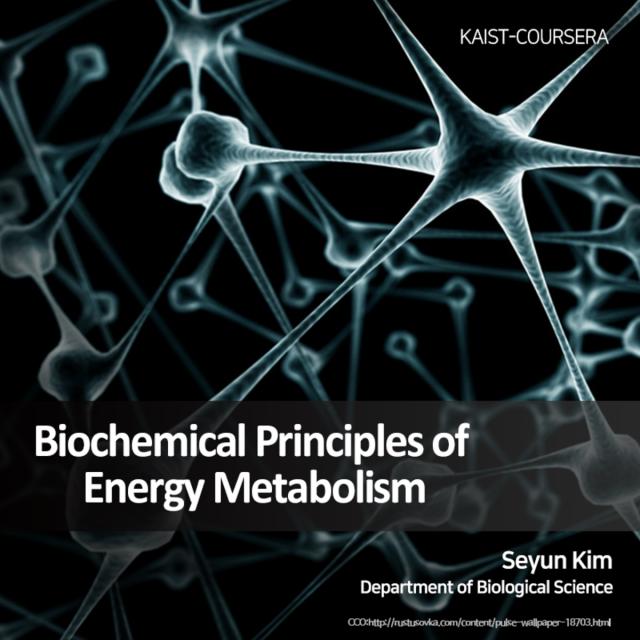
Everyone knows that energy is essential for sustaining life. How can you define energy in life? Have ever thought about ways of how carbohydrates like glucose from your diet can be used for extracting energy? A scientific field that focuses on energy production and flow though living cells and organisms is called bioenergetics. Energy metabolism covers various biochemical ways of energy transformation and regulatory mechanisms of over thousands chemical reactions. Without fine control of those metabolic processes, cells and organisms cannot maintain activities linked to life.

Oct 12th 2026
5-12 Weeks
Epidemiology: The Basic Science of Public Health (Coursera) Coursera
University of North Carolina

Epidemiology: The Basic Science of Public Health (Coursera)

Often called “the cornerstone” of public health, epidemiology is the study of the distribution and determinants of diseases, health conditions, or events among populations and the application of that study to control health problems. By applying the concepts learned in this course to current public health problems and issues, students will understand the practice of epidemiology as it relates to real life and makes for a better appreciation of public health programs and policies. This course explores public health issues like cardiovascular and infectious diseases – both locally and globally – through the lens of epidemiology.

Oct 12th 2026
5-12 Weeks
Curanderismo: Traditional Healing Using Plants (Coursera) Coursera
University of New Mexico

Curanderismo: Traditional Healing Using Plants (Coursera)

As one of four courses on Curanderismo, the art of Hispanic/Latino traditional medicine, this course focuses specifically on the use of plants in traditional healing. As an educational and cultural platform, this course will share the history, influences, and contributions of traditional medicine. Trained traditional healers will share their knowledge of the healing properties of plants commonly found in the Southwestern United States and Mexico through practical applications that can still be used today.

Oct 19th 2026
5-12 Weeks
Training and Learning Programs for Volunteer Community Health Workers (Coursera) Coursera
Johns Hopkins University

Training and Learning Programs for Volunteer Community Health Workers (Coursera)

Volunteer community health workers (CHWs) are a major strategy for increasing access to and coverage of basic health interventions. Our village health worker training course reviews the process of training and continuing education of CHWs as an important component of involving communities in their own health service delivery. Participants will be guided through the steps of planning training and continuing education activities for village volunteers. The course draws on real-life examples from community-directed onchocerciasis control, village health worker programs, community case management efforts, peer educators programs and patent medicine vendor training programs, to name a few.

Oct 12th 2026
5-12 Weeks
Clinical Kidney, Pancreas and Islet Transplantation (Coursera) Coursera
Leiden University,Leiden University Medical Center

Clinical Kidney, Pancreas and Islet Transplantation (Coursera)

Kidney transplantation is a major advance of modern medicine which provides high-quality of life for patients with end-stage renal disease. What used to be an experimental, risky, and very limited treatment option more than 50 years ago is now routinely performed in many countries worldwide. The number of renal transplants is expected to rise sharply in the next decade since the proportion of patients with end stage renal disease is increasing.

Oct 12th 2026
4 Weeks
Medical Neuroscience (Coursera) Coursera
Duke University

Medical Neuroscience (Coursera)

Medical Neuroscience explores the functional organization and neurophysiology of the human central nervous system, while providing a neurobiological framework for understanding human behavior. In this course, you will discover the organization of the neural systems in the brain and spinal cord that mediate sensation, motivate bodily action, and integrate sensorimotor signals with memory, emotion and related faculties of cognition. The overall goal of this course is to provide the foundation for understanding the impairments of sensation, action and cognition that accompany injury, disease or dysfunction in the central nervous system. The course will build upon knowledge acquired through prior studies of cell and molecular biology, general physiology and human anatomy, as we focus primarily on the central nervous system.

Oct 12th 2026
13-24 Weeks
Diabetes - a Global Challenge (Coursera) Coursera
University of Copenhagen

Diabetes - a Global Challenge (Coursera)

Diabetes and obesity are growing health problems in rich and poor countries alike. With this course you will get updated on cutting-edge diabetes and obesity research including biological, genetic and clinical aspects as well as prevention and epidemiology of diabetes and obesity. All lectures are provided by high-profile scientists from one the world's leading universities in diabetes research.

Oct 12th 2026
5-12 Weeks
Stories of Infection (Coursera) Coursera
Stanford University

Stories of Infection (Coursera)

This course introduces learners to a variety of infectious diseases using a patient-centered, story-based approach. Through illustrated, short videos, learners will follow the course of each patient’s illness, from initial presentation to resolution. Integrating the relevant microbiology, pathophysiology and immunology, this course aims to engage and entice the learner towards future studies in microbiology, immunology and infectious diseases.

Oct 12th 2026
5-12 Weeks
Preventing Chronic Pain: A Human Systems Approach (Coursera) Coursera
University of Minnesota

Preventing Chronic Pain: A Human Systems Approach (Coursera)

Chronic pain is at epidemic levels and has become the highest-cost condition in health care. This course uses both creative and experiential learning to better understand chronic pain conditions and how they can be prevented through self-management in our cognitive, behavioral, physical, emotional, spiritual, social, and environmental realms.

Oct 12th 2026
5-12 Weeks
A Life of Happiness and Fulfillment (Coursera) Coursera
Indian School of Business - ISB

A Life of Happiness and Fulfillment (Coursera)

What are the determinants of a happy and fulfilling life? This is surely one of life’s biggest questions, and a question that has interested many of our ancestors. Buddha famously gave up his kingdom in search of happiness. Several Greek philosophers (from Aristotle to Epicurus and Plato to Socrates) had their own views on what it takes to be happy. And of course, we all have our own theories about happiness too.

Oct 12th 2026
5-12 Weeks