Using SAS Viya REST APIs with Python and R (Coursera)

Offered by SAS,
Using SAS Viya REST APIs with Python and R (Coursera)

SAS Viya is an in-memory distributed environment used to analyze big data quickly and efficiently. In this course, you’ll learn how to use the SAS Viya APIs to take control of SAS Cloud Analytic Services from a Jupyter Notebook using R or Python. You’ll learn to upload data into the cloud, analyze data, and create predictive models with SAS Viya using familiar open source functionality via the SWAT package -- the SAS Scripting Wrapper for Analytics Transfer.

Class Deals by MOOC List - Click here and see Coursera's Active Discounts, Deals, and Promo Codes.

You’ll learn how to create both machine learning and deep learning models to tackle a variety of data sets and complex problems. And once SAS Viya has done the heavy lifting, you’ll be able to download data to the client and use native open source syntax to compare results and create graphics.

Course Syllabus

WEEK 1
Course Overview
In this module, you meet the instructor and learn about course logistics, such as how to access the software for this course.
SAS® Viya® and Open Source Integration
In this module you learn about the analytical processing engine behind SAS Viya, the Cloud Analytic Services server. You also learn how to submit data processing commands to SAS Viya from the open source languages R and Python.

WEEK 2
Machine Learning
In this module you learn how to use R and Python to create, optimize, and assess SAS Viya predictive models. You also learn how to use R and Python to efficiently manage the creation and assessment of these models.

WEEK 3
Text Analytics
In this module you learn how natural language processing is used to analyze collections of text documents. You also learn how to turn blocks of unstructured text into numeric inputs suitable for predictive modeling.
Deep Learning
In this module you learn how deep learning methods extend traditional neural network models with new options and architectures. You also learn how recurrent neural networks are used to model sequence data like time series and text strings, and how to create these models using R and Python APIs for SAS Viya.

WEEK 4
Time Series
In this module you learn how to model time series using two popular methods, exponential smoothing and ARIMAX. You also learn how to use the R and Python APIs for SAS Viya to create forecasts using these classical methods and using recurrent neural networks for more complex problems.
Image Classification
In this module you learn how convolutional neural networks are used to classify images and how to use the R and Python APIs for SAS Viya to create convolutional neural networks.
Factorization Machines
In this module you learn how factorization machines are used to create recommendation engines and how to build factorization machine models in SAS Viya using the R and Python APIs.

Go to Class
MOOC List is learner-supported. When you buy through links on our site, we may earn an affiliate commission.

Related Courses

Security and Privacy for Big Data - Part 1 (Coursera) Coursera
EIT Digital

Security and Privacy for Big Data - Part 1 (Coursera)

This course sensitizes regarding security in Big Data environments. You will discover cryptographic principles, mechanisms to manage access controls in your Big Data system. By the end of the course, you will be ready to plan your next Big Data project successfully, ensuring that all security related issues are under control. You will look at decent-sized big data projects with security-skilled eyes, being able to recognize dangers. This will allow you to improve your systems to a grown and sustainable level.

Oct 5th 2026
1 Week
Population Health: Responsible Data Analysis (Coursera) Coursera
Leiden University

Population Health: Responsible Data Analysis (Coursera)

In most areas of health, data is being used to make important decisions. As a health population manager, you will have the opportunity to use data to answer interesting questions. In this course, we will discuss data analysis from a responsible perspective, which will help you to extract useful information from data and enlarge your knowledge about specific aspects of interest of the population.

Oct 5th 2026
4 Weeks
Visualization for Data Journalism (Coursera) Coursera
University of Illinois at Urbana-Champaign

Visualization for Data Journalism (Coursera)

While telling stories with data has been part of the news practice since its earliest days, it is in the midst of a renaissance. Graphics desks which used to be deemed as “the art department,” a subfield outside the work of newsrooms, are becoming a core part of newsrooms’ operation. Those people (they often have various titles: data journalists, news artists, graphic reporters, developers, etc.) who design news graphics are expected to be full-fledged journalists and work closely with reporters and editors.

Oct 5th 2026
5-12 Weeks
Data science perspectives on pandemic management (Coursera) Coursera
Politecnico di Milano

Data science perspectives on pandemic management (Coursera)

The COVID-19 pandemic is one of the first world-wide scenarios where data made a difference in capturing and analyzing the diffusion and impact of the disease. We offer an introductory course for decision makers, policy makers, public bodies, NGOs, and private organizations about methods, tools, and experiences on the use of data for managing current and future pandemic scenarios.

Oct 5th 2026
5-12 Weeks
Functional Programming in Scala Capstone (Coursera) Coursera
École Polytechnique Fédérale de Lausanne

Functional Programming in Scala Capstone (Coursera)

In the final capstone project you will apply the skills you learned by building a large data-intensive application using real-world data. You will implement a complete application processing several gigabytes of data. This application will show interactive visualizations of the evolution of temperatures over time all over the world.

Oct 5th 2026
5-12 Weeks
Global Warming II: Create Your Own Models in Python (Coursera) Coursera
University of Chicago

Global Warming II: Create Your Own Models in Python (Coursera)

This class provides a series of Python programming exercises intended to explore the use of numerical modeling in the Earth system and climate sciences. The scientific background for these models is presented in a companion class, Global Warming I: The Science and Modeling of Climate Change. This class assumes that you are new to Python programming (and this is indeed a great way to learn Python!), but that you will be able to pick up an elementary knowledge of Python syntax from another class or from on-line tutorials.

Oct 5th 2026
5-12 Weeks
Algorithmic Thinking (Part 1) (Coursera) Coursera
Rice University

Algorithmic Thinking (Part 1) (Coursera)

Experienced Computer Scientists analyze and solve computational problems at a level of abstraction that is beyond that of any particular programming language. This two-part class is designed to train students in the mathematical concepts and process of "Algorithmic Thinking", allowing them to build simpler, more efficient solutions to computational problems.

Oct 5th 2026
4 Weeks
Machine Teaching for Autonomous AI (Coursera) Coursera
University of Washington

Machine Teaching for Autonomous AI (Coursera)

Just as teachers help students gain new skills, the same is true of artificial intelligence (AI). Machine learning algorithms can adapt and change, much like the learning process itself. Using the machine teaching paradigm, a subject matter expert (SME) can teach AI to improve and optimize a variety of systems and processes. The result is an autonomous AI system.

Oct 5th 2026
4 Weeks
An Introduction to Interactive Programming in Python (Part 1) (Coursera) Coursera
Rice University

An Introduction to Interactive Programming in Python (Part 1) (Coursera)

This two-part course is designed to help students with very little or no computing background learn the basics of building simple interactive applications. Our language of choice, Python, is an easy-to learn, high-level computer language that is used in many of the computational courses offered on Coursera. To make learning Python easy, we have developed a new browser-based programming environment that makes developing interactive applications in Python simple.

Oct 5th 2026
5-12 Weeks
Practical Time Series Analysis (Coursera) Coursera
The State University of New York

Practical Time Series Analysis (Coursera)

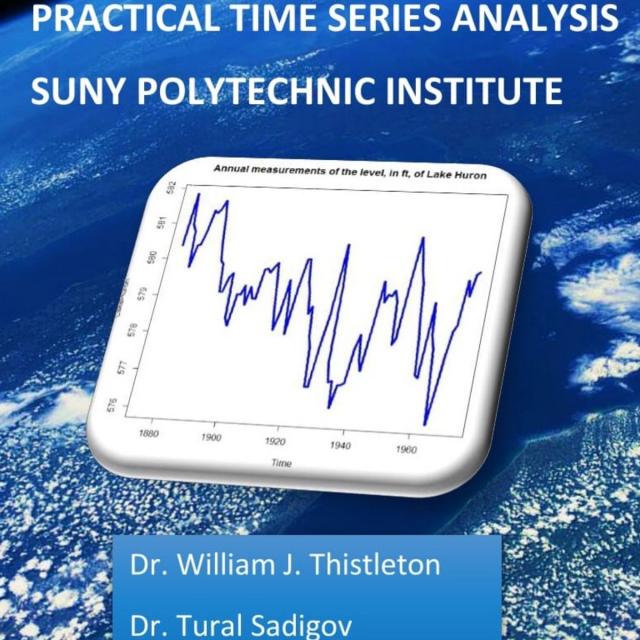
Many of us are "accidental" data analysts. We trained in the sciences, business, or engineering and then found ourselves confronted with data for which we have no formal analytic training. This course is designed for people with some technical competencies who would like more than a "cookbook" approach, but who still need to concentrate on the routine sorts of presentation and analysis that deepen the understanding of our professional topics.

Oct 5th 2026
5-12 Weeks