Tibetan Buddhist Meditation and the Modern World: Lesser Vehicle (Coursera)

Tibetan Buddhist Meditation and the Modern World: Lesser Vehicle (Coursera)

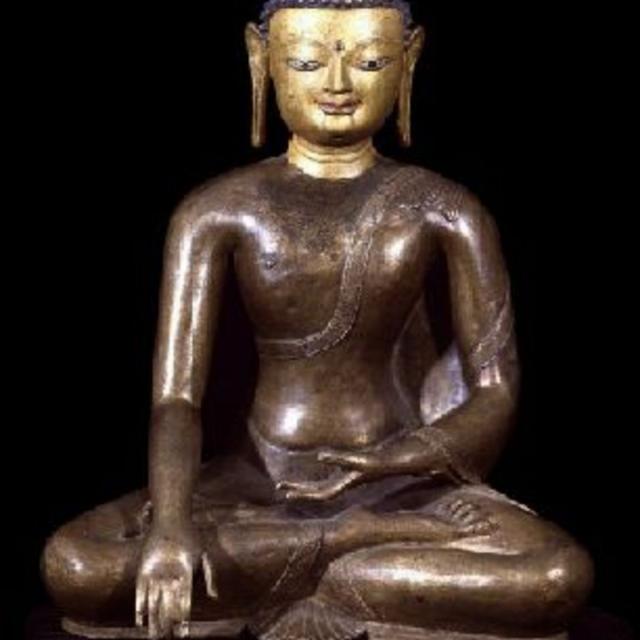
Tibetan Buddhist Meditation and the Modern World explores the immense variety of meditation practices past and present. We present their histories, their philosophical underpinnings, their transformations in the modern global world, and we give you a chance to reflect upon meditation practices through secular contemplations designed just for this course.

Class Deals by MOOC List - Click here and see Coursera's Active Discounts, Deals, and Promo Codes.

We use a traditional, if overly simplistic, way of grouping Buddhist philosophical systems and ritual-contemplative practices into “three vehicles”, three programs of theory and practice supporting the personal journey from suffering to enlightenment. This scheme became normative in India and Tibet: (i) the Lesser Vehicle (Hīnayāna), (ii) the Great Vehicle (Mahāyāna), and (iii) the Adamantine Vehicle (Vajrayāna), also referred to as “esoteric Buddhism” or “Buddhist tantra”. To this, we will add a fourth Vehicle which is explicit in many Tibetan materials, though no standard term ever emerged that was accepted by all sectarian traditions - we will thus term it as the “Natural Vehicle” or “Post Tantra”. We follow an indigenous Tibetan tradition in terms of characterizing each with a specific orientational paradigm - repression, refinement, transformation, and natural freedom. These twelve meditative traditions constitute the framework for the course’s discussion of the main streams of Tibetan Buddhist meditation.
The five modules of the present course, dedicated to "Lesser Vehicle" practices and perspectives, treat the first five of these twelve types. Each module in turn has four components: (i) the specific Buddhist meditation in its traditional presentation and practice; (ii) modern scientific research into its efficacy and dynamics, or on practices, principles, and processes related to this type of meditation in our analysis; (iii) the fact, problems, and opportunities of modern secular adaptations in a variety of educational, professional, and personal settings; and (iv) secular practices for experimentation, which are either direct adaptations or new practices designed to give an experiential sense of some of the principles underlying the Buddhist meditative practice.
Note: This course is currently not available.

Related Courses

Calvin - Histoire et réception d'une Réforme (Coursera) Coursera
University of Geneva

Calvin - Histoire et réception d'une Réforme (Coursera)

Ce cours introduit à la vie et à la pensée du réformateur Jean Calvin (1509-1564) ainsi qu’à son influence sur le monde moderne et contemporain. La démarche proposée se veut critique, il ne s’agit ni de canoniser ni de condamner Calvin, mais de comprendre sa pensée avec toute la distance requise et d’en analyser les enjeux.

Sep 14th 2026
5-12 Weeks
Religions and Society in China (Coursera) Coursera
Higher School of Economics - HSE University

Religions and Society in China (Coursera)

This course provides an introduction to the study of the history, major teachings, and practices of the major Chinese religions and spiritual practices and is deigned to give conceptual tools to appreciate diverse religious practice in East. It covers the development of Buddhism, Daoism, Confucianism and wide range of popular and local religions.

Jul 25th 2022
5-12 Weeks
China’s First Empires and the Rise of Buddhism (edX) EdX
HarvardX,Harvard University

China’s First Empires and the Rise of Buddhism (edX)

Learn about the Qin and Han dynasties, and how Buddhism and ideas of self-realization influenced the medieval period. This course, the second in a collection on Chinese history and culture, addresses how the Qin dynasty conquered China and established a new system of government and how the Han dynasty built a stable, centralized empire that lasted for hundreds of years. We cover the early history of Buddhism in China and how the rising feudal aristocracy responded to the loss of empire by looking inward.

Self Paced
Self-Paced
Oriental Beliefs: Between Reason and Traditions (edX) EdX
LouvainX,Université Catholique de Louvain - UCL

Oriental Beliefs: Between Reason and Traditions (edX)

Explore the spiritual and magical beliefs of cultures, from ancient Egypt to modern Japan, as we discuss gods, the universe, cosmos, dreams and so much more! This course takes a journey through the world of beliefs as they have developed in a great variety of cultures, ranging from Ancient Egypt, the Near East to Central Asia, India, China, and the Far East.

No sessions available
5-12 Weeks
Why Religion Matters: Religious Literacy, Culture and Diversity (FutureLearn) FutureLearn
The Open University

Why Religion Matters: Religious Literacy, Culture and Diversity (FutureLearn)

Discover why religion is important for understanding and engaging with global challenges. Consider the ways religion affects personal and political decision-making. Religion not only influences personal behaviours and ethics, but it’s also relevant to international conflicts and domestic policy decisions. On this course, you will gain a broader understanding of why religion matters in society and in different cultures.

Self Paced
4 Weeks
A Global History of Architecture (edX) EdX
MIT,MITx

A Global History of Architecture (edX)

Learn about humanity’s rich architectural history on this journey around the globe – from 100,000 BCE to ca. 1,600 CE. How do we understand architecture? One way of answering this question is by looking through the lens of history, beginning with First Societies and extending to the 16th century. This course in architectural history is not intended as a linear narrative, but rather aims to provide a more global view, by focusing on different architectural "moments."

Oct 18th 2023
5-12 Weeks
Religion, Conflict and Peace (edX) EdX
HarvardX,Harvard University

Religion, Conflict and Peace (edX)

Explore the diverse and complex roles that religions play in both promoting and mitigating violence. In this course, we will explore a series of contemporary conflicts in different regions of the world with a special focus on identifying and analyzing the diverse and complex roles that religions play in both promoting and mitigating violence in each context.

Self Paced
Self-Paced
Demystifying Mindfulness (FutureLearn) FutureLearn
Leiden University

Demystifying Mindfulness (FutureLearn)

Discover the science of mindfulness, learn how it works and why, from a political, psychological, and philosophical perspective. Experience mindfulness for yourself, and learn whether it really works. Interest in meditation, mindfulness, and contemplation has grown rapidly in recent years. These practises are increasingly being seen as scientifically and psychologically valid forms of therapy.

Jul 5th 2021
5-12 Weeks
Modern Masterpieces of World Literature (edX) EdX
HarvardX,Harvard University

Modern Masterpieces of World Literature (edX)

Examine how great modern writers capture the intricacies of our globalized world and how their works circulate within that world to find their own audiences. Based on the second half of the Masterpieces of World Literature edX MOOC, this short literature course examines how writers reach beyond national and linguistic boundaries as worldly readers and travelers, and how their modern fictions rise to the status of world literature.

Self Paced
Self-Paced
East Asian Religions & Ecology (Coursera) Coursera
Yale University

East Asian Religions & Ecology (Coursera)

At first glance the fields of religion and ecology may seem and unlikely pairing, but a deeper consideration reveals the two have a great deal to contribute to one another and are indeed inextricably linked. Religions recognize the unity and interdependence of humans with nature. Ecological sciences affirm this deep interconnection with the natural world. This partnership can inspire work for the wellbeing of the Earth community

Aug 31st 2026
5-12 Weeks