EdX

The Tabernacle in Word & Image: An Italian Jewish Manuscript Revealed (edX)

The Tabernacle in Word & Image: An Italian Jewish Manuscript Revealed (edX)

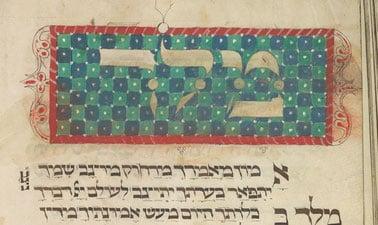
Alessandro Guetta (Paris) uses anItalian Hebrewcommentary on the biblical description of the ancient Israelite Tabernacle ( mishkan ), Tavnit ha-mishkan by Malkiel Ashkenazi,as a case studyinhowmanuscripts can be used by intellectual historians.

Class Deals by MOOC List - Click here and see EdX's Active Discounts, Deals, and Promo Codes.

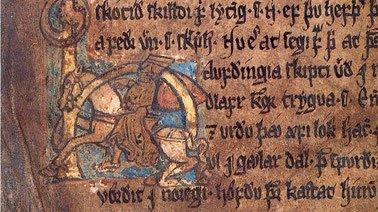
This mini-course introduces the use of early modern manuscripts for intellectual history—that is, the history of how ideas and the communication of those ideas changes over time. Professor Alessandro Guetta presents a case study constructed on a single, remarkable Hebrew manuscript from 17th-century Mantua, Malkiel Ashkenazi’s Tavnit ha-mishkan (University of Pennsylvania CAJS Rar Ms 460).
By examining this work, an extended commentary on the structure and implements of the ancient Israelite Tabernacle ( mishkan ), Professor Guetta explores how the manuscript can help us understand early modern Jewish intellectual life. Written in Renaissance Italy, he explains that the textual “reconstruction” of the Tabernacle and Temple was in part a Jewish response to the importance of buildings and architectural expression for early Modern Italians. He also considers how other manuscript copies of the same text can be studied to determine the history of the text’s transmission and development across time, thus shedding light on the historical context in which they were produced. This course comprises five short video lectures (10–12 minutes each) that explore this manuscript, its editions, and how it opens a window into Italian Jewish intellectual life only possible by attention to the physical manuscript.
No previous knowledge of Jewish history, intellectual history, or manuscript studies is required. Nevertheless, this course will be most interesting to advanced students of Jewish and Early Modern history, and those interested in censorship, Jewish life in Early Modern Italy, and biblical commentary. It also introduces a fascinating, freely browsable, Italian Jewish text in the collection of the University of Pennsylvania.

What you'll learn

  • How manuscripts help a scholar to write intellectual history.
  • The basics of a remarkable Mantuan Jewish manuscript containing a copy of Malkiel Ashkenazi’s Tavnit ha-mishkan, and its historical context.
  • Some of the most important characteristics of early modern Jewish intellectual life.
  • How to reconstruct text editions from the signs of editorial processes.

Syllabus

A lecture in five parts delivered by Alessandro Guetta.
Accompanying multiple-choice quizzes.
Plus Discussion questions and bibliography to guide future inquiry.
Go to Class
MOOC List is learner-supported. When you buy through links on our site, we may earn an affiliate commission.

Related Courses

Egiptología (Egyptology) (Coursera) Coursera
Universitat Autònoma de Barcelona

Egiptología (Egyptology) (Coursera)

¿Sientes curiosidad por la civilización del antiguo Egipto? ¿Eres un apasionado de su cultura e historia? En este curso nos acercaremos a los templos de los antiguos faraones, a sus complejos funerarios, a sus ciudades, a su escritura jeroglífica, a su religión y a muchos otros aspectos de esta gran civilización.

Jun 8th 2026
5-12 Weeks
La España de El Quijote (edX) EdX
Universidad Autonoma de Madrid,UAMx

La España de El Quijote (edX)

La España de El Quijote es un viaje a nuestro esplendor cultural. A un Siglo de Oro que elevó las artes y las letras hispanas a la excelencia mundial. En un lugar de la UAM, cuyo nombre merece recordar, habita la España de El Quijote. Un espacio en el que su monarquía creó el primer imperio global de la Historia. Un tiempo, entre los siglos XVI y XVII, en el que su sociedad alcanzó la excelencia en las artes y las letras.

Self Paced
Self-Paced
Visualizing the Birth of Modern Tokyo (edX) EdX
MIT,MITx

Visualizing the Birth of Modern Tokyo (edX)

See Tokyo’s modernization through the “100 views” tradition, from the gas-lit 1870s to the jazz era 1930s. From MIT Visualizing Cultures, with the Smithsonian Institution. This course shows the emergence of modern Tokyo through artist renderings of its neighborhoods, daily life and nightlife, nested between its recurring destruction by natural disasters and war.

Self Paced
Self-Paced
Soul Beliefs: Causes and Consequences - Unit 2: Belief Systems (Coursera) Coursera
Rutgers University

Soul Beliefs: Causes and Consequences - Unit 2: Belief Systems (Coursera)

Throughout history, the vast majority of people around the globe have believed they have, however defined, a “soul.” While the question of whether the soul exists cannot be answered by science, what we can study are the causes and consequences of various beliefs about the soul and its prospects of surviving the death of the body. Why are soul and afterlife beliefs so common in human history? Are there adaptive advantages to assuming souls exist?

Jun 8th 2026
5-12 Weeks
The Civil War and Reconstruction - 1850-1861: A House Divided (edX) EdX
Columbia University,ColumbiaX

The Civil War and Reconstruction - 1850-1861: A House Divided (edX)

Discover how the issue of slavery came to dominate American politics, and how political leaders struggled and failed to resolve the growing crisis in the nation. A House Divided: The Road to Civil War, 1850-1861 begins by examining how generations of historians have explained the crisis of the Union. After discussing the institution of slavery and its central role in the southern and national economies, it turns to an account of the political and social history of the 1850s.

Self Paced
Self-Paced
Globalization: Past and Future (edX) EdX
SDGAcademyX,SDG Academy

Globalization: Past and Future (edX)

Is globalization a new phenomenon or a cyclical pattern throughout human history? In this four-part mini-course, Professor Jeffrey Sachs argues that we have always lived in a global world. He takes students on a historical and anthropological tour of six distinct waves of globalization and outlines the key factors that drove innovation, technology dispersal and development during these epochs.

Self Paced
Self-Paced
Was Alexander Great? The Life, Leadership, and Legacies of History’s Greatest Warrior (edX) EdX
Wellesley College,WellesleyX

Was Alexander Great? The Life, Leadership, and Legacies of History’s Greatest Warrior (edX)

Was Alexander Great? If so, how? If not, why not? This course explores the life, leadership, and legacies of history’s greatest warrior. Alexander the Great conquered most of the world known to the ancient Greeks, fused the eastern and western peoples of his empire, and became a god – before his 33rd birthday.

No sessions available
4 Weeks
La percepción del paisaje (edX) EdX
Universidad Autonoma de Madrid,UAMx

La percepción del paisaje (edX)

En este MOOC nos proponemos dos objetivos: recrear la historia del paisaje y percibirlo no sólo por la vista, sino por los cinco sentidos. De forma que veremos cómo se ha ido pasando de una percepción frontal del paisaje (la del caminante y el navegante), a una lateral (la de las ventanillas del ferrocarril) y a otra vertical (la de los submarinos y los satélites espaciales). Y desde la aparición de internet ha surgido otra dimensión: el paisaje virtual.

Self Paced
Self-Paced
PredictionX: Diviner’s Guide (edX) EdX
HarvardX,Harvard University

PredictionX: Diviner’s Guide (edX)

This course is an overview of divination systems, ranging from ancient Chinese bone burning to modern astrology. Humans have always sought to know their own future, be it the destiny of an empire or an individual's fate. Across cultures and history, we find people trying to find their place in the Universe by attempting to gaze into the future.

Self Paced
Self-Paced
Deciphering Secrets: Unlocking the Manuscripts of Medieval Toledo (Spain) (edX) EdX
Universidad Carlos III de Madrid - UC3M

Deciphering Secrets: Unlocking the Manuscripts of Medieval Toledo (Spain) (edX)

Explore the medieval city of Toledo (Spain) and assess its history of Jewish, Christian, and Muslim religious and cultural coexistence. This course evaluates the medieval history of Toledo from the reign of King Alfonso “The Wise” (1252-1284) until the creation of the blood purity statutes in the 1450s.

No sessions available
5-12 Weeks