FUN

Stratégies diagnostiques des cancers (FUN)

Stratégies diagnostiques des cancers (FUN)

Seul un diagnostic précis permet de choisir le traitement le plus approprié. Ce cours va vous expliquer pourquoi ce principe général est crucial quand il s'agit des cancers. Les cancers, ou tumeurs malignes, correspondent à des maladies qui présentent des caractéristiques communes, mais aussi de nombreuses différences.

Pour tous ces cancers, survenant chez des patients ayant eux-mêmes des caractéristiques uniques, on dispose actuellement d'un grand nombre de traitements possibles. Avec un diagnostic précis, on sélectionnera le traitement le plus adapté, qu’on appellera "traitement personnalisé".
Caractériser précisément un cancer avant tout traitement est un enjeu majeur qui implique des médecins cliniciens, des spécialistes de l’imagerie radiologique et tissulaire et de la biologie des cancers.
Notre mission est de vous transmettre une vision globale des principales étapes du diagnostic des cancers.

Plan du cours

Ce MOOC se déroulera sur 6 semaines :
Semaine 1 : Des symptômes du patient au prélèvement de la tumeur
Semaine 2 : Le prélèvement tumoral, son analyse macroscopique et microscopique
Semaine 3 : L’analyse moléculaire du prélèvement tumoral et l’identification de potentielles cibles thérapeutiques
Semaine 4 : Le bilan d’extension du cancer, la réunion de concertation pluridisciplinaire et l’annonce du diagnostic
Semaine 5 : Exemples concrets de cancer du sein, cancer de l'enfant, cancer du système lymphoïde et cancer du colon
Semaine 6 : Exemples concrets de cancer du poumon, cancer du sang, cancer de la peau et cancer de la prostate.
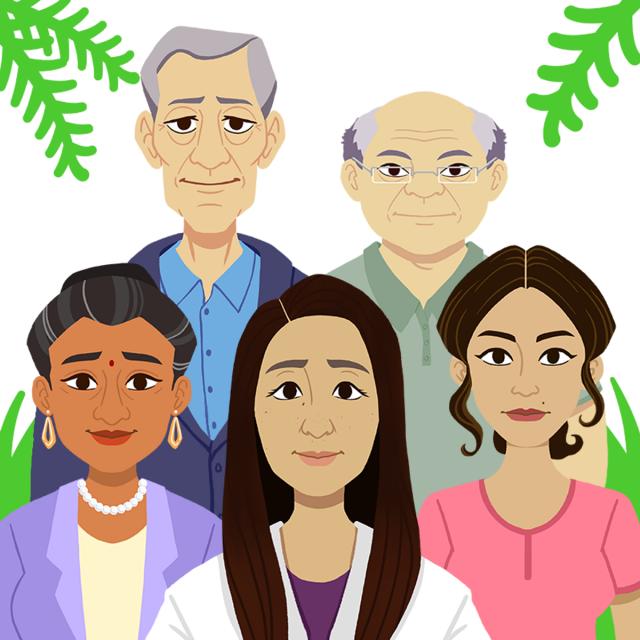
Les enseignants de ces différentes semaines sont listés ci-dessous, par code couleur de semaine.
Go to Class
MOOC List is learner-supported. When you buy through links on our site, we may earn an affiliate commission.

Related Courses

2021 Cancer Prevention Web-Based Activity (CE eligible) (Coursera) Coursera
University of Virginia

2021 Cancer Prevention Web-Based Activity (CE eligible) (Coursera)

This web-based video course focuses on the importance of prevention and risk reduction in decreasing cancer occurrences. All learners will need to watch the video modules, read associated articles, and achieve a passing score of 80% on quizzes in order to complete the course. After completing the course, learners will receive a link to claim continuing medical and nursing education credit.

Feb 26th 2024
5-12 Weeks
Cancer and the Older Person: Improving Care, Outcomes and Experience (FutureLearn) FutureLearn
University of Melbourne,Victorian Comprehensive Cancer Centre

Cancer and the Older Person: Improving Care, Outcomes and Experience (FutureLearn)

Gain an introduction to modern strategies of geriatric oncology and support. This course will enhance your understanding of cancer care for geriatric patients and help you to build confidence and knowledge to care for older people who have been diagnosed with or are undergoing treatment for cancer.

Sep 2nd 2024
4 Weeks
Talking About Cancer: Reducing Risk, Early Detection and Mythbusting (FutureLearn) FutureLearn
Cancer Research UK

Talking About Cancer: Reducing Risk, Early Detection and Mythbusting (FutureLearn)

Learn from experts at Cancer Research UK about how you could save lives by talking about cancer prevention and early detection. Learn how to talk about cancer risk reduction and spotting cancer early. 1 in 2 people will develop cancer in their lifetime. Talking about how to reduce the risk of cancer and the importance of early detection isn’t always easy, but it can make a real difference to peoples’ health. You might be worried you’ll say the wrong thing or that you simply don’t know enough about the subject. Our Cancer Research UK experts are here to help.

Apr 5th 2021
3 Weeks
HPV-Associated Oral and Throat Cancer: What You Need to Know (Coursera) Coursera
Icahn School of Medicine at Mount Sinai

HPV-Associated Oral and Throat Cancer: What You Need to Know (Coursera)

This course, offered by the Department of Otolaryngology – Head and Neck Surgery at the Icahn School of Medicine at Mount Sinai, is designed to inform primary care physicians and otolaryngologists (general and head and neck surgeons), as well as medical students, residents, nurses, physician assistants, medical assistants, about HPV-associated oral and throat cancers. It is also applicable to individuals who wish to broaden their knowledge and vernacular about this disease process, especially those who may have been diagnosed with HPV and/or HPV-associated oropharyngeal cancers.

May 25th 2026
5-12 Weeks
Cancer Biology (saylor.org) Saylor Academy
Saylor.org

Cancer Biology (saylor.org)

Cancer has existed among humans since humans themselves began and has been a subject of urgent interest from very early in our history. What we call “cancer” consists of a number of different diseases with one fundamental similarity: they are all initiated by the unchecked proliferation and growth of cells in which the pathways and systems that normally control cell division and mortality are absent.

Legacy Course
Self-Paced
Artificial Intelligence for Breast Cancer Detection (Coursera) Coursera
Johns Hopkins University

Artificial Intelligence for Breast Cancer Detection (Coursera)

Through interactive lectures and module exercises, this course illustrates the potential of artificial intelligence in breast imaging. Topics include an introduction of breast cancer and breast imaging, introduction to artificial intelligence in image analysis and computer image processing of cancer detection. The course intends to provide students basic understanding of artificial intelligence approaches to breast cancer detection.

May 18th 2026
4 Weeks
Extracellular Vesicles in Health and Disease (Coursera) Coursera
University of California, Irvine

Extracellular Vesicles in Health and Disease (Coursera)

This course aims to provide current understanding about extracellular vesicles (EVs) and their role in health and diseases. The EVs are known to be involved in cell to cell communication. Apart from maintaining normal cell physiology, EVs deliver messages that can drive or influence the progression of a disease. This course discusses recent advances made in the field to give an introduction on their function in health as well as in disease.

Jun 1st 2026
4 Weeks
Causes of Human Disease: Exploring Cancer and Genetic Disease (FutureLearn) FutureLearn
University of Leeds

Causes of Human Disease: Exploring Cancer and Genetic Disease (FutureLearn)

Explore how the unravelling of genetic code has led to a deeper understanding of genetic diseases and cancer. It’s widely known that some diseases run in families. The discovery of the structure of DNA and the unravelling of the genetic code has led to a deeper understanding of such diseases. We now know more about the genetic basis of cancer and how cancer cells are formed and reproduce. On this course you’ll explore the structure of DNA, its processes and learn how genetic disease results from DNA alterations.

Sep 23rd 2024
2 Weeks
Interpreting Genomic Variation: Inherited Cancer Susceptibility (FutureLearn) FutureLearn
St George's, University of London,CanGene CanVar

Interpreting Genomic Variation: Inherited Cancer Susceptibility (FutureLearn)

Explore how robust variant interpretation is needed to support patients with increased risk of cancer. Explore germline variation in cancer susceptibility genes. Germline genomic variation can increase the risk of developing cancer. It’s essential to use the best evidence available to decide if a genomic variant is likely to increase the chance of a person developing cancer. This allows us to offer at-risk individuals access to appropriate screening, prevention, and personalised treatments.

Jan 10th 2022
2 Weeks
Genomics in the NHS: A Clinician's Guide to Genomic Testing for Cancer (Solid Tumours) (FutureLearn) FutureLearn
Health Education England

Genomics in the NHS: A Clinician's Guide to Genomic Testing for Cancer (Solid Tumours) (FutureLearn)

Elevate your clinical career by developing your understanding of cancer genomic testing and how to support tests in the NHS. On this two-week course from NHS England, you’ll develop an understanding of the different types of genomic testing for solid tumours – from single gene tests to whole genome sequencing – and walk through the application of this testing in clinical practice.

Jan 22nd 2024
2 Weeks
Introduction to Breast Cancer (Coursera) Coursera
Yale University

Introduction to Breast Cancer (Coursera)

Welcome to an Introduction to Breast Cancer! In this course, we’ll learn a bit about the leading cause of cancer in women worldwide – from the basic biology of the disease, to risk factors and prevention, to treatment modalities to survivorship. We’ll talk to leading experts, explore some of the milestone studies that have pushed this field forward, and have interactive discussions on discussion boards and social media. You’ll even have an opportunity to let us know what topics you want to cover on tweetchats, so we can try to make the content fit your interests.

May 18th 2026
5-12 Weeks