Sports and Building Aerodynamics (Coursera)

Sports and Building Aerodynamics (Coursera)

Have we reached the boundaries of what can be achieved in sports and building design? The answer is definitely “NO”. This course explains basic aspects of bluff body aerodynamics, wind tunnel testing and Computational Fluid Dynamics (CFD) simulations with application to sports and building aerodynamics. It is intended for anyone with a strong interest in these topics. Key fields addressed are urban physics, wind engineering and sports aerodynamics.

Class Deals by MOOC List - Click here and see Coursera's Active Discounts, Deals, and Promo Codes.

Syllabus

WEEK 1
Introduction movies & Basic aspects of fluid flow
This series of lectures outlines some basic aspects of fluid flow. It starts with the fluid properties velocity, pressure, temperature, density and viscosity. It continues with flow properties such as viscous versus inviscid flow, compressible versus incompressible flow, confined versus open flow, steady versus unsteady flow, stationary versus non-stationary flow and laminar versus turbulent flow. It also addresses some basic components of fluid statics, kinematics and dynamics. The last lectures are focused on the important concept of the boundary layer. Laminar versus turbulent boundary layers, boundary layer separation and obstacle form drag versus friction drag are explained. Finally, the module ends with a lecture on a special type of boundary layer: the atmospheric boundary layer, in which sports and building aerodynamics take place.

WEEK 2
Wind-tunnel testing
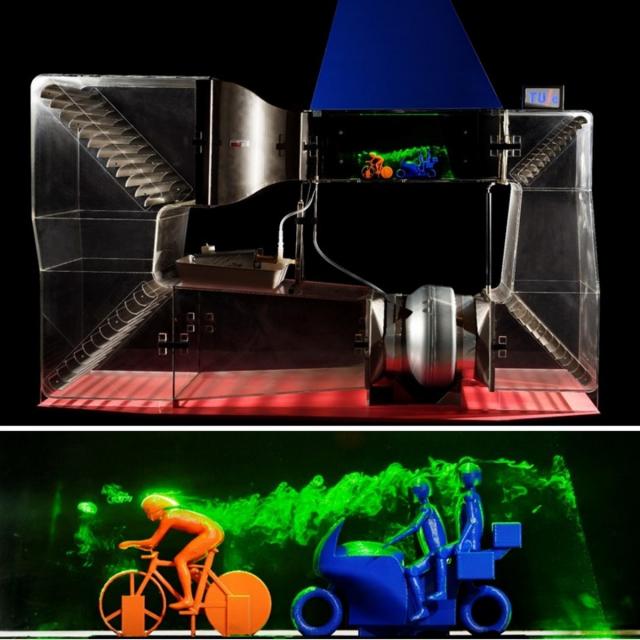
This series of lectures provides some fundamental aspects of wind-tunnel testing. First, the reasons why wind-tunnel testing is still important are outlined. Next, different types of wind tunnels and applications of wind-tunnel testing are discussed. As a special type of wind tunnel, the atmospheric boundary layer wind tunnel is described. Further lectures focus on the different wind-tunnel components, on measurements and flow visualization, on similarity and flow quality and on important best practice guidelines for high-quality wind-tunnel testing.

WEEK 3
Computational Fluid Dynamics
This series of lectures provides the basics of Computational Fluid Dynamics (CFD) with focus on application to Sports & Building Aerodynamics. First, the possibilities and limitations of CFD are outlined. Next, the main approaches for solving and modeling turbulent flow are explained, after which some basic aspects of discretization and near-wall modeling are described. After that, we focus on the important topics of errors, uncertainties, verification and validation in CFD. The series is concluded with two lectures that provide an overview of the past achievements and future challenges in Computational Wind Engineering.

WEEK 4
Building aerodynamics
The lecture series on Building Aerodynamics consists of 10 lectures. The first two lectures provide basic information about the wind flow around isolated buildings and generic building groups. Three lectures focus on the important problem of pedestrian-level wind discomfort and wind danger around buildings. One lecture addresses natural ventilation of buildings, focused on the ventilation study for a large football stadium in the Netherlands. Two lectures address wind-driven rain on building facades, and the final two lectures are devoted to wind energy in the built environment, where some important misconceptions are highlighted and explained.

WEEK 5
100 m sprint aerodynamics
This short lecture series addresses the aerodynamics of the 100 m sprint, including aerodynamic effects generated by the stadium. The first lecture explains the importance of aerodynamics in the 100 m sprint competition. Next, an existing mathematical-physical model of short-distance running is outlined. Based on this model, further lectures investigate wind effects and altitude effects on 100 m sprint performances and on potential world records. Finally, the potential influence of the geometry of the sports stadium on records established in it is explained, and the lecture series is concluded by an interview with a professional athletics coach.

WEEK 6
Cycling aerodynamics
The lecture series on cycling aerodynamics consists of 8 lectures. In the first lecture, the importance of aerodynamics in cycling is outlined. In the next two lectures, wind-tunnel testing of real and dummy cyclists is presented. The next lectures focus on CFD studies of the aerodynamics of a single cyclist, aerodynamics of two drafting cyclists and aerodynamics of drafting cyclist groups. After that, the aerodynamic interaction between a cyclist and a following car is studied. Finally, the series is concluded by an interview with two professional cycling coaches.

WEEK 7
Final quiz
The final quiz contains questions covering all 6 weeks. The minimum score to pass the course is 80%. 3 attempts can be taken. Partial feedback (correct / incorrect) will be given after every attempt. Points for multiple-choice questions with multiple correct answers are only obtained when all correct answers are labeled as such by the student.

WEEK 8
Peer-graded assignment
The peer-graded assignment includes the critical review of a scientific article based on the knowledge gained throughout the MOOC. The review consists of three parts: (1) performing a detailed study of the article; (2) providing a detailed answer to a set of specific questions; (3) grading at least 5 assignments of colleague students / peers.


Go to Class
MOOC List is learner-supported. When you buy through links on our site, we may earn an affiliate commission.

Related Courses

Mathematics for Engineers: The Capstone Course (Coursera) Coursera
The Hong Kong University of Science and Technology - HKUST

Mathematics for Engineers: The Capstone Course (Coursera)

Mathematics for Engineers: The Capstone Course provides a capstone project for students who are completing the Mathematics for Engineers specialization. Students will first learn some basic concepts in computational fluid dynamics, and then apply these concepts to compute the fluid flow around a cylinder. Access to MATLAB online and the MATLAB grader is given to all students who enroll.

Sep 21st 2026
3 Weeks
A prática da gestão de clubes e federações esportivas (Coursera) Coursera
FIA Business School

A prática da gestão de clubes e federações esportivas (Coursera)

O aluno irá aprender conceitos da gestão de clubes e federações esportivas, conceitos de marketing voltados ao esporte e conceitos de patrocínio esportivo. Iremos abordar a relação das federações esportivas com a imprensa e serão dados conceitos de finanças voltados a instituições esportivas.

Sep 14th 2026
5-12 Weeks
The Science Behind Anti-Doping (FutureLearn) FutureLearn
King's College London

The Science Behind Anti-Doping (FutureLearn)

Discover the life-cycle of a sample collected for anti-doping processes within sport, and the science behind it. Learn the science behind the anti-doping process with King’s College London. This fascinating course will cover the life cycle of a sample (blood and urine) collected for anti-doping purposes within sport and explain the science behind the analytical processes involved.

Self Paced
4 Weeks
Navigating Legal & Commercial Aspects of Sports (edX) EdX
Hamad Bin Khalifa University - HBKU,HBKUx

Navigating Legal & Commercial Aspects of Sports (edX)

Leading academics in their respective fields will introduce you to the dynamic world of sports law and related business principles. You will develop an overall understanding of the key legal and commercial aspects of sports. You will gain useful insights into their application based on actual scenarios involving athletes and teams. You will test your learning by applying it to hypothetical problems involving sports.

Self Paced
Self-Paced
Mental Skills Training for Sport and Health (FutureLearn) FutureLearn
Manchester Metropolitan University

Mental Skills Training for Sport and Health (FutureLearn)

Learn how techniques from sport psychology can be used to enhance your own sports performance or that of your clients. Learn sports psychology to improve physical performance in yourself or others. We all experience changing levels of motivation, self-confidence, and anxiety depending on the situation we’re in. On this course, you’ll discover exercise and sports psychology and consider its relevance to contemporary issues in sport, health and fitness.

Self Paced
4 Weeks
Moneyball and Globalization (Coursera) Coursera
University of Colorado Boulder

Moneyball and Globalization (Coursera)

This course will explore baseball’s historical connections to money and globalization, two of the most powerful forces in the modern era. Baseball may be a child’s game, but it has been inextricably intertwined with money and profit since its very inception in the late nineteenth century. The Reserve Clause, world tours, collective bargaining, expansion, bringing players from abroad, and realignment have always been driven as much or more by money than anything else.

Sep 21st 2026
4 Weeks
Baseball and Americanism (Coursera) Coursera
University of Colorado Boulder

Baseball and Americanism (Coursera)

This course will explore baseball and Americanism. What does it mean that baseball is the national pastime? What does national pastime even mean? What about national? When you think of the United States, what do you think of? Is baseball a part of that? These are some of the aspects we are going to delve into throughout this course. We are going to spend some time discussing how baseball reflected American culture at the time. In some instances, we will discuss how baseball reflected what people wanted American culture to look like, or appear to be.

Sep 21st 2026
4 Weeks
Foundations of Sports Analytics: Data, Representation, and Models in Sports (Coursera) Coursera
University of Michigan

Foundations of Sports Analytics: Data, Representation, and Models in Sports (Coursera)

This course provides an introduction to using Python to analyze team performance in sports. Learners will discover a variety of techniques that can be used to represent sports data and how to extract narratives based on these analytical techniques. The main focus of the introduction will be on the use of regression analysis to analyze team and player performance data, using examples drawn from the National Football League (NFL), the National Basketball Association (NBA), the National Hockey League (NHL), the English Premier LEague (EPL, soccer) and the Indian Premier League (IPL, cricket).

Sep 14th 2026
5-12 Weeks
Football: More than a Game (Coursera) Coursera
University of Edinburgh

Football: More than a Game (Coursera)

Explore the world of football (soccer), the money, the rivalries, the trends, the past, the present, the men’s game, the women's game and the real issues. Whether you love it, hate it or try to ignore it – join us as we go behind the scenes to examine why football is more than just a game.

Sep 21st 2026
5-12 Weeks
Prediction Models with Sports Data (Coursera) Coursera
University of Michigan

Prediction Models with Sports Data (Coursera)

In this course the learner will be shown how to generate forecasts of game results in professional sports using Python. The main emphasis of the course is on teaching the method of logistic regression as a way of modeling game results, using data on team expenditures. The learner is taken through the process of modeling past results, and then using the model to forecast the outcome games not yet played.

Sep 14th 2026
5-12 Weeks
Activism in Sports and Culture (Coursera) Coursera
Morehouse College

Activism in Sports and Culture (Coursera)

Sports have become an ever-present reflection of American culture, and an important symbol of the divisions and alliances in our society. Sports and political change walk hand in hand in America. The way that athletes and institutions deal with questions of race, economic hardship, nationalism, and political ties have become central to the way that we understand ourselves and our society. And yet, there are those who would prefer their sports free of controversy and opinion.

Sep 28th 2026
4 Weeks