Mathematics for Engineers: The Capstone Course (Coursera)

Mathematics for Engineers: The Capstone Course (Coursera)

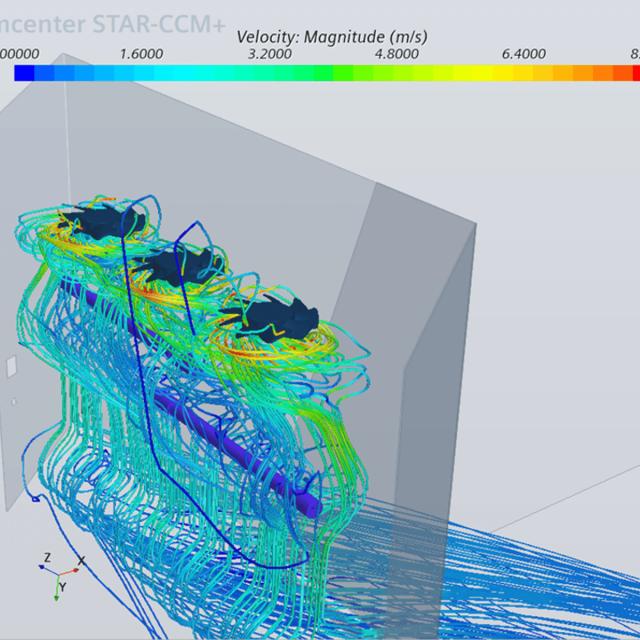
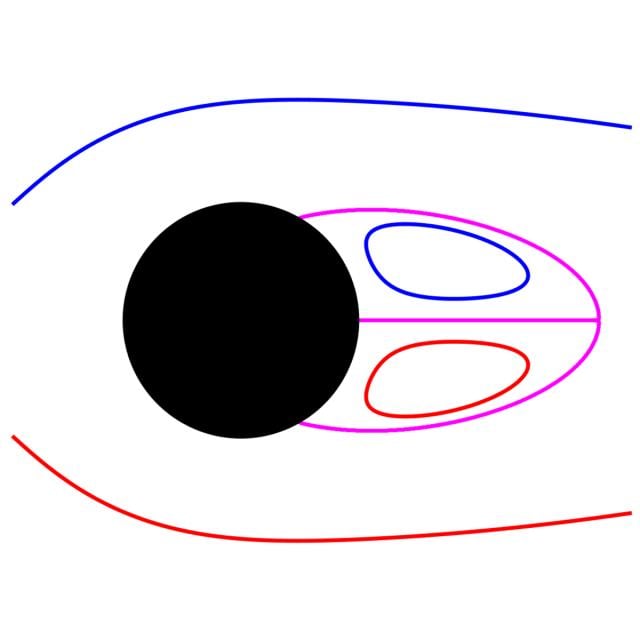
Mathematics for Engineers: The Capstone Course provides a capstone project for students who are completing the Mathematics for Engineers specialization. Students will first learn some basic concepts in computational fluid dynamics, and then apply these concepts to compute the fluid flow around a cylinder. Access to MATLAB online and the MATLAB grader is given to all students who enroll.

Class Deals by MOOC List - Click here and see Coursera's Active Discounts, Deals, and Promo Codes.

Before enrolling, students should have already taken courses in matrix algebra, differential equations, vector calculus and numerical methods and be able to program in MATLAB.
The course contains 22 short video lectures and a full set of lecture notes. After each lecture there are problems to solve and at the end of the second and third weeks there is a substantial MATLAB programming assignment.
Course 5 of 5 in the Mathematics for Engineers Specialization.

What You Will Learn

  • Computational Fluid Dynamics
  • Scientific Computing

Syllabus

WEEK 1
Governing Equations
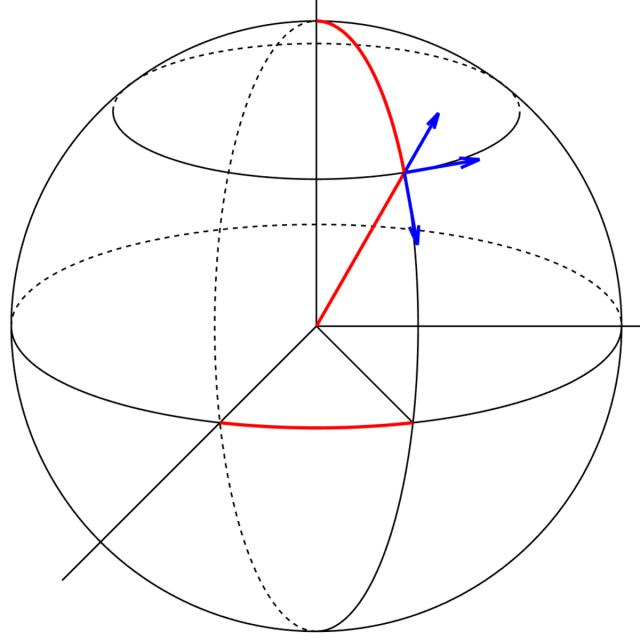
This week we learn the governing equations for the flow around a cylinder. We begin with the Navier-Stokes equations and the continuity equation, and derive a pair of coupled equations for the stream function and scalar vorticity. These equations are nondimensionalized and contain only a single dimensionless parameter called the Reynolds number. The governing equations are then simplified using log-polar coordinates.

WEEK 2
Steady Flows
In this week, we formulate the computational fluid dynamics problem of the steady flow around a cylinder. We introduce the finite difference method and derive iteration equations. Boundary conditions are derived and the outline of a MATLAB program is discussed. Students will write a program to compute the stream function at a Reynolds number of ten.

WEEK 3
Unsteady Flows
In this week, we formulate the computational fluid dynamics problem of the unsteady flow around a cylinder. We introduce periodic boundary conditions in the polar angle and show how to solve for the stream function using matrix methods. The solution for the scalar vorticity will use a MATLAB ode integrator. Students will write code to compute the time-dependent scalar vorticity at a Reynolds number of sixty.


Go to Class
MOOC List is learner-supported. When you buy through links on our site, we may earn an affiliate commission.

Related Courses

Mathematical Foundations for Cryptography (Coursera) Coursera
University of Colorado System

Mathematical Foundations for Cryptography (Coursera)

Welcome to Course 2 of Introduction to Applied Cryptography. In this course, you will be introduced to basic mathematical principles and functions that form the foundation for cryptographic and cryptanalysis methods. These principles and functions will be helpful in understanding symmetric and asymmetric cryptographic methods examined in Course 3 and Course 4. These topics should prove especially useful to you if you are new to cybersecurity. It is recommended that you have a basic knowledge of computer science and basic math skills such as algebra and probability.

May 25th 2026
4 Weeks
Discrete Mathematics (Coursera) Coursera
Shanghai Jiao Tong University

Discrete Mathematics (Coursera)

Discrete mathematics forms the mathematical foundation of computer and information science. It is also a fascinating subject in itself. Learners will become familiar with a broad range of mathematical objects like sets, functions, relations, graphs, that are omnipresent in computer science. Perhaps more importantly, they will reach a certain level of mathematical maturity - being able to understand formal statements and their proofs; coming up with rigorous proofs themselves; and coming up with interesting results.

May 25th 2026
5-12 Weeks
Calculus through Data & Modeling: Applying Differentiation (Coursera) Coursera
Johns Hopkins University

Calculus through Data & Modeling: Applying Differentiation (Coursera)

As rates of change, derivatives give us information about the shape of a graph. In this course, we will apply the derivative to find linear approximations for single-variable and multi-variable functions. This gives us a straightforward way to estimate functions that may be complicated or difficult to evaluate. We will also use the derivative to locate the maximum and minimum values of a function. These optimization techniques are important for all fields, including the natural sciences and data analysis. The topics in this course lend themselves to many real-world applications, such as machine learning, minimizing costs or maximizing profits.

Jun 1st 2026
5-12 Weeks
Introduction to Programming with MATLAB (Coursera) Coursera
Vanderbilt University

Introduction to Programming with MATLAB (Coursera)

This course teaches computer programming to those with little to no previous experience. It uses the programming system and language called MATLAB to do so because it is easy to learn, versatile and very useful for engineers and other professionals. MATLAB is a special-purpose language that is an excellent choice for writing moderate-size programs that solve problems involving the manipulation of numbers.

May 25th 2026
5-12 Weeks
Calculus through Data & Modeling: Differentiation Rules (Coursera) Coursera
Johns Hopkins University

Calculus through Data & Modeling: Differentiation Rules (Coursera)

Calculus through Data & Modeling: Differentiation Rules continues the study of differentiable calculus by developing new rules for finding derivatives without having to use the limit definition directly. These differentiation rules will enable the calculation of rates of change with relative ease the derivatives of polynomials, rational functions, algebraic functions, exponential and logarithmic functions, and trigonometric and inverse trigonometric functions.

Jun 1st 2026
5-12 Weeks
Julia Scientific Programming (Coursera) Coursera
University of Cape Town

Julia Scientific Programming (Coursera)

This four-module course introduces users to Julia as a first language. Julia is a high-level, high-performance dynamic programming language developed specifically for scientific computing. This language will be particularly useful for applications in physics, chemistry, astronomy, engineering, data science, bioinformatics and many more.

May 25th 2026
4 Weeks
Linear Regression and Modeling (Coursera) Coursera
Duke University

Linear Regression and Modeling (Coursera)

This course introduces simple and multiple linear regression models. These models allow you to assess the relationship between variables in a data set and a continuous response variable. Is there a relationship between the physical attractiveness of a professor and their student evaluation scores? Can we predict the test score for a child based on certain characteristics of his or her mother? In this course, you will learn the fundamental theory behind linear regression and, through data examples, learn to fit, examine, and utilize regression models to examine relationships between multiple variables, using the free statistical software R and RStudio.

May 25th 2026
4 Weeks
Introduction to Ordinary Differential Equations (Coursera) Coursera
Korea Advanced Institute of Science and Technology - KAIST

Introduction to Ordinary Differential Equations (Coursera)

In this introductory course on Ordinary Differential Equations, we first provide basic terminologies on the theory of differential equations and then proceed to methods of solving various types of ordinary differential equations. We handle first order differential equations and then second order linear differential equations. We also discuss some related concrete mathematical modeling problems, which can be handled by the methods introduced in this course.

Jun 1st 2026
5-12 Weeks
Computer Vision Basics (Coursera) Coursera
University at Buffalo,The State University of New York

Computer Vision Basics (Coursera)

By the end of this course, learners will understand what computer vision is, as well as its mission of making computers see and interpret the world as humans do, by learning core concepts of the field and receiving an introduction to human vision capabilities. They are equipped to identify some key application areas of computer vision and understand the digital imaging process. The course covers crucial elements that enable computer vision: digital signal processing, neuroscience and artificial intelligence.

Jun 1st 2026
4 Weeks
Machine Learning for Computer Vision (Coursera) Coursera
MathWorks

Machine Learning for Computer Vision (Coursera)

In the second course of the Computer Vision for Engineering and Science specialization, you will perform two of the most common computer vision tasks: classifying images and detecting objects. You will apply the entire machine learning workflow, from preparing your data to evaluating your results. By the end of this course, you’ll train machine learning models to classify images of street signs and detect material defects.

Jun 1st 2026
4 Weeks
English for Science, Technology, Engineering, and Mathematics (Coursera) Coursera
University of Pennsylvania

English for Science, Technology, Engineering, and Mathematics (Coursera)

Welcome to English for Science, Technology, Engineering, and Mathematics, a course created by the University of Pennsylvania, and funded by the U.S. Department of State Bureau of Educational and Cultural Affairs, Office of English Language Programs. This course is designed for non-native English speakers who are interested in improving their English skills in the sciences. In this course, you will explore some of the most innovative areas of scientific study, while expanding your vocabulary and the language skills needed to share scientific information within your community.

Jun 1st 2026
5-12 Weeks
Mathematics for Machine Learning: Multivariate Calculus (Coursera) Coursera
Imperial College London

Mathematics for Machine Learning: Multivariate Calculus (Coursera)

This course offers a brief introduction to the multivariate calculus required to build many common machine learning techniques. We start at the very beginning with a refresher on the “rise over run” formulation of a slope, before converting this to the formal definition of the gradient of a function. We then start to build up a set of tools for making calculus easier and faster. Next, we learn how to calculate vectors that point up hill on multidimensional surfaces and even put this into action using an interactive game.

Jun 1st 2026
5-12 Weeks