Software Analysis & Testing (Udacity)

Software Analysis & Testing (Udacity)

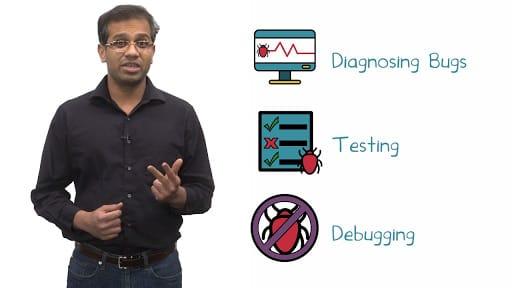
This course covers the theory and practice of software analysis, which lies at the heart of many software development processes such as diagnosing bugs, testing, debugging, and more. It presents diverse techniques, each with their own strengths and limitations, for automating tasks such as testing, debugging, and finding bugs in complex real-world programs. These techniques include dataflow analysis, constraint-based analysis, type systems, model checking, symbolic execution, and more. The course teaches the principles underlying these techniques as well as imparts hands-on experience with using and implementing tools based on these techniques.

Class Deals by MOOC List - Click here and see Udacity's Active Discounts, Deals, and Promo Codes.

Take this course if you need to learn how to test complex, large-scale programs using state of the art testing paradigms.

What You Will Learn

LESSON 1
Testing

  • Principles of random testing.
  • Automatically generating tests.

LESSON 2
Analysis

  • Analyzing dataflows within a program.
  • Analyzing pointers.
  • Analyzing software based on constraints.

LESSON 3
Debugging

  • Basics of type systems.
  • Statistical principles of debugging.
  • Dynamic symbolic execution.

Prerequisites and Requirements
To be prepared for this course, you should be very comfortable with:

  • Mathematical and logical reasoning (e.g. basics of set theory, graph theory, boolean algebra, and probability)
  • Programming in a high-level language like Java
  • Shell scripting on Linux-like operating systems

Go to Class
MOOC List is learner-supported. When you buy through links on our site, we may earn an affiliate commission.

Related Courses

Client Needs and Software Requirements (Coursera) Coursera
University of Alberta

Client Needs and Software Requirements (Coursera)

This course covers practical techniques to elicit and express software requirements from client interactions. Upon successful completion of this course, you will be able to: Create clear requirements to drive effective software development; visualize client needs using low-fidelity prototypes; maximize the effectiveness of client interactions - adapt to changing product requirements.

Sep 28th 2026
4 Weeks
Software Architecture for the Internet of Things (Coursera) Coursera
EIT Digital

Software Architecture for the Internet of Things (Coursera)

This course will teach you how to design futureproof systems that meet the requirements of IoT systems: systems that are secure, interoperable, modifiable and scalable. Moreover, you'll learn to apply best-in-class software architecture methods to help you design complex IoT and other applications. Lastly, you'll come to understand the business impact of the technical decisions that you make as an IoT system architect.

Sep 28th 2026
5-12 Weeks
Java Programming Basics (Udacity) Udacity
Udacity

Java Programming Basics (Udacity)

Take your first steps towards becoming a Java developer! Learn Java syntax and create conditional statements, loops, and functions. Taking this course will provide you with a basic foundation in Java syntax, which is the first step towards becoming a successful Java developer. You’ll learn how computers make decisions and how Java keeps track of information through variables and data types.

Self Paced
Self-Paced
Intellectual Humility: Theory (Coursera) Coursera
University of Edinburgh

Intellectual Humility: Theory (Coursera)

Faced with difficult questions people often tend to dismiss and marginalize dissent. Political and moral disagreements can be incredibly polarizing, and sometimes even dangerous. And whether it’s Christian fundamentalism, Islamic extremism, or militant atheism, religious dialogue remains tinted by arrogance, dogma, and ignorance. The world needs more people who are sensitive to reasons both for and against their beliefs, and are willing to consider the possibility that their political, religious and moral beliefs might be mistaken. The world needs more intellectual humility.

Sep 28th 2026
3 Weeks
Code Yourself! An Introduction to Programming (Coursera) Coursera
University of Edinburgh,Universidad ORT Uruguay

Code Yourself! An Introduction to Programming (Coursera)

Have you ever wished you knew how to program, but had no idea where to start from? This course will teach you how to program in Scratch, an easy to use visual programming language. More importantly, it will introduce you to the fundamental principles of computing and it will help you think like a software engineer.

Sep 28th 2026
5-12 Weeks
Algorithmic Thinking (Part 1) (Coursera) Coursera
Rice University

Algorithmic Thinking (Part 1) (Coursera)

Experienced Computer Scientists analyze and solve computational problems at a level of abstraction that is beyond that of any particular programming language. This two-part class is designed to train students in the mathematical concepts and process of "Algorithmic Thinking", allowing them to build simpler, more efficient solutions to computational problems.

Oct 5th 2026
4 Weeks
Principles of Computing (Part 2) (Coursera) Coursera
Rice University

Principles of Computing (Part 2) (Coursera)

This two-part course introduces the basic mathematical and programming principles that underlie much of Computer Science. Understanding these principles is crucial to the process of creating efficient and well-structured solutions for computational problems. To get hands-on experience working with these concepts, we will use the Python programming language. The main focus of the class will be weekly mini-projects that build upon the mathematical and programming principles that are taught in the class.

Oct 5th 2026
4 Weeks
Agile with Atlassian Jira (Coursera) Coursera
Atlassian

Agile with Atlassian Jira (Coursera)

Agile teams use “just enough” planning and an incremental approach to accomplishing the work of the team. Every project and every team uses a custom agile methodology. This course discusses common foundational principles and practices used by agile methodologies, providing the student a flexible set of tools to use in any role (e.g. product owner, scrum master, project manager, team member) on any agile team.

Sep 28th 2026
4 Weeks