EdX

Semiconductors for Beginners (edX)

Semiconductors for Beginners (edX)

The primary goal of the course is to enable the student to understand what semiconductors are, and why they are important to the electronics industry. Students will first learn and understand why some materials are insulators and others are conductors, and will learn how these properties can be modified. The course also explores other situations where the conductivity of an insulator can be drastically changed, such as the situation inside a bolt of lightning or inside a semiconductor.

Class Deals by MOOC List - Click here and see EdX's Active Discounts, Deals, and Promo Codes.

The primary goal of the course is to enable learners to understand what semiconductors are and exactly why they are useful to the electronics industry.
We will learn why some materials are insulators and others are conductors, why some materials are transparent and others opaque, and we will learn how electrons move inside materials. The course explores situations where the conductivity of an insulator can be drastically changed, such as the situation inside a bolt of lightning or inside a semiconductor.
Semiconductor physics textbooks are typically highly mathematical, and often rely on a foundation of solid state physics. This course, however, focuses less on mathematics and more on understanding at an intuitive level why materials have the properties that they do. For instance, silicon is a very important material in the modern electronics industry, and by the end of this short course, the reason why silicon is special will be clear.
This course is suitable for a first year university undergraduate student, or an older learner who did not study electrical engineering or materials science. High school-level physics is the assumed background. By the end of the course, learners will understand all of the fundamental terminology used in the semiconductor industry, and will be able to perform basic calculations.

What you'll learn
Students who take this class will be able to explain the following concepts and perform relevant basic calculations:

  • What causes static electricity? How can insulators be “electrified”?
  • What is ionization and how can an insulator sometimes become a conductor?
  • What really happens inside a bolt of lightning?
  • Why are some materials good conductors of electricity and others poor conductors?
  • What causes light emission in some materials?
  • How do gas discharge lamps work?
  • How can electrons to be emitted from solids?
  • What factors affect conductivity in a material and how can we calculate it?
  • What is the bandgap of a semiconductor?
  • What is doping and how does it affect conductivity?
  • Why are semiconductors, particularly silicon, so important?
  • How does a solar cell work?

Syllabus

Section 1: Introduction

  • Introduction

Section 2: Electrons on the move

  • Static Electricity
  • Insulators and Conductors
  • Electrons in Orbit

Section 3: Electricity and light

  • Lightning and Sparks
  • Light
  • Electricity in Gases
  • Light from Gases
  • Electricity in a Vacuum

Section 4: Crystals and Semiconductors

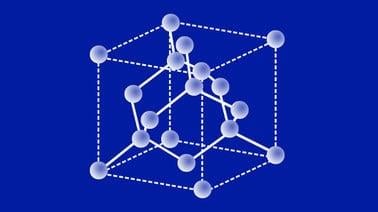
  • Crystal Lattices
  • Bandgaps
  • Semiconductors
  • Solar Cells
Go to Class
MOOC List is learner-supported. When you buy through links on our site, we may earn an affiliate commission.

Related Courses

Transmisión de energía eléctrica (edX) EdX
Tecnológico de Monterrey,TecdeMonterreyX

Transmisión de energía eléctrica (edX)

Aprende cómo se transmite y se distribuye la electricidad y cómo este conocimiento puede ser aplicado para maximizar la transmisión de energía eléctrica. Caso de estudio en el sistema eléctrico mexicano. El conocer la manera en que funciona el sistema eléctrico mexicano como caso de estudio genera competencias importantes en el mundo actual y permite tener conocimientos de distribución eléctrica que se pueden usar en otros países.

Self Paced
Self-Paced
Semiconductor Fundamentals (edX) EdX
Purdue University,PurdueX

Semiconductor Fundamentals (edX)

From smartphones to satellites, semiconductors are everywhere. Tying together physics, chemistry, and electrical engineering, this easy-to-follow introduction provides the background needed to understand devices such as transistors and solar cells. This course provides the essential foundations required to understand the operation of semiconductor devices such as transistors, diodes, solar cells, light-emitting devices, and more.

Jan 9th 2023
5-12 Weeks
RF Design: Passive and Active Components (edX) EdX
Purdue University,PurdueX

RF Design: Passive and Active Components (edX)

Learn the necessary techniques and tools for designing high-performance passive and active RF components. Following the ‘Primer on RF Design’ course, this class focuses on passive and active components. We use the techniques learnt in the previous course, to design advanced RF devices including couplers, filters and amplifiers. Current research topics are discussed as appropriate.

Nov 1st 2021
5-12 Weeks
AP® Physics 1 - Part 4: Exam Prep (edX) EdX
Rice University,RiceX

AP® Physics 1 - Part 4: Exam Prep (edX)

The fourth of four courses in a dynamic, comprehensive series that provides a solid base in introductory physics and helps prepare you for the AP Physics 1 Exam. Free textbook included! In this four-part series, we will explore AP Physics 1 concepts and prepare for the AP Physics 1 Exam in an exciting and entirely new way. Increase your skills – and your readiness – for the AP Exam though quality videos, inquiry labs, Hollywood-style Concept Trailers™, Direct Measurement Videos, AP problem-solving sessions and more!

No sessions available
4 Weeks
Circuits and Electronics 3: Applications (edX) EdX
MIT,MITx

Circuits and Electronics 3: Applications (edX)

Learn about cool applications, op-amps and filters in the design of microchips used in smartphones, computers, and the internet. Want to learn how your radio works? Wondering how to implement filters using resistors, inductors, and capacitors? Wondering what are some other applications of RLC and CMOS circuits? This free circuit course, taught by edX CEO and MIT Professor Anant Agarwal and MIT colleagues, is for you.

Self Paced
Self-Paced
Quantum Mechanics for Everyone (edX) EdX
Georgetown University,GeorgetownX

Quantum Mechanics for Everyone (edX)

Learn the fundamental notions of quantum mechanics at a level that is accessible to everyone. Quantum Mechanics for Everyone is a six-week long MOOC that teaches the basic ideas of quantum mechanics with a method that requires no complicated math beyond taking square roots (and you can use a calculator for that).

Jun 8th 2023
5-12 Weeks
Graphene Science and Technology (edX) EdX
Chalmers University of Technology,ChalmersX

Graphene Science and Technology (edX)

Graphene: its practical applications and how it offers new insights into quantum physics. Graphene is the world’s first 2-dimensional material and is the thinnest, strongest, and most flexible material known to exist. Graphene, a special form of carbon,,can conduct electricity and heat better than anything else.

No sessions available
5-12 Weeks
Incorporating Renewable Energy in Electricity Grids (edX) EdX
Imperial College London,ImperialX

Incorporating Renewable Energy in Electricity Grids (edX)

Learn how to manage high shares of variable renewable electricity sources to achieve cost-effective and reliable electricity supplies. This introductory course, delivered by Ieading academics from Imperial College London, with technical input and contributions from the National Energy Renewable Lab (Golden, Colorado), will discuss what challenges variable output renewables pose to the achievability of a reliable, stable electricity system, how these challenges can be addressed and at what costs.

Self Paced
Self-Paced