EdX

Circuits and Electronics 2: Amplification, Speed, and Delay (edX)

Offered by MIT, MITx,
Circuits and Electronics 2: Amplification, Speed, and Delay (edX)

Learn how to speed up digital circuits and build amplifiers in the design of microchips used in smartphones, computers, and the Internet. Want to learn how to construct an amplifier for mobile phones? Wondering how energy storage elements like capacitors and inductors work, or how to make microchips run faster? This free circuit course taught by edX CEO and MIT Professor Anant Agarwal and colleagues is for you.

Class Deals by MOOC List - Click here and see EdX's Active Discounts, Deals, and Promo Codes.

This is the second of three online Circuits and Electronics courses and is taken by all MIT Electrical Engineering and Computer Science (EECS) majors.

Topics covered include: MOSFET large signal and small signal analysis; amplifiers; energy storage elements like capacitors and inductors; and dynamics of first-order networks and circuit speed. Design and lab exercises are also significant components of the course.
Weekly coursework includes interactive video sequences, readings from the textbook, homework, online laboratories, and optional tutorials. The course will also have a final exam.
This is a self-paced course, so there are no weekly deadlines. However, all assignments are due when the course ends.

What you'll learn:

  • How to build amplifiers using MOSFETs.
  • How to use intuition to describe the approximate time and frequency behavior of first-order circuits containing energy storage elements like capacitors and inductors.
  • The relationship between the mathematical representation of first-order circuit behavior and corresponding real-life effects.
  • How to improve the speed of digital circuits
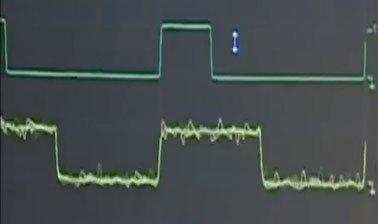
  • Measurement of circuit variables using tools such as virtual oscilloscopes, virtual multimeters, and virtual signal generators.
  • How to compare the measurements with the behavior predicted by mathematical models and explain the discrepancies.

Course Syllabus

Week 1: Amplifiers, MOSFET large signal analysis, MOSFET small signal analysis
Week 2: Capacitors, first-order RC circuits
Week 3: Inductors, first-order step response, first-order circuit analysis, impulses, digital circuit speed
Week 4: Impulse, step, ramp superposition, digital memory, state, ZIR, ZSR
Go to Class
MOOC List is learner-supported. When you buy through links on our site, we may earn an affiliate commission.

Related Courses

Teaching Physical Computing with Raspberry Pi and Python (edX) EdX
Raspberry Pi Foundation

Teaching Physical Computing with Raspberry Pi and Python (edX)

Explore the exciting world of physical computing and create electronic circuits that you can control with code. On this course from the Raspberry Pi Foundation, you will be introduced to the world of physical computing. You will use input devices to capture data, process that data with the Python programming language, and then use output devices to get information back out from your computer.

Self Paced
Self-Paced
AC and Switching Circuits (edX) EdX
National University of Singapore,NUS

AC and Switching Circuits (edX)

In this course, you will learn all about circuits with alternating current (AC). The course shows how to design and analyse AC circuits, and concepts like phasors and power factor are explained. We also cover transformers, fuses, relays, and the use of transistors as switches. The course is the second in our series on electronics and a working knowledge of DC circuits is assumed.

Self Paced
Self-Paced
Physics 102 - Electric Potential and DC Circuits (Coursera) Coursera
Rice University

Physics 102 - Electric Potential and DC Circuits (Coursera)

This course serves as an introduction to the physics of electricity and magnetism. Upon completion, learners will have an understanding of how the forces between electric charges are described by fields, and how these fields are related to electrical circuits. They will gain experience in solving physics problems with tools such as graphical analysis, algebra, vector analysis, and calculus.

Jun 8th 2026
3 Weeks
Adding Electronics to Rapid Prototypes (Coursera) Coursera
Arizona State University

Adding Electronics to Rapid Prototypes (Coursera)

Hello, everyone! Welcome to this course on Adding Electronics to Rapid Prototypes. This is part of the Rapid Prototyping and Tooling specialization. In this course, I’ll cover the basics of electric circuits, breadboards, and multimeters. I’ll then discuss different options for connecting electrical components as well as discuss different types of motors and actuators. Finally, I’ll end this course by discussing microcontrollers and how to use them to make even more sophisticated prototypes.

Jun 8th 2026
5-12 Weeks
The Mechatronics Revolution: Fundamentals and Core Concepts (edX) EdX
Georgia Institute of Technology,GTx

The Mechatronics Revolution: Fundamentals and Core Concepts (edX)

In this course, students will learn to harness the power of microcontrollers, sensors, and actuators to build useful and interesting robotic devices. The Mechatronics Revolution is upon us. Never before has it been easier to build robotic devices and computer-controlled machines. The confluence of low-cost embedded computers, sensors, and actuators has made experimentation and prototyping easier than ever.

Self Paced
Self-Paced
Electricity Distribution (edX) EdX
National University of Singapore,NUS

Electricity Distribution (edX)

This course is designed like a field trip. Let’s travel together around the world, visiting solar farms, substations, and transformer rooms! Learn how to identify major components in electrical substations, learn about 3-phase electricity, and all about the ins and outs of electrical grids. We cover generation, transmission, and distribution. Welcome!

Self Paced
Self-Paced
AP® Physics 1 - Part 4: Exam Prep (edX) EdX
Rice University,RiceX

AP® Physics 1 - Part 4: Exam Prep (edX)

The fourth of four courses in a dynamic, comprehensive series that provides a solid base in introductory physics and helps prepare you for the AP Physics 1 Exam. Free textbook included! In this four-part series, we will explore AP Physics 1 concepts and prepare for the AP Physics 1 Exam in an exciting and entirely new way. Increase your skills – and your readiness – for the AP Exam though quality videos, inquiry labs, Hollywood-style Concept Trailers™, Direct Measurement Videos, AP problem-solving sessions and more!

No sessions available
4 Weeks
Introduction to Quantum Transport (edX) EdX
Purdue University,PurdueX

Introduction to Quantum Transport (edX)

This course introduces the non-equilibrium Green’s function (NEGF) method widely used to describe quantum effects in nanoscale devices, along with its applications to spintronic devices. This course introduces the Schrödinger equation, using the tight-binding method to discuss the concept of bandstructure and E(k) relations, followed by an introduction to the NEGF method with simple illustrative examples. Concept of spinors is introduced along with the application of the NEGF method to spintronic devices.

Feb 12th 2024
5-12 Weeks
Nanotechnology: Fundamentals of Nanotransistors (edX) EdX
Purdue University

Nanotechnology: Fundamentals of Nanotransistors (edX)

Explore nantechnology and gain an understanding of the essential physics and technology of nanotransistors. The transistor has been called the greatest invention of the 20th century – it enables the electronics systems that have shaped the world we live in. Today’s nanotransistors are a high volume, high impact success of the nanotechnology revolution. If you are interested in understanding how this scientifically interesting and technologically important nano-device operates, this course is for you!

No sessions available
5-12 Weeks